last updated on 03/27/2026
Mood swings are part of everyday life for many people – and can be a significant burden. Learn more about the causes, warning signs, and how Ayurveda can help you in this guide.
At a Glance: Mood Swings in Ayurveda
Mood swings are rapid, often difficult-to-explain changes in emotional state – from joy to sadness, from calmness to irritability. A certain degree of this is completely normal.
Common causes include:
- Hormonal changes (menstrual cycle and PMS, pregnancy, menopause, puberty)
- Chronic stress and lack of sleep
- Mental health conditions such as depression or bipolar disorder
- Physical illnesses (e.g., thyroid problems)
Ayurveda understands them as an expression of a Dosha imbalance and offers holistic approaches.
Read more on the topic:
- Ayurveda during Menopause: 5 Tips
- Building a Positive Mindset with Ayurveda
- Stress Management with Ayurveda: Definition & Methods
- Shatavari: Effects in Ayurveda
- Holistic Health with European Ayurveda®
What Are Mood Swings?
Mood swings are rapid, often barely explainable changes in emotional state that occur without an apparent reason and can noticeably burden everyday life.

Our mood changes naturally throughout the day. It becomes problematic when the emotional world fluctuates strongly without an apparent reason – and does so regularly. This is when we speak of mood swings in the narrower sense.
The emotions often switch abruptly between high spirits and sadness, between balance and irritability. Sometimes also between drive and complete exhaustion.

“Mood swings often show that the body and mind need more balance. Ayurveda helps to rebuild inner stability and gently strengthen emotional equilibrium.”
Elisabeth Naschberger-Mauracher, European Ayurveda Expert & Managing Director of the European Ayurveda Resort Sonnhof in Tyrol
It is not about how many emotional changes per day are normal, but how strongly you experience these fluctuations as burdensome. In psychology, this is referred to as “subjective well-being” – your personal perception is what counts. If you notice that your mood lows are becoming more frequent or are restricting you in everyday life, it is worth taking a closer look.
What Causes Mood Swings?
Mood swings usually have hormonal, psychological, or physical causes – often several factors act simultaneously.

Hormonal Causes for Mood Swings in Women
Mood swings in women are particularly often hormonally induced. The female body goes through several phases of strong hormonal changes over the course of a lifetime. These can directly affect the emotional state:
- Mood swings before the period (PMS): In the second half of the cycle, estrogen levels drop while progesterone rises. These changes can trigger irritability, sadness, and inner unrest. Over 90% of women report at least one of these PMS symptoms before their period. (1)
- Mood swings around ovulation: Hormone levels also fluctuate in the middle of the cycle, which can briefly influence the mood.
- Mood swings during pregnancy: Especially in the first trimester, the body massively reorganizes its hormone balance. Joy and anxiety, nausea, and changes in everyday life further intensify emotional fluctuations.
- Mood swings after a hysterectomy: A surgical procedure can significantly change the hormone balance, especially if the ovaries are removed at the same time. The abrupt hormonal change often leads to intense emotional reactions.
- Mood swings during menopause: With the decline of estrogen and progesterone in menopause, many women experience irritability, sadness, and inner unrest. Since estrogen has a mood-lifting effect, its drop can significantly influence the emotional state.
Mood Swings in Men
Men are also affected: declining testosterone levels as well as fluctuations in growth hormones can lead to mood swings in men. Irritability, lack of drive, and emotional instability then become noticeable. Chronic stress and lack of sleep intensify these effects.
Psychological and Neurological Causes
Strong mood swings can also be an indication of a mental health condition. Particularly relevant are:
- Depression: It often occurs in phases – with deep dejection, lack of drive, and joylessness. Mood swings are among the typical accompanying symptoms.
- Bipolar disorder: Here, phases of deep depression and extreme high spirits (mania) alternate.
- Borderline personality disorder: Intense, rapidly changing feelings are part of the core image of this condition.
- ADHD: Mood swings also frequently occur with ADHD, triggered by overstimulation and impulsivity.
In addition, physical illnesses such as thyroid dysfunction, chronic stress, lack of sleep, or certain medications can destabilize the mood.
When Are Strong Mood Swings Concerning?
Mood swings become concerning when they last longer, occur without an external reason, or noticeably restrict everyday life. Occasional emotional fluctuations are normal and no cause for concern. It is time to take a closer look if:
- the mood swings last longer than two weeks
- they occur without a recognizable trigger and are very pronounced
- everyday life, relationships, or work are noticeably impaired
- additional symptoms, such as sleep disorders, withdrawal, loss of appetite, or thoughts of self-harm, occur
In these cases, medical or psychotherapeutic clarification is urgently recommended. Extreme mood swings classified as a mental illness require professional support. Ayurveda can only act complementarily here by supporting your body and mind holistically.
Mood Swings from an Ayurvedic Perspective: The Dosha Imbalance
Ayurveda views the human being as a unity of body, mind, and soul. From an Ayurvedic perspective, emotional instability is not an isolated problem. Rather, it is a signal of an imbalance of the three fundamental bioenergies – the so-called Doshas: Vata, Pitta, and Kapha.

Every person carries all three Doshas within them, in an individual mixture that determines their physical and mental characteristics. If the Doshas get out of balance, this also manifests in the emotional world:
- Increased Vata (movement, air): leads to inner unrest, anxiety, sleep problems, and rapidly changing moods.
- Excessive Pitta (fire, transformation): manifests as irritability, impatience, hot-headedness, and overstimulation.
- Dominant Kapha (earth, water): shows as lethargy, dejection, and emotional clinging.
Especially in hormonally turbulent phases of life – such as the cycle, pregnancy, or menopause – the Dosha balance shifts. In European Ayurveda®, this connection becomes clear: menopause marks the transition from the Pitta to the Vata phase of life. This can be reflected in increased sensitivity, inner unrest, and emotional fluctuations.
6 Tips: What Helps Against Mood Swings?
These six measures can help – ideally tailored to your individual Dosha type.

Tip #1: Movement and Exercise
Regular exercise is considered one of the most effective measures for emotional stability. Research results suggest that physical activity can stabilize the mood, partly through effects on neurotransmitters such as serotonin and dopamine (2).
Particularly well-suited are gentle but regular activities such as yoga, walks in nature, swimming, or light jogging. According to Ayurvedic teaching, gentle movement activates the energy system (Prana), promotes grounding, and strengthens vitality.
Tip #2: Mindfulness, Meditation, and Breathing Techniques
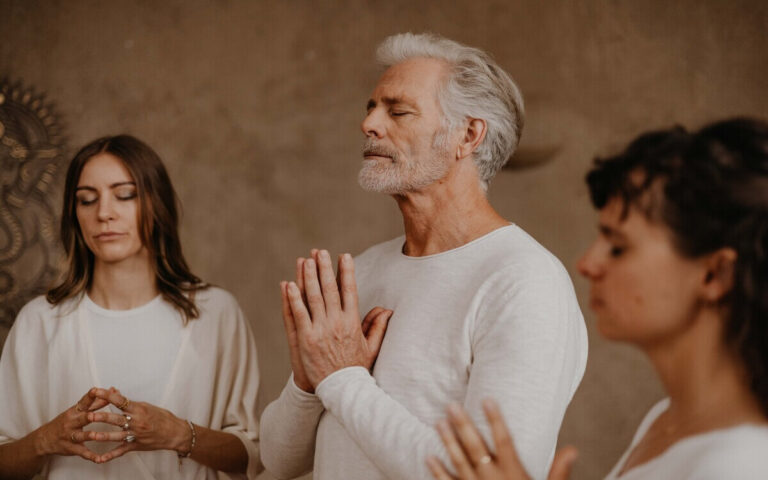
Daily mindfulness exercises can already show noticeable effects. Conscious breathing, meditation, or mindful walking help the nervous system to become calmer. In Ayurveda, Pranayama exercises (breathing techniques) play a central role: they primarily calm increased Vata and support emotional stability sustainably.
Tip #3: Type-Appropriate Nutrition According to Ayurveda
Ayurvedic nutrition is more than just a source of energy – it is medicine. Warm, freshly prepared meals and spices play an important role. They nourish the organism and have a direct effect on the mood.
Recent research confirms that gut health directly influences mood. A healthy microbiome supports the production of serotonin. Around 90% of the body’s own serotonin is produced in the gut. Via the so-called gut-brain axis, the gut is in close communication with the nervous system – a connection that also influences emotional stability (3).
Tip #4: Medicinal Plants and Adaptogens
In Ayurveda, there are powerful medicinal plants that strengthen the nervous system and increase stress resistance:
- Ashwagandha: Calms both Vata and Kapha, acts as an adaptogen, and thus helps to better cope with stress.
- Brahmi: Promotes mental clarity, calms the nervous system, and supports emotional balance.
- Shatavari: Particularly valuable for women: it has a balancing effect on female hormones and can alleviate mood swings around the cycle and during menopause.
Important: Medicinal plants should always be taken in consultation with an Ayurveda practitioner.
Tip #5: Sleep and Daily Routine (Dinacharya)
Sleep disorders are one of the most common triggers for emotional instability. They can be counteracted with an Ayurvedic daily routine. In Ayurveda, the daily routine (Dinacharya) is of high importance.
Getting up early, a morning cleansing ritual, regular meals, and fixed rest periods in the evening strengthen the body’s self-regulation and emotional stability.
Tip #6: Oil Massages (Abhyanga)
Daily self-massages with warm oil (Abhyanga) calm the nervous system, reduce increased Vata, and promote a deep sense of security and comfort.
Mood Swings During Menopause: Ayurveda as a Natural Path
Menopause is one of the most intense hormonal transition phases in a woman’s life. Hot flashes, sleep disorders, and mood swings are among the most common complaints. Many women experience this phase as particularly challenging.

In Ayurveda, menopause is not considered an illness, but a natural transition from the Pitta to the Vata phase of life. This change can bring various complaints and changes depending on the Dosha type:
- Vata type: tends toward inner unrest, anxiety, sleep disorders, and rapidly changing moods. Grounding through warm, nourishing food, oil massages, and regular routines is particularly important here.
- Pitta type: more frequently shows hot flashes, irritability, and excess. Cooling nutrition and cooling herbal massages help to dampen the inner fire.
- Kapha type: struggles more with lethargy, listlessness, and the tendency to gain weight. Activating movement and light, spicy food support the necessary lightness.
Holistic support through an Ayurvedic diet and lifestyle can noticeably ease this phase.
Mood Swings and Depression: Knowing the Difference
Mood swings and depression are not the same – even though they can be similar. Important differences are:
- Mood swings change rapidly. High-spirited moments are also possible. Everyday life can often still be managed.
- Depression lasts longer (at least two weeks), is accompanied by deep joylessness, lack of drive, and often physical symptoms. Everyday life becomes an insurmountable hurdle.
Persistent, intense mood swings can be a precursor or accompanying symptom of depression. If you feel that you no longer have control over your emotional world, seek professional help. Ayurveda can provide complementary support here – through holistic programs that address body, mind, and soul simultaneously.
FAQ: Frequently Asked Questions About Mood Swings
What are mood swings?
With mood swings, the emotional state changes frequently and without external triggers. Emotions can fluctuate between joy and sadness, calmness and irritability, or energy and exhaustion – often without an apparent reason.
What causes mood swings in women?
Mood swings in women are often hormonally induced: by the menstrual cycle (PMS), ovulation, pregnancy, or menopause. But chronic stress, lack of sleep, physical illnesses, and psychological factors also play an important role.
What helps against mood swings during menopause?
Ayurveda offers a holistic approach to mood swings during menopause: type-appropriate nutrition, medicinal herbs, oil massages, yoga, pranayama, and an adapted daily routine can noticeably alleviate symptoms.
When should I see a doctor about mood swings?
If mood swings last longer than two weeks and severely restrict everyday life. Also, if further symptoms such as sleep disorders or thoughts of self-harm occur, immediate medical or psychotherapeutic clarification is important.
Are strong mood swings a sign of a mental illness?
Not necessarily. Strong mood swings can be normal reactions to stressful situations or hormonal changes. However, they can also be a symptom of a mental illness. Medical clarification provides clarity.
Can mood swings before the period be treated?
Yes. Regular exercise, stress reduction, Ayurvedic nutrition, and a stable daily routine can significantly reduce PMS-related mood swings. In severe cases (PMDD), medical treatment is advisable.
Which Ayurveda cure does the Sonnhof recommend for mood swings?
Depending on the cause and individual Dosha type, a Balance & Longevity cure, a Panchakarma cure, or a Spiritual Healing Retreat can be the right choice. With our Cure Finder, you will find the perfect treatment for your needs.
Can mood swings also be hormonally induced in men?
Yes. Declining testosterone levels, especially from the mid-40s onwards, as well as fluctuations in growth hormone can lead to mood swings in men. They are then more frequently irritable, listless, or emotionally unstable. Chronic stress and lack of sleep further intensify these effects.
Sources
(1) Tschudin, S., Bitzer, J., Coda, P., & Zemp, E. (2009). Premenstrual syndrome between facts and fiction – new population-based data. Geburtshilfe und Frauenheilkunde, 69, A113. doi:10.1055/s-0029-1239029
(2) Choi KW, Chen C, Stein MB, et al. (2019): Assessment of Bidirectional Relationships Between Physical Activity and Depression Among Adults: A 2-Sample Mendelian Randomization Study. JAMA Psychiatry; 76(4):399–408. doi:10.1001/jamapsychiatry.2018.4175
(3) Cryan, J.F. et al. (2019): The Microbiota-Gut-Brain Axis. Physiological Reviews, 99(4), 1877–2013. doi: 10.1152/physrev.00018.2018