last updated on 10/27/2026
Why do some people not age—or at least age so much slower? Research now has surprisingly concrete answers. Here you will learn whether the aging process or cellular aging can really be slowed down. We will also show you how European Ayurveda® supports you in aging more healthily.
The Essentials in Brief: Slowing down the aging process yes, stopping it no
- To date, no medication or treatment can stop or reverse the aging process. However, it has been proven that it can be slowed down.
- People who seemingly do not age usually have a favorable mix of genes and lifestyle. Depending on the calculation, genes explain between 10% and 50% of the lifespan; the rest is shaped by exercise, nutrition, sleep, stress, and the environment.
- Not smoking, daily exercise, maintaining a normal weight, eating a balanced diet, and consuming little alcohol give women over 50 an average of around 14 additional years of life, and men a good 12 years.
- In the aging process of women, menopause primarily accelerates skin aging. The strongest lever for the skin remains consistent sun protection.
- European Ayurveda® addresses exactly these key factors with Rasayana, type-appropriate nutrition, and the Longevity Retreat.
Read more on the topic:
- Epigenetics & European Ayurveda®: Genes are not destiny
- Longevity Nutrition: How food influences your aging
- Ojas in Ayurveda: Strengthen your cells and ensure healthy longevity
- Longevity: Factors and practical tips for healthy aging
- Perimenopause: First signs, symptoms, and what really helps
Why do some people not age—or at least age more slowly?
Some people age more slowly because their bodies repair damage better and accumulate less new damage. This is ensured by an interplay of genes, metabolism, lifestyle, and environment. Your biological age can therefore differ significantly from the age in your passport.
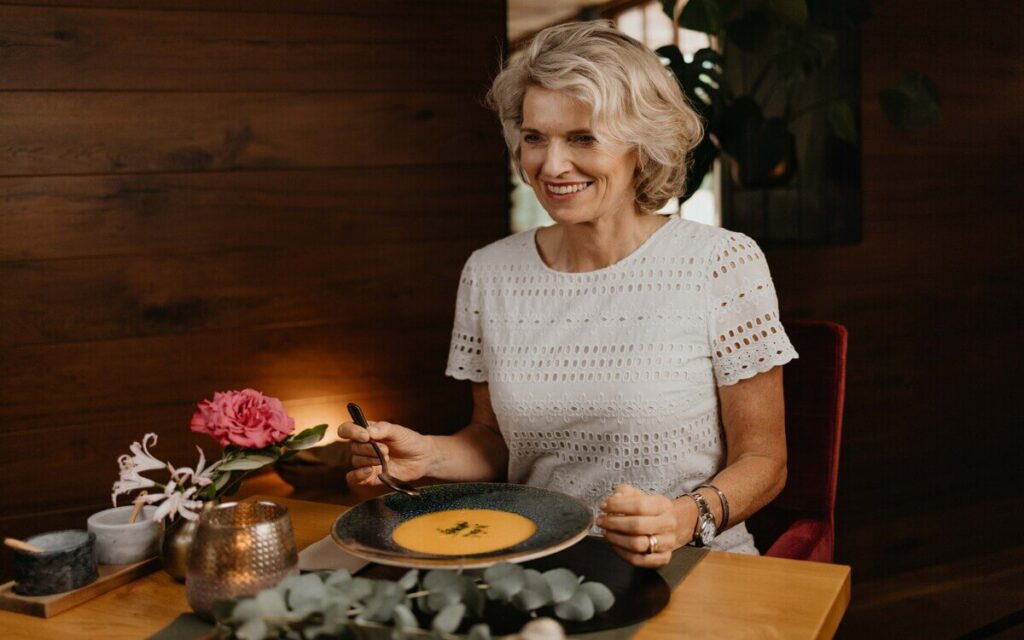
How large these differences are even at a young age is shown by a long-term study from New Zealand (1). Researchers tracked numerous biomarkers in 954 young people over three measurement points, such as for the lungs, gums, cardiovascular system, kidneys, liver, and immune system. Most aged approximately one biological year per calendar year, some practically not at all, others up to three times as fast.
Those who aged faster were already physically less resilient before midlife, performed worse in cognitive tests, and looked older. Aging, therefore, does not begin at 60. It begins much earlier and quite quietly.
How much do genes determine?
Genes play a role, but they do not decide alone. Older studies estimated their influence on the lifespan at only about 10% to 15%. A new twin analysis from 2026 (2) filters out deaths from accidents or infections and arrives at a heritability of over 50% for purely biological causes.
A large part thus remains in your hands. How your genes behave also depends on the signals they receive daily. This is exactly what epigenetics deals with.
Cellular aging: These processes take place in the body
Cellular aging is not a single process, but a bundle of small mishaps. Over the years, damage accumulates in the genetic material, and the protective caps of the chromosomes (telomeres) become shorter. Some cells stop dividing without dying and permanently send out inflammatory signals.
At the same time, the cell’s own recycling program declines. As basic research on autophagy (3) shows, this cleanup process decreases with age. Simultaneously, its activation positively influences health and lifespan. It is triggered, among other things, when nutrients become scarce.
Mitochondria also play a key role. They are involved in over 1,000 metabolic pathways and generate free radicals, which are unhealthy in both excessive and insufficient quantities. Exercise releases slightly more of these radicals, in a dose that has been proven to be good for health.
Can the aging process be stopped or reversed?
According to current knowledge, the aging process cannot be stopped, and true rejuvenation has not been proven in humans. So far, research knows of no medication or treatment that has been proven to extend the human lifespan. Slowing down aging, on the other hand, is very much possible.
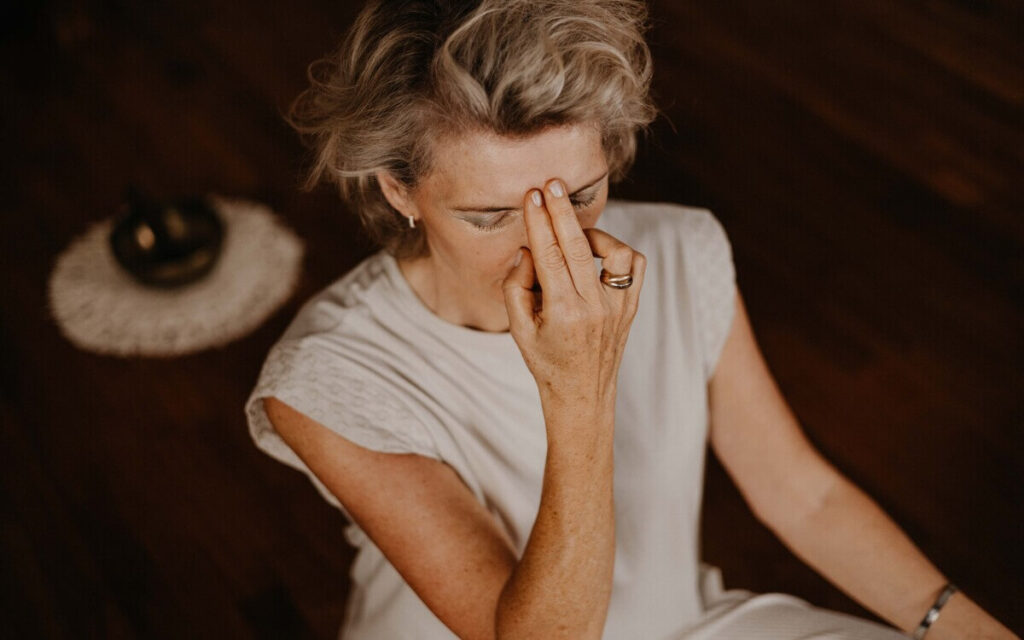
The strongest evidence to date is provided by a two-year study on calorie restriction (4). 220 healthy adults ate either normally or around 25% less for two years. In the calorie group, the epigenetically measured rate of aging slowed by 2% to 3%, which can correspond to a 10% to 15% lower risk of mortality, similar to quitting smoking.
However, permanent calorie restriction is strenuous and not suitable for everyone. From an Ayurvedic perspective, what counts is less strict deprivation and more a moderate, regular rhythm when eating. Longevity supplements can meaningfully complement your diet.
How can you slow down aging?
Five simple habits have the strongest effect: do not smoke, exercise daily, maintain a healthy weight, eat a balanced diet, and drink little alcohol. Together, they bring more years of life than any active substance has achieved in humans so far. The best part: you don’t need a prescription for it.

This is shown by the evaluation of two large US cohorts (5) with around 123,000 adults. Women who fulfilled all five factors at age 50 had a life expectancy 14 years higher than women without any of them; for men, it was 12.2 years.
| Habit | What was considered “favorable” in the study |
| Smoking | Never smoked |
| Exercise | At least 30 minutes daily, moderate to intense, for example, brisk walking |
| Body weight | Body Mass Index in the normal range |
| Nutrition | Plenty of vegetables, fruit, whole grains, and nuts; little processed meat and sugar |
| Alcohol | Maximum one glass per day for women, two for men |
Regarding alcohol, from today’s perspective, the following still applies: the less, the better for your cells.
Nutrition against aging: 5 principles for your plate
You don’t need a specific anti-aging diet. What matters is what regularly ends up on your plate and how you prepare it.
- Predominantly plant-based: With age, the diversity of gut bacteria decreases, while the proportion of pathogens increases. Vegetables, legumes, and whole grains feed the good bacteria. In animal experiments, old fish with the gut flora of young conspecifics even lived up to 40% longer (3).
- Moderate instead of lavish: Those who are not constantly full give their cells room to clean up. Fixed meals with breaks in between are more suitable for everyday life than strict diets.
- Choose protein consciously: In animal studies, a very high-protein diet shortened the lifespan. In older age, however, your body needs more protein again to maintain muscle; legumes are a good basis for this.
- Cook gently: Steaming and stewing instead of grilling and deep-frying reduces harmful sugar-protein compounds. You can read more about this in the next section.
- Warm and regular: In Ayurveda, a strong digestive fire (Agni) is central. Warm, freshly cooked meals at fixed times relieve the metabolism; you can find more on this in the article on Longevity Nutrition.
What are AGEs and how do you reduce them in everyday life?
AGEs (Advanced Glycation Endproducts) are formed when sugar attaches to proteins or fats. AGEs ingested through food promote oxidative stress and inflammation. They also deposit in long-lived tissues such as skin collagen and make it stiffer.
Your body produces some itself, especially with permanently elevated blood sugar. You take in the rest with food, and here you have a great influence. Laboratory analyses of over 500 foods (6) show: dry heat increases the AGE content by 10 to 100 times compared to the raw state.
| More AGEs | Fewer AGEs |
| Grilling, frying, deep-frying, roasting | Steaming, poaching, boiling, stewing |
| High temperature, long cooking time | Lower temperature, short cooking time |
| Fat- and protein-rich animal foods | Vegetables, fruit, whole grains |
| Prepared without acid | Marinated with lemon juice or vinegar |
The good news: Ayurvedic cuisine already prefers gentle cooking methods. Dal, vegetable curry, and kitchari are naturally low in AGEs.
Why stress and lack of sleep make you age faster
Chronic stress leaves traces right down to the chromosomes. In a frequently cited telomere study (7), mothers with the highest perceived stress had significantly shorter telomeres than women with low stress. The difference corresponded to at least a decade of additional cellular aging.
Sleep is also repair time. In the 8 pillars of European Ayurveda®, it therefore stands on equal footing with nutrition and exercise, with the goal of hormonal balance and nightly cellular repair. If your mind doesn’t switch off in the evening, our emotional & spiritual support can help you release old patterns.
For home use, there are the programs of the Sleep Well line. The Sleep Well Home Retreat accompanies you for three weeks with 12 European Ayurveda® products, including teas, spices, and care oils. You can start more gently with Sleep Well Daily, a daily routine of Inner Peace herbal tea, capsules, and massage oil with guidance in the European Ayurveda® Home App.
Aging process in women: When do changes become visible?
Women live longer but age more abruptly in some areas. According to current population data (8), life expectancy in Austria in 2025 was 84.6 years for women and 80.2 years for men. The most significant turning point in the aging process of women is the time around menopause.
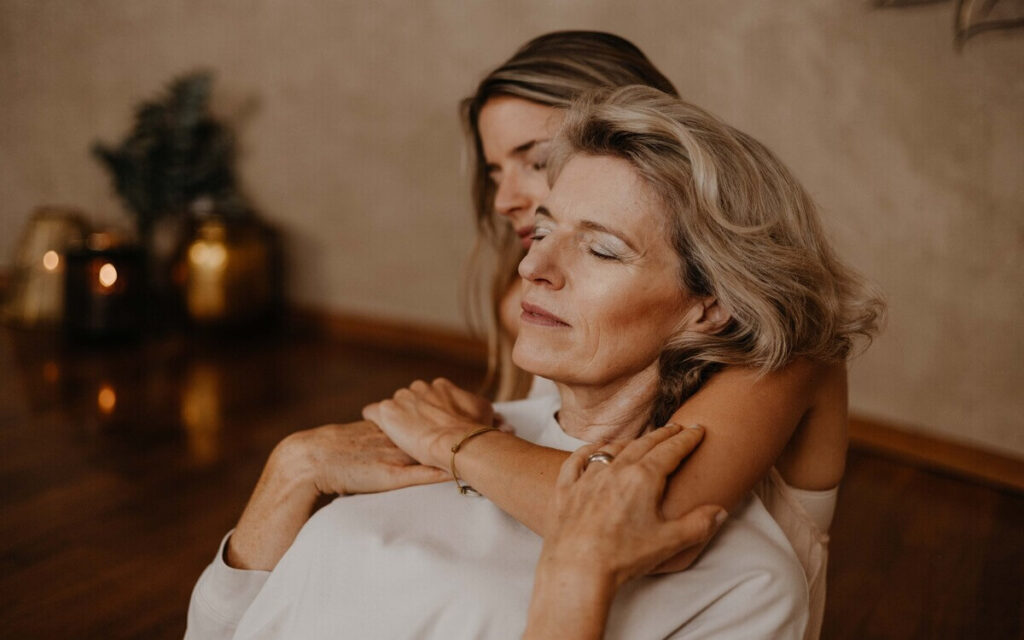
Perimenopause begins for most women between 40 and 45, sometimes as early as the late 30s. Declining estrogen co-regulates collagen formation, moisture, and elasticity of the skin. Specialist literature on menopausal skin (9) quantifies collagen loss at around 30% in the first five years thereafter; the skin becomes thinner and less firm.

“Many women experience menopause as a break. I see it as an invitation to find one’s own rhythm anew. Those who take good care of themselves now will feel it for the next twenty years.”
Elisabeth Naschberger-Mauracher, European Ayurveda® expert & Managing Director of the European Ayurveda Resort Sonnhof in Tyrol
In Ayurveda, this phase is considered a transition from Pitta to Vata, with typical dryness of the skin and mucous membranes. Warming, oily foods and regular oil massages balance this; further tips can be found under Ayurveda during menopause.
How can skin aging be slowed down?
The most effective protection is surprisingly unspectacular: daily sun protection. In a study of 298 women between 30 and 78 years old (10), UV radiation accounted for around 80% of the visible signs of aging on the face. Pigment spots were strongly related to the sun, while sagging contours were more related to chronological age.
For your daily routine, this means: sun protection in the morning, and in the evening, care that strengthens your skin barrier. Added to this are not smoking, sufficient sleep, and a low-AGE diet. Further Ayurvedic care tips can be found in the article Improving skin appearance.
In the case of pronounced pigmentation disorders or severe light damage, dermatological treatment may be useful. It is best to clarify this in a dermatological practice.
How does European Ayurveda® support slower aging?
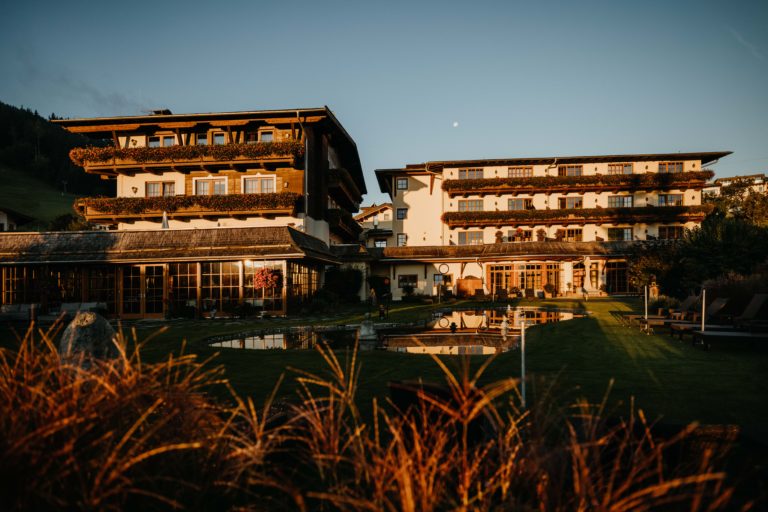
European Ayurveda® does not understand longevity as a fight against wrinkles, but as an inner order that shows on the outside. At the European Ayurveda Resort Sonnhof, we combine 5,000-year-old Ayurvedic knowledge with modern medicine and aging research.
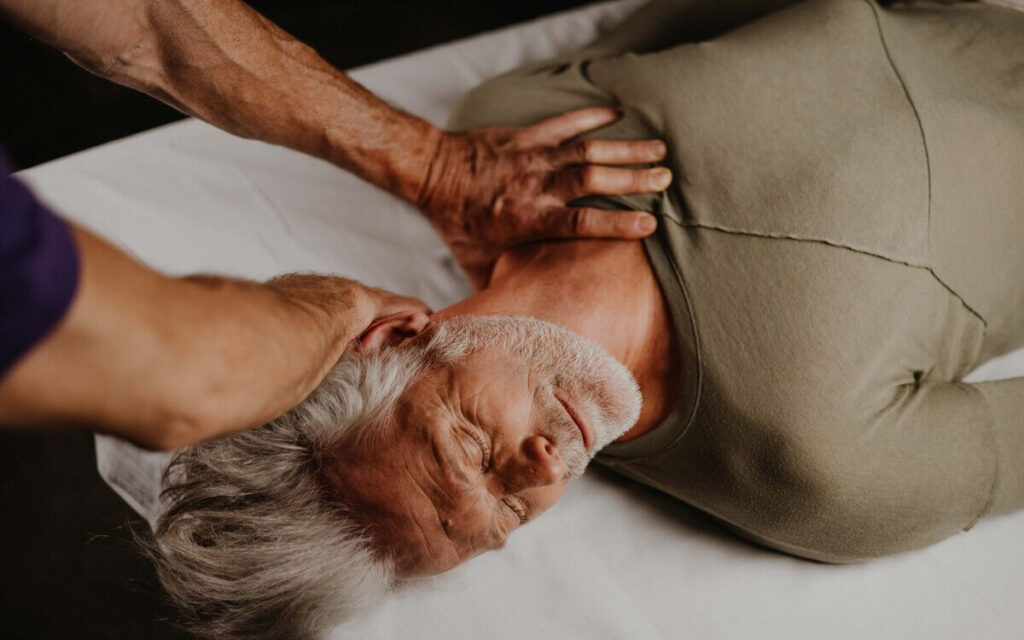
For healthy aging, Ayurveda has its own specialized field: Rasayana, the science of rejuvenation. Rasayanas are herbal preparations intended to build Ojas, protect cells, and strengthen the immune system. A classic for home use is Chyavanprash, a herbal fruit jam with Amla berry; you can learn more about this under Ojas in Ayurveda.
It is remarkable how many Ayurvedic principles coincide with the key factors identified by research:
| Finding of aging research | Approach in European Ayurveda® |
| Autophagy needs breaks from eating | Fixed meals, light evening cuisine, detox elements |
| Diverse gut microbiome | Strengthening of Agni, plant-based cuisine with ingredients from our own Lindhof farm |
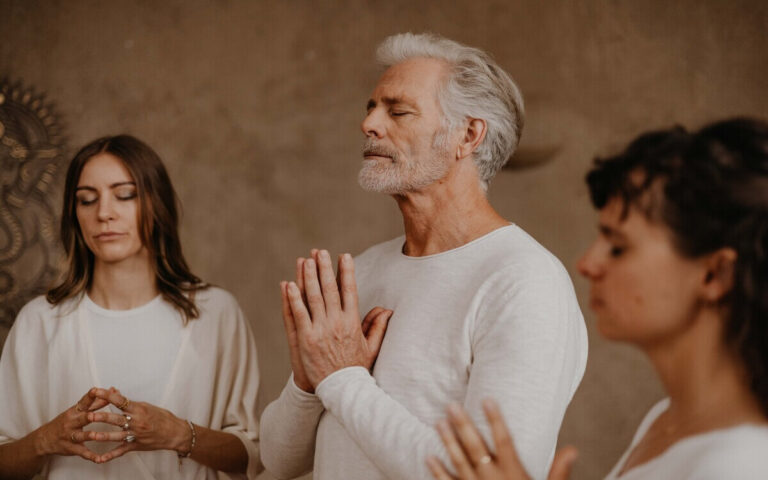
| Stress shortens telomeres | Meditation, yoga, breathing exercises, emotional support |
| Sleep as repair time | Evening rituals, oil applications, Sleep Well line |
| AGEs from hot, dry preparation | Gently cooked, freshly prepared meals |
| People age at different rates | Pulse diagnosis and Dosha-appropriate therapy plans |
Ayurvedic physician Gaurav Sharma, a specialist in Rasayana medicine, relies on Abhyanga, Shirodhara, and Udvartana, among other things. Together with our expert team, he creates your individual therapy plan after a pulse diagnosis.
Specifically aimed at cellular health and regeneration are our Balance & Longevity Retreats, from the gentle Rasayana Retreat to the intensive Longevity Retreat. If you want to deep clean first, a Panchakarma Retreat is the classic start. Our Retreat Finder will show you which retreat fits your life phase in just a few questions.
Why do some people not age? The honest answer: they do age, just more slowly because genes and everyday life play into their hands. You can help shape your everyday life starting today, and that is exactly where the real opportunity lies.
FAQ: Frequently asked questions about the aging process
Can the aging process be reversed?
According to current knowledge, the aging process cannot be completely reversed. However, individual measurements of biological age can be improved, for example, the epigenetic rate of aging through moderate calorie restriction.
At what age do you age the fastest?
At the molecular level, studies show two bursts: around the age of 44 and 60. For women, menopause is added, in the first five years of which the skin loses about 30% of its collagen.
Which foods slow down aging?
Vegetables, legumes, whole grains, fruit, and nuts best support the gut and cells. Preparation is equally important: steamed and stewed foods contain significantly fewer AGEs than grilled or deep-fried foods.
What accelerates the aging process the most?
Smoking, unprotected sun, lack of exercise, obesity, excessive alcohol, chronic stress, and poor sleep. UV radiation alone causes around 80% of visible facial skin aging.
When should you start with prevention?
Ideally as early as your mid-20s, as measurable differences in aging already appear between the ages of 26 and 38. However, sun protection, exercise, and good sleep are worthwhile at any age, even at 60 or 70.
Does Metformin help against aging?
This has not yet been proven in humans. Metformin extends the life of mice; a large study in humans with around 3,000 participants is planned. You should not take it as an anti-aging agent without a medical indication.
Which retreat does the Sonnhof recommend to slow down aging?
The European Ayurveda Resort Sonnhof recommends the Balance & Longevity Retreats, i.e., the Rasayana Retreats or the more intensive Longevity Retreat. The Panchakarma Retreat is suitable as a deep cleansing beforehand; the Retreat Finder will show you the appropriate variant.
Sources
- Belsky, D. W., Caspi, A., Houts, R., Cohen, H. J., Corcoran, D. L., Danese, A., Harrington, H., Israel, S., Levine, M. E., Schaefer, J. D., Sugden, K., Williams, B., Yashin, A. I., Poulton, R., & Moffitt, T. E. (2015). Quantification of biological aging in young adults. Proceedings of the National Academy of Sciences, 112(30), E4104–E4110. https://doi.org/10.1073/pnas.1506264112
- Max Planck Institute for Biology of Ageing. (2026, February). Do our genes determine how old we get? https://www.age.mpg.de/bestimmen-unsere-gene-wie-alt-wir-werden
- Max Planck Institute for Biology of Ageing. (n.d.). Can aging be slowed down? https://www.age.mpg.de/laesst-sich-das-altern-bremsen
- Waziry, R., Ryan, C. P., Corcoran, D. L., Huffman, K. M., Kobor, M. S., Kothari, M., Graf, G. H., Kraus, V. B., Kraus, W. E., Lin, D. T. S., Pieper, C. F., Ramaker, M. E., Bhapkar, M., Das, S. K., Ravussin, E., Redman, L. M., Roberts, S. B., Racette, S. B., & Belsky, D. W. (2023). Effect of long-term caloric restriction on DNA methylation measures of biological aging in healthy adults from the CALERIE trial. Nature Aging, 3, 248–257. https://www.nature.com/articles/s43587-022-00357-y
- Li, Y., Pan, A., Wang, D. D., Liu, X., Dhana, K., Franco, O. H., Kaptoge, S., Di Angelantonio, E., Stampfer, M., Willett, W. C., & Hu, F. B. (2018). Impact of healthy lifestyle factors on life expectancies in the US population. Circulation, 138(4), 345–355. https://doi.org/10.1161/CIRCULATIONAHA.117.032047
- Uribarri, J., Woodruff, S., Goodman, S., Cai, W., Chen, X., Pyzik, R., Yong, A., Striker, G. E., & Vlassara, H. (2010). Advanced glycation end products in foods and a practical guide to their reduction in the diet. Journal of the American Dietetic Association, 110(6), 911–916.e12. https://pubmed.ncbi.nlm.nih.gov/20497781/
- Epel, E. S., Blackburn, E. H., Lin, J., Dhabhar, F. S., Adler, N. E., Morrow, J. D., & Cawthon, R. M. (2004). Accelerated telomere shortening in response to life stress. Proceedings of the National Academy of Sciences, 101(49), 17312–17315. https://pubmed.ncbi.nlm.nih.gov/15574496/
- Statistics Austria. (2026). Birth balance 2025: Preliminary results of natural population movement [Press release]. https://www.statistik.at/fileadmin/announcement/2026/02/20260225Geburtenbilanz2025.pdf
- Apotheken Umschau. (n.d.). Do estrogen-containing creams slow down skin aging during menopause? https://www.apotheken-umschau.de/mein-koerper/haut-und-haare/haut-in-den-wechseljahren-wie-gut-helfen-oestrogen-cremes-1135493.html
- Flament, F., Bazin, R., Laquieze, S., Rubert, V., Simonpietri, E., & Piot, B. (2013). Effect of the sun on visible clinical signs of aging in Caucasian skin. Clinical, Cosmetic and Investigational Dermatology, 6, 221–232. https://pubmed.ncbi.nlm.nih.gov/24101874/