last updated on 05/08/2026
The desire to live a healthier life for longer is leading more and more people to take a close look at longevity supplements. Capsules, powders, and drops promise longer telomeres, more cellular energy, and slowed aging. But what is the reality—and which supplements are actually worth it?
Key Takeaways: Longevity Supplements in Ayurveda
- Longevity supplements can be useful, but no single preparation can replace a healthy lifestyle.
- Only a few substances are backed by robust human studies: Vitamin D, Omega-3, magnesium, and ashwagandha are among the best-researched.
- Dietary supplementation should always be based on a proven deficiency and is best conducted under medical supervision.
- In Ayurveda, many of these active ingredients have been used for millennia—an approach that holistically considers the body, mind, and individuality.
Read more on this topic:
- Longevity Nutrition: How Food Affects Your Aging
- Longevity: 10 Tips for Aging Healthily
- Longevity in European Ayurveda®: 4 Strategies
- Holistic Health with European Ayurveda®
- Epigenetics & Ayurveda: How You Influence Your Genes
What Are Longevity Supplements?
Longevity supplements are dietary supplements specifically designed to slow down aging processes. This also involves extending the so-called healthspan—the number of years spent in good health.

In Ayurveda, so-called Rasayanas—rejuvenating, vitalizing herbal preparations—have been used for thousands of years. They are intended to keep the body and mind in balance and promote a long, healthy life. Many of today’s hyped longevity ingredients, such as ashwagandha or turmeric, have their roots in exactly this tradition.
What modern research is increasingly confirming today: some of these supplements can actually influence cellular mechanisms, such as inflammatory processes, oxidative stress, or mitochondrial function.

“Longevity supplements can provide useful support, but true longevity never results from a single preparation. The decisive factor is always the interplay of lifestyle, individual guidance, and specifically selected active ingredients.”
Gaurav Sharma, Ayurveda specialist at the European Ayurveda Resort Sonnhof in Tyrol
Which Longevity Supplements Are Truly Effective?
A look at the research shows that some positive effects of dietary supplements are indeed well-documented, at least regarding long-term health and the prevention of age-related diseases.
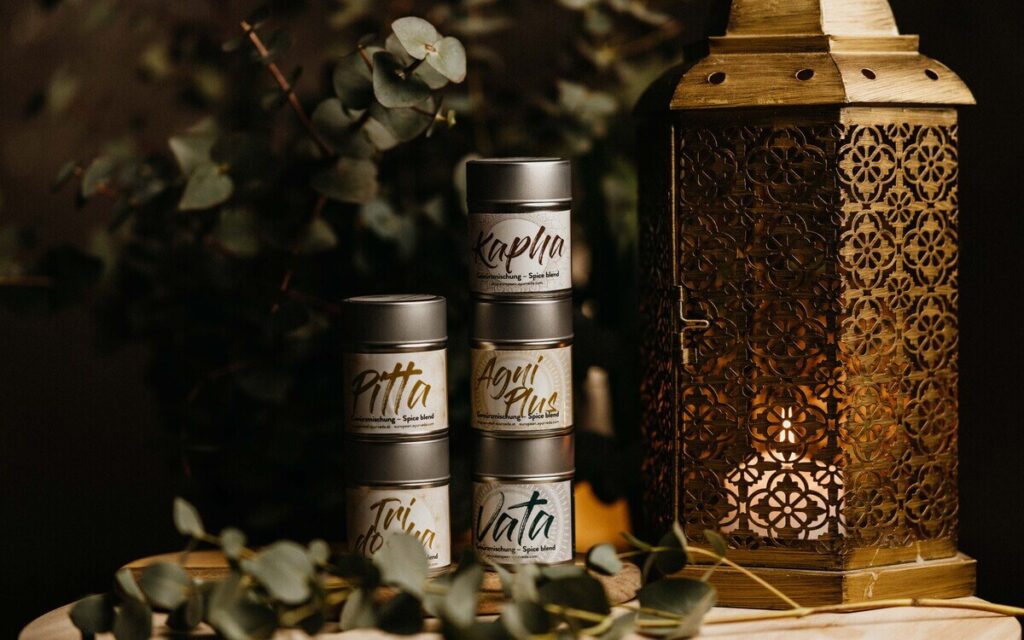
Attention:
Please note: You should only take dietary supplements after consulting with your doctor. The information provided in this article is purely for educational purposes and does not constitute a substitute for medical advice! Taking the recommended dietary supplements is at your own discretion.
Turmeric (Curcumin): Anti-inflammatory and Cell-protecting
Curcumin, the active ingredient in turmeric root, possesses strong antioxidant and anti-inflammatory properties. Present in Ayurvedic cuisine and medicine for centuries, it is now increasingly becoming a focus of longevity research (1). Important to know: Curcumin is poorly absorbed by the body—combining it with black pepper (piperine) significantly improves bioavailability.
Ashwagandha: The Ayurvedic Adaptogen
Ashwagandha is one of the most well-known Ayurvedic medicinal plants. As an adaptogen, it helps the body regulate stress, promotes sleep quality, and supports cognitive function. Current scientific studies provide initial evidence that ashwagandha can influence telomerase activity and DNA protection (2).
Vitamin D: The Sunshine Vitamin for Strong Bones
Especially in the winter months, many people suffer from a vitamin D deficiency, which affects bones, the immune system, and muscle strength, among other things. Studies suggest that balanced vitamin D levels are associated with a significantly reduced overall mortality rate (3).
Omega-3 Fatty Acids: Anti-inflammatory and Heart-protecting
Omega-3 fatty acids are essential because the body cannot produce them itself. They have anti-inflammatory effects, support heart health, and, according to studies, improve cellular protein function (4). Those who eat little fatty sea fish benefit from regular supplementation with high-quality fish oil or a plant-based alternative derived from algae.
Magnesium: Good for the Muscles
Magnesium is involved in over 300 enzymatic processes. Studies show that a magnesium deficiency—which is widespread in the population—can delay age-related diseases (5). As a longevity supplement, magnesium is one of the few active ingredients that have proven to be potentially life-extending in human studies.
Ayurveda and Longevity—A Holistic Approach
What modern longevity science is currently rediscovering has been known in Ayurveda for more than 5,000 years: longevity does not come from a single supplement, but through the interplay of nutrition, exercise, sleep, mindset, and supportive herbs.

In Ayurveda, the focus is on the individual constitution. Which herbal preparation or supplement is right for you depends on your Dosha, your current imbalance, and your stage of life.
General recommendations fundamentally contradict this basic principle. The European Ayurveda Resort Sonnhof offers exactly this personalized approach with its Longevity Retreat. Ayurvedic doctors analyze your individual constitution and develop an optimal plan including targeted herbal therapies, nutritional, and lifestyle recommendations.
What You Should Consider with Longevity Supplements
Before you buy a longevity supplement, it is worth considering a few fundamental points:
- Have blood levels tested: Have relevant levels such as Vitamin D, magnesium, and Omega-3 measured. Targeted supplementation for a proven deficiency is always more effective than random supplementation.
- Quality is key: Look for tested quality, transparent composition, and high bioavailability—the formulation plays a decisive role, especially with curcumin and Omega-3.
- Less is more: Individual, well-selected substances often work better than an uncoordinated supplement stack. Taking dozens of preparations daily does not necessarily provide more benefit.
- Involve a doctor or therapist: Professional guidance is recommended, especially in the field of longevity—whether through a primary care physician, internist, or an Ayurvedic doctor.
- Lifestyle comes first: Studies show that a healthy diet, sufficient sleep, exercise, and stress management have the greatest impact on longevity. Supplements are a building block—but not the foundation.
Longevity supplements can be a useful part of your health concept. It is important that they are used purposefully, with a focus on quality, and in the context of a healthy lifestyle.
FAQ: Frequently Asked Questions About Longevity Supplements
What are longevity supplements?
Longevity supplements are dietary supplements specifically designed to slow down aging processes and extend the healthspan. The most well-known active ingredients include Vitamin D, Omega-3, magnesium, NMN, resveratrol, ashwagandha, and curcumin.
Which longevity supplements are effective?
The effects of Vitamin D, Omega-3 fatty acids, magnesium, and Vitamin B12 are best supported by human studies. Ashwagandha and curcumin are considered promising. For NMN, resveratrol, and spermidine, the human study situation is still thin—research is ongoing.
Which dietary supplements should you take daily?
This depends on your individual blood levels and your lifestyle. Especially in Central Europe, Vitamin D is useful for many in winter, as is Omega-3 if you eat little fish. It is best to have your levels measured before taking supplements daily.
How many longevity supplements should you take?
Less is often more. Instead of uncoordinated supplement intake, experts recommend responding specifically to proven deficiencies. A medically supervised analysis—e.g., as part of an Ayurveda retreat—helps identify the substances that are truly useful for you.
Are longevity supplements suitable for everyone?
Not every supplement is equally useful or tolerable for every person. Pregnant women, individuals with pre-existing conditions, or people taking medication should definitely seek medical advice before taking them.
Which longevity supplements does Sonnhof recommend?
In Ayurveda, different herbs and Rasayanas are recommended depending on the individual constitution type (Dosha). Classics include ashwagandha, turmeric, amla (Indian gooseberry), and brahmi. At the European Ayurveda Resort Sonnhof, appropriate herbal therapies are individually tailored to you as part of the Longevity Retreat.
Can supplements replace a healthy lifestyle?
No. Research and Ayurveda agree: sleep, nutrition, exercise, and stress reduction are the strongest longevity levers. Supplements can meaningfully complement this lifestyle—but never replace it.
Sources
(1) Curcumin: Al-Sharif, M., et al. (2025). Curcumin as a natural therapeutic agent: A rapid review of potential clinical uses and mechanisms of action. PMC12297037. https://www.ncbi.nlm.nih.gov/pmc/articles/PMC12297037/
(2) Ashwagandha: Raguraman, V., & Subramaniam, J. R. (2016). Withania somnifera root extract enhances telomerase activity in the human HeLa cell line. Advances in Bioscience and Biotechnology, 7(4), 199–204. https://www.researchgate.net/publication/301295944
(3) Barbarawi et al. (2019): “Vitamin D Supplementation and Cardiovascular Disease Risks in More Than 83,000 Individuals in 21 Randomized Clinical Trials” – JAMA Cardiology
(4) Omega-3 / cellular protein function: Tavares Ribeiro, P., et al. (2024). Omega-3 in reducing disease and increasing longevity: A literature review. Research, Society and Development, 13(3). https://rsdjournal.org/rsd/article/view/45408
(5) Magnesium: Veronese, N., et al. (2024). Magnesium and the hallmarks of aging. Nutrients, PMC10892939. https://www.ncbi.nlm.nih.gov/pmc/articles/PMC10892939/