Rheumatism encompasses many different clinical pictures that require different treatment approaches. However, these joint diseases have one thing in common: pain during movement. Instead of drug-based treatments, Ayurveda for rheumatism focuses on a holistic treatment approach.
At a Glance: Treating Rheumatism with Ayurveda
Rheumatism is a collective term for various chronic complaints of the musculoskeletal system. The cause is usually the painful wear and tear of the joint cartilage, which is primarily caused by excessive metabolic residues in your body.
Osteoarthritis is one possible clinical manifestation of rheumatism, involving age-related degradation of joint cartilage. In Ayurveda, the condition is treated holistically, with a primary focus on your lifestyle.
Ayurveda for Rheumatism: Causes and Symptoms
Joint complaints are an increasing problem in modern society. Ayurveda described the signs, symptoms, and treatment options years ago. In Ayurvedic teachings, rheumatoid arthritis is classified as a Vata disorder.

“Rheumatic complaints require a treatment that looks beyond just the symptom. Ayurveda relies on a holistic approach to relieve pain and support mobility.”
Dr. Alaettin Sinop, Specialist in General Medicine focusing on Naturopathic Treatments
Causes of Rheumatism According to Ayurvedic Teachings
According to the Ayurvedic view, rheumatism is caused by excessive metabolic residues (Ama) and increased Vata in the body. Ama develops over a long period and is promoted by the wrong diet at the wrong time.
For example, consuming a heavy, hard-to-digest meal in the evening is not recommended. This is because the digestive fire (Agni) decreases in the evening, causing Ama to settle in the body and clog the body’s channels.
Ama is produced in your body on two levels:
- Local Ama, which is normally produced in the gastrointestinal tract
- Systemic Ama, which is also found at systemic levels
If Vata is also increased in your body, Vata-Ama is formed. Rheumatic complaints can then increase significantly. As soon as Vata-Ama also combines with Kapha, the disease spreads into the bone tissue.
Vata is responsible for the bioenergy within you and stands for lightness, movement, and imagination. The Dosha increases when you permanently overextend yourself, get too little sleep, and experience a lot of stress. The resulting poor sleep, restlessness, and nervousness ensure that Vata increases.
A first step toward healing is therefore a corresponding adjustment of diet and lifestyle according to your individual constitution.

Ayurveda Types Overview: Determine your Ayurveda type with our Dosha test
The determination of the Doshas represents a central area of Ayurvedic healing and life sciences. The interaction of the physical and psychological levels of each person is unique and incomparable.
Symptoms of Rheumatoid Arthritis
The symptoms of rheumatism can vary. However, the disease usually manifests through stiffness and persistent pain. Typical symptoms of rheumatoid arthritis include:
- Painful, swollen, or stiff limbs
- The affected joints are impacted symmetrically on both sides of the body (especially hands, wrists, elbows, shoulders, and feet)
- Stiffness in the morning or after long periods of sleeping/sitting
- Appearance of nodules at the body’s pressure points (e.g., elbows or finger joints)
- General feeling of illness and exhaustion, possibly also moderate fever as well as lack of appetite and weight loss
5 Tips Against Rheumatism with Ayurveda
In Ayurveda, every joint, every cartilage, and every tissue is considered alive. And where there is life, change is also possible. Below you will find 5 tips from Ayurveda that help against rheumatic complaints.

Tip #1: Undergo a treatment program for rheumatism
An important step for the treatment of rheumatism is an Ayurvedic cleansing cure. With this, you can eliminate long-standing metabolic waste and toxins from your body. A Panchakarma cure can work wonders for rheumatism.
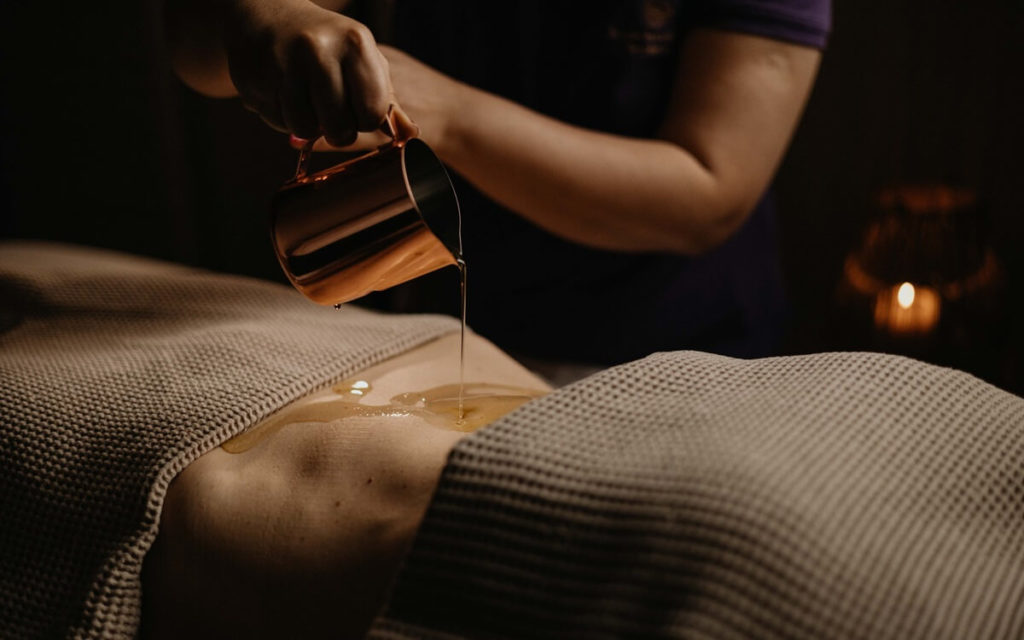
External applications with herbal stamp massages, Marma massages, and deep internal cleansings ensure the elimination of toxins. Aroma oils and massages with herbal preparations further assist in the regeneration of your body.
With the Panchakarma cure, Agni is first strengthened in order to subsequently be able to eliminate Ama. Unlike conventional medicine, Ayurveda takes the connection between diet and lifestyle into account. According to this view, an imbalance can be brought back into balance.
This requires no pharmaceuticals, nor are there any unwanted side effects. Your Ayurveda expert will create a nutrition plan tailored individually to you. This strengthens Agni again, allowing the digestive fire to fully perform its task.
Tip #2: Adjust your lifestyle
To strengthen and stimulate Agni, a healthy lifestyle is important – just as much as an adapted Ayurvedic diet. This includes sufficient sleep, abstaining from nicotine and alcohol, regular meals, and the avoidance of stress.
Avoiding sleeping during the day and staying awake at night also leads to an improvement in your rheumatic condition. Yoga, meditation, and targeted breathing exercises also take the speed out of your everyday life.
Furthermore, appropriate and regular movement of the joints is important for promoting blood circulation. This also increases synovial fluid and stabilizes the muscles.
Tip #3: Optimize your nutritional style
To achieve a long-term improvement in your health, a Dosha-appropriate diet is crucial. For the treatment of rheumatism, a change in eating habits is almost unavoidable.

Easily digestible dishes made from fresh and seasonal products are good for promoting Agni. You should also avoid certain food combinations so as not to make the work of your digestive fire more difficult.

Discover high-quality Ayurveda food in our online shop now
Nutrition according to the Ayurvedic principle balances the three Doshas – Vata, Pitta, and Kapha. Bring your body back into harmony with our food products. We have a wide selection of porridge, crispbread tailored to your Dosha, and other Ayurvedic foods in our online shop for you.
Tip #4: Ayurvedic herbal preparations
There are special Ayurvedic herbs derived from a variety of different medicinal plants. They can be administered both internally and externally and support your holistic health.
The effect of the herbs is based on taste, properties, and specific behaviors. The treatment principle includes both the soothing of Ama and the elimination of the damage caused.
Tip #5: Consider your own psyche
Important for holistic treatment is also the inclusion of your psychological state. For this, you must look honestly within yourself and determine in which areas of life you feel burdened.
The symptoms of a disease are your body’s way of telling you something. It is all the more important that you listen carefully. See the illness as an opportunity to change your life in a positive way.
Relaxation exercises, massages, and meditation help relieve your psyche. Accompanying psychotherapy for the treatment of physical symptoms also proves to be helpful.

Longevity: Factors and Practical Tips for Healthy Aging
To age healthily, you should start early to keep your body and mind fit with a conscious lifestyle. This article shows you what to look out for regarding the topic of ‘Longevity’.