Tulsi, or Indian basil, is a plant valued in Ayurveda for its balancing and healing effects. Whether as a fragrant essence or a soothing tea—this herb benefits everyone and brings peace, clarity, and warmth. If you frequently struggle with stress-related symptoms or cold symptoms in your daily life, this plant is perfect for you. Discover exactly how Tulsi works and the best way to take it here.
The Essentials at a Glance: What Exactly Is Tulsi?
The plant known as Tulsi is primarily found in Southeast and Southwest Asia. It belongs to the basil genus and is therefore also called Indian basil, king basil, or holy basil.
In India, the herb is held in very high regard and is frequently used in spiritual ceremonies. According to legend, the Hindu goddess Tulsi is said to have entered the plant to heal and protect people.
The name Tulsi ultimately translates to “the incomparable one.” As you can see, this spiritual herb is something truly special.
In Ayurveda, this medicinal plant is also very important, as it is attributed with life-prolonging and calming effects. It is considered a Rasayana, a herbal substance intended to promote longevity. But why is that exactly?
The Effects of Tulsi: For Calming the Doshas
In Ayurvedic medicine, Tulsi is used to balance the three Doshas. Especially for stress-related complaints, Indian basil helps to release blockages and normalize blood pressure and blood sugar levels.
Since it slightly increases the Pitta Dosha, the herb is particularly used for Vata and Kapha conditions.
Soothes the Vata Dosha: Stress-Reducing and Clarifying
The inability to adapt to stress is associated with a high Vata Dosha. Tulsi dampens elevated Vata and thereby all physical complaints related to stress, such as high blood pressure, stomach cramps, bloating, and digestive issues.
The plant contains powerful antioxidants such as phenols and flavonoids, as well as soothing essential oils. This helps the body learn to cope better with stress.

As an adaptogen, Indian basil also works against mental stress. In turbulent times, it can happen that we feel tense and scattered.
The herb harmonizes and dissolves anxiety, helping us find our way back to ourselves. It soothes a restless mind and restores clarity.
It is also particularly good for memory performance and retention. Free your body and mind from stress with this wonderful basil!

“Tulsi is valued in Ayurveda not only for its versatility but also for its balancing power. As a medicinal plant, it can support well-being in a special way.”
Gaurav Sharma, Ayurveda Specialist at the European Ayurveda Resort Sonnhof in Tyrol
For Kapha Imbalances: Against Colds and Inflammation
Basil can also bring healing for Kapha-related conditions. It has antibacterial and anti-inflammatory effects and therefore works well as a home remedy for colds, coughs, or fever. The airways become clearer, allowing for easier breathing.
The plant is also an excellent Ayurvedic oral care product and can help with inflammation of the gums or the mouth area. As a rinse, it brings pleasant freshness and is good for oral health. Elevated Kapha is thus no longer a problem.
Tulsi Effects on Sleep Problems
The calming effect of Indian basil can also promote restful sleep. If Tulsi tea is taken in the evening before bedtime, the time it takes to fall asleep can be significantly reduced and sleep quality improved.
Discover our European Ayurveda® teas now
Ayurvedic tea is an integral part of Indian healing wisdom. You can use it to cleanse, heal, and stimulate your body—or simply relax with a cup of tea. With us, you will find selected Ayurveda teas of various types in the best quality.
How to Take Tulsi Correctly
To benefit from the effects of Indian basil, the healing leaves of the Tulsi plant are used.
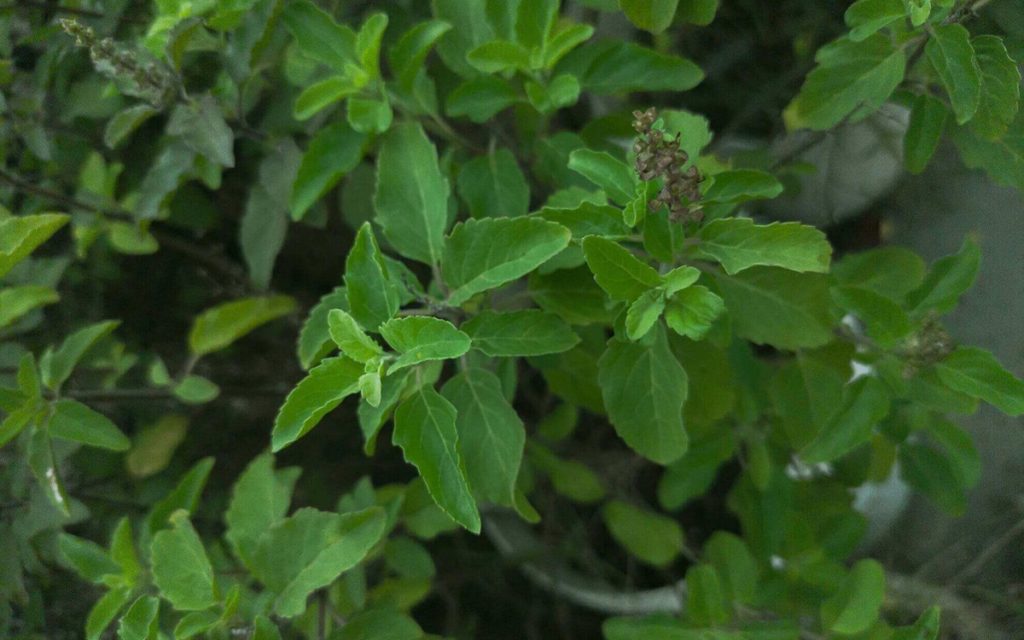
There are different forms of intake:
- As a tea: To bring the Doshas back into harmony, the herb is consumed in the form of a cleansing tea.
- As an essential oil: As an essential oil, basil is particularly helpful when it comes to calming the nerves and soothing the mind.
- Tulsi leaves for dishes: Tulsi leaves can be added to salads or other dishes and work well for digestion and against bloating. But note: The leaves should not be cooked with the food.
- Chewing leaves: Even chewing the raw leaves of the plant can be effective. Indian basil is considered a miracle cure for cracked corners of the mouth and bleeding gums. Those suffering from an irritable cough or a feeling of fullness can also chew on the leaves.
An Ayurvedic insider tip for the morning routine is, by the way, to take 5 leaves with a little water in the morning on an empty stomach. This is said to improve brain and memory performance.
The easiest and most effective way is certainly to start by enjoying Tulsi as a tea. Therefore, we will now show you how to treat yourself to a break with this hot beverage.
Attention:
You should only take dietary supplements after consultation with your doctor. The information provided in this post is purely for educational purposes and does not constitute a substitute for medical advice! The intake of recommended dietary supplements is at your own discretion.
Tulsi Tea: Effects and Preparation
Indian basil is most commonly taken in the form of tea. Tulsi tea is highly valued not only for its effects but also for its pleasant taste. It has a sweet, lemony note, but at the same time tastes slightly peppery.
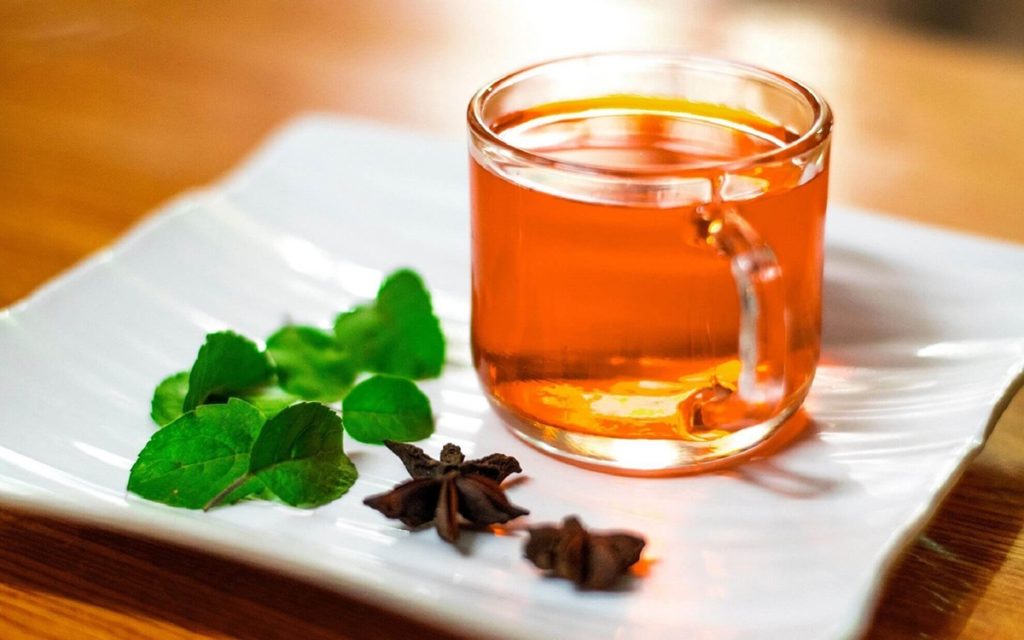
If you suffer from digestive problems, stress, or a weak immune system, the drink has a particularly soothing effect. The tea is also recommended for colds or high blood pressure.
For the Tulsi tea to be effective, you should drink 1–2 cups daily over a period of six weeks.
Ready-made tea blends are available in stores. However, if you want to do something especially good for yourself, get the Tulsi leaves and prepare the tea yourself. It’s very simple and can be expanded as desired!
Preparing Tulsi Tea
For a nice cup of Tulsi tea, you initially need nothing more than:
- 1 tsp Tulsi herb
- 200 ml water
Place the herb in a cup and bring the water to a boil. Pour the water over the herb and then let the tea steep for about 6–10 minutes. That’s all there is to it!
Of course, you can also spice up the tea. Add about ½ tsp of turmeric and 1 tsp of ginger to make the tea even spicier and tastier!
Tulsi Tea: How Often Should You Drink It?
As with most things, the right dose is key here as well. It is recommended to take the tea over a period of no more than six weeks. During this time, women can drink about 1-2 cups a day.

Why only women? Well, men are advised not to drink the tea every day, as it may inhibit sperm production in them and can lead to constipation.
But beware: The tea should under no circumstances be drunk during pregnancy and breastfeeding! However, if you stick to the recommended dose and avoid the tea during pregnancy, nothing stands in the way of enjoying this stimulating hot beverage!
Tulsi Tea: Special Tips for Every Dosha Type
If you specifically want to curb a certain Dosha, we have a few more tips here to make the tea even more effective.
Dampening Kapha
For cold symptoms caused by excess Kapha, you are welcome to add a little honey to your tea. Alternatively, a bit of Original Ayurveda Ghee can also be stirred in.
Balancing Vata
If you desire a clearer mind or suffer from stress-related digestive problems, you should dampen your Vata Dosha. In this case, add some ginger, fennel, and cardamom to the tea and drink it with meals.
For Pitta Types
We advise you to consume Tulsi tea after meals and before going to bed. Especially for depressive moods and anxiety, the tea is recommended as an evening drink, as it allows you to settle down pleasantly and thus brings a restful sleep.
Tulsi Oil for a Clear Mind and Strengthening Defenses
Due to its essential fragrances, the plant is occasionally used as a pleasant aromatic oil. However, a small dose is absolutely sufficient.
Simply add one drop of Tulsi oil to about 50 ml of carrier oil and enjoy the comforting scent. The mixture strengthens the immune system and is good support for infections.
Especially during or after work, the balancing scent can also provide more concentration and focused energy. It allows for deep breathing again and soothes strained nerves. Thus, the oil ensures that the mind becomes more focused and work becomes easier.
If you notice an increased Kapha or Vata Dosha and long for more balance for body and mind, this herb is the ideal solution for you.
It brings the Doshas back into equilibrium and thus helps you find the right balance again. Try it out and treat yourself to a soothing Tulsi tea!
Tulsi: Side Effects and Possible Risks
Like all dietary supplements, Tulsi can have a laxative effect or cause stomach discomfort if consumed in excess.
Pregnant women, breastfeeding women, or people with pre-existing conditions should definitely consult a doctor before taking Tulsi.
Furthermore, due to a lack of studies, it cannot be ruled out that the dietary supplement may cause interactions with medications (especially those for type 2 diabetes, hypothyroidism, or directly after surgery).
If you have pre-existing conditions or take medication, you should therefore urgently clarify the intake of Tulsi with your doctor.

How can I regulate my nervous system? 4 tips from European Ayurveda®
An overstimulated nervous system is among the most common causes of chronic complaints. Irritable bowel syndrome, exhaustion, hormonal imbalances, insomnia, or migraines are frequent consequences. We show you how you can regulate your nervous system with European Ayurveda and return to Vata balance.
Cover image: © Dragonite_East – istockphoto.com (File No.: 8999069161337573242)
Sources
(1) Yadav, S. P. et al. (2024). Health and therapeutic uses of Tulsi (Holy Basil). Octa Journal of Environmental Research 12(1), 4-15. http://www.sciencebeingjournal.com/sites/default/files/02%2020240206_1201_PP02.pdf.
(2) Mandal, A.K., Poudel, M., Neupane, N.P., Verma, A. (2022). Phytochemistry, Pharmacology, and Applications of Ocimum sanctum (Tulsi). In: Masoodi, M.H., Rehman, M.U. (eds) Edible Plants in Health and Diseases. Springer, Singapore. https://doi.org/10.1007/978-981-16-4959-2_4.
(3) Parveen, A. et al. (2023). Tulsi. In: Zia-Ul-Haq, M. et al. (eds) Essentials of Medicinal and Aromatic Crops. Springer, Cham. https://doi.org/10.1007/978-3-031-35403-8_38.
(4) Thakur, S. et al. (2021). Tulsi – A Review Based Upon Its Ayurvedic and Modern Therapeutic Uses. International Journal of Research and Review 8(5), 263-272. https://doi.org/10.52403/ijrr.20210534.