Ayurvedic teachings assume that physical and mental ailments arise from an imbalance. The three doshas, which significantly influence mental balance, form the basis for individual healing approaches and treatments. You can learn how the Indian healing art works in harmony with body and mind in this article.
What exactly is Ayurveda?
The word “Ayurveda,” originating from Sanskrit, is composed of “Ayus” for life or long lifespan and “Veda” for knowledge or science. The term can therefore be translated as the “Science of (Long) Life.”
As a healing art, Ayurveda has existed for millennia as a health system of the ancient Indian Vedic high culture. It is therefore one of the oldest existing healing arts in the world and is also recognized as traditional medicine by the WHO.
Ayurveda as a Holistic Health Philosophy
The word part “Veda” describes the comprehensive teaching that views humans, nature, and the cosmos as a whole. The holistic health philosophy thus encompasses life as a whole and unites physical, psychological, mental, and spiritual aspects. The goal is balance between body, mind, and soul.
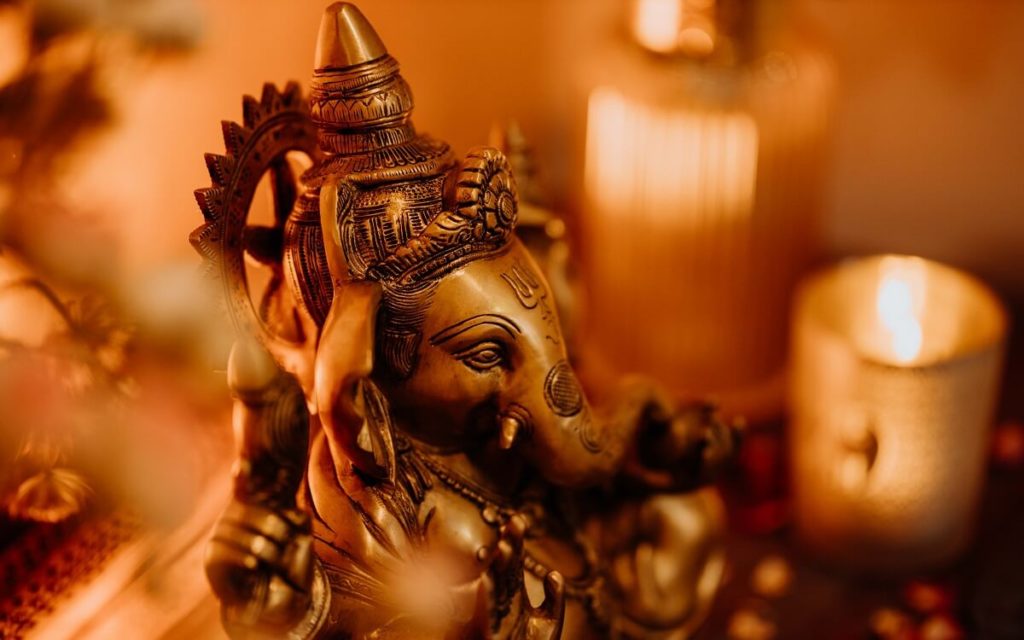
Only a person in balance can sustainably prevent illnesses and, if necessary, heal with Ayurveda. When choosing your treatment, the Ayurveda experts consider central aspects of your life. These include your consciousness, your diet and exercise, and any current medications.

“Ayurveda is far more than a health concept – it is a holistic knowledge of life. Its strength lies in always considering the person in their entirety.”
Elisabeth Naschberger-Mauracher, European Ayurveda Expert & Managing Director of the European Ayurveda Resort Sonnhof in Tyrol
What does Ayurveda help with?
Ayurveda can prevent illnesses and alleviate existing complaints by activating the body’s self-healing powers. Ayurvedic treatments are particularly well-suited for reducing stress and regaining balance.
For example, Ayurveda can alleviate symptoms of osteoarthritis, or you can reduce excess weight with an Ayurvedic diet. Skin conditions, joint problems, back pain, digestive disorders, migraines, and sleep disturbances can also be treated with Ayurveda. It can help bring the body and mind back into balance.
The Three Constitutional Types in Ayurveda
A crucial role in creating your Ayurveda cure is played by your doshas, which represent your “fundamental functional principle.” According to Ayurvedic teachings, they control all processes and functions of the human body.
You can find out your constitutional type in our Dosha Test. This will reveal how pronounced Vata, Pitta, and Kapha are within you. They determine the nature surrounding you, as well as your body and mind. With an Ayurvedic lifestyle, you keep the three fundamental energies in balance and create the best conditions for health and contentment.
In line with the Ayurvedic view of the individual uniqueness of every person, specific characteristics and physical features indicate a particular dosha distribution. The weighting of the doshas is innate and changes little over the course of life.
Overview of the Three Doshas
| Vata: The Principle of Movement | Pitta: The Metabolic Principle | Kapha: The Structural Principle | |
| Elements | Ether, Air, Space | Fire, Water | Earth, Water |
| Typical Characteristics | Mobile, fast, light, cool/cold, dry, changeable | Warm/hot, flushed, sharp, irritable | Immobile, heavy, moist, slow, firm, stable |
| Body Stature | Rather light build with low weight | Mostly medium build | Rather stable, heavy build |
| Typical Strengths | Quick comprehension, enthusiastic, clear, alert mind, creativity | Contentment, sharp intellect, articulate | Enduring, strong, calm |
| Digestion | Rather irregular, also applies to hunger, tendency to constipation and bloating | Strong hunger, good digestion, finds it hard to skip meals, active metabolism, tendency to soft stools, sometimes diarrhea | Less appetite, slow digestion, gains weight easily |
The Vata Type
As a Vata type, you are naturally a delicate and sensitive person with a slender build, dry skin, and artistic and sensitive abilities. In Ayurveda, Vata represents the principle of movement and is characterized by speed, instability, and a multifaceted personality. The Vata constitutional type has many interests and talents, is physically and mentally active, curious, and has a drive for movement.
The Vata type has a very sensitive digestion and an irregular appetite. They react to stress, an improper diet, and inner tension with bloating and constipation. The nervous system is also one of Vata’s sensitive aspects. Their physical strength and resistance to illness are rather low. Cold and wind particularly affect the Vata type.
One of this type’s greatest strengths is their ability to communicate. As a Vata dosha type, you have an open nature, easily make new contacts, and are generally talkative. Your capacity for ideas and creativity knows no bounds. You enthusiastically take on new tasks. Conversely, your stamina is rather low, and you often pursue several projects simultaneously without being able to fully concentrate on one.
The resulting overload simultaneously protects you from boredom and routine. As a Vata type, you are more prone to mental and psychosomatic illnesses. Your musculoskeletal system is susceptible to disorders and complaints related to digestion, anxiety, sleep disturbances, exhaustion, or tinnitus.
The Pitta Type
As a Pitta type, you possess a dynamic, successful, and impressive personality. Your energy potential and your physical and mental capabilities are exceptionally powerful. Pitta is fiery and provides you with heat, sharpness, and acidity, which positively affects your digestion and metabolism.
You are enthusiastic about physical activity and use physical exertion as a relaxing balance for your often tense disposition. Pitta’s strengths include good argumentation skills, which you express in fluent, clear language. Pitta individuals are good speakers and hold a special position in discussions or conversations.
Pitta is often dominant, assertive, and particularly competent in action. Heavy sweating and warm, well-perfused skin characterize Pitta, as do skin conditions, hyperacidity, inflammation, and problems with the liver and other digestive organs.
The Kapha Type
Your inner strength and stability characterize you as a Kapha type. You are strongly built and have a resistant immune system. In dealing with others and yourself, you act calmly and serenely. The watery and earthy principle of Kapha offers you slowness, security, and contentment, as well as a tolerant personality.
The Kapha type has a well-developed body with rounded contours and tends to be overweight, despite a low food intake. Kapha individuals generally have beautiful, smooth skin and large, expressive eyes, as well as thick hair. They possess remarkable physical strength and are resistant to illnesses.
Typical Kapha illnesses include diabetes, complaints in the lung, bronchial, and sinus areas. Kapha types also tend towards obesity and related diseases.
Of all constitutional types, the Kapha dosha has the lowest tendency towards mental disorders and possesses a calm, balanced, and loyal nature. At the same time, Kapha tends towards comfort and inner sluggishness. This type is also characterized by low physical and mental energy, often requiring a lot of time for themselves and their tasks.
The Mixed Types and Tri-Dosha
Hardly anyone is a pure dosha; rather, most are mixed types. In most cases, two doshas are more pronounced, while the third is only weaker. Very rarely are all three doshas found in a balanced ratio, which is referred to as Tri-Dosha in Ayurveda. Knowing the proportions of your dosha types helps you better understand your body, moods, and peculiarities.
6 Central Elements of Ayurveda
Ayurvedic teachings consist of various elements that share the common goal of keeping your body, mind, and soul healthy in the long term. The different methods and applications for treating your complaints are always tailored to your individual needs.
1. Pulse Diagnosis
The first element of an Ayurvedic treatment is the anamnesis to identify your problem areas. The pulse diagnosis is a classic component of Ayurvedic treatment, where your pulse is felt with three fingers.

Based on the systematics of your pulse, the Ayurveda expert receives important clues about possible disturbances. An imbalance of the doshas can also be detected through pulse diagnosis.
Our professional pulse diagnosticians immediately grasp you in your entirety, allowing for a more precise diagnosis. If an imbalance in the interplay of your doshas is detected, Ayurveda offers diverse measures to restore your natural balance.
2. Massages
Ayurveda offers a variety of different massage forms with various application and effect areas.

- Abhyanga is a gentle full-body massage with special oils, usually performed synchronously by two treating experts. The massage helps balance your doshas and is both cleansing and relaxing. Custom essences, tailored to your constitutional type, support the massage treatment.
- Vishesh is a particularly intense form of synchronous full-body oil massage. This massage is significantly more vigorous than Abhyanga and is often used as part of a deep cleansing cure.
- Garshan is a popular dry massage in Ayurveda. Your entire body is massaged with a special silk glove, completely without oil. This treatment primarily balances Kapha, while stimulating and increasing Vata and Pitta.
- Udvartana is a special full-body massage that achieves deep tissue detoxification and purification. Especially for metabolic disorders, Udvartana is an effective treatment option. The stimulating massage is performed with Ayurvedic powders and stimulates circulation and smooths the skin.
- Pinda Sweda is an Ayurvedic massage with herbal poultices. Depending on the complaints, these spice-filled cloth bags are a very effective, universal, and adaptable therapeutic agent. Often, the herbs are mixed with cooked rice and used as a warm application.
3. (Cleansing) Cures
An important element of Ayurvedic treatment is the cleansing of the body with specific Ayurvedic cleansing cures. This helps eliminate metabolic residues and toxins from your body. It also counteracts an excessive accumulation of waste products, called Ama in Ayurveda.
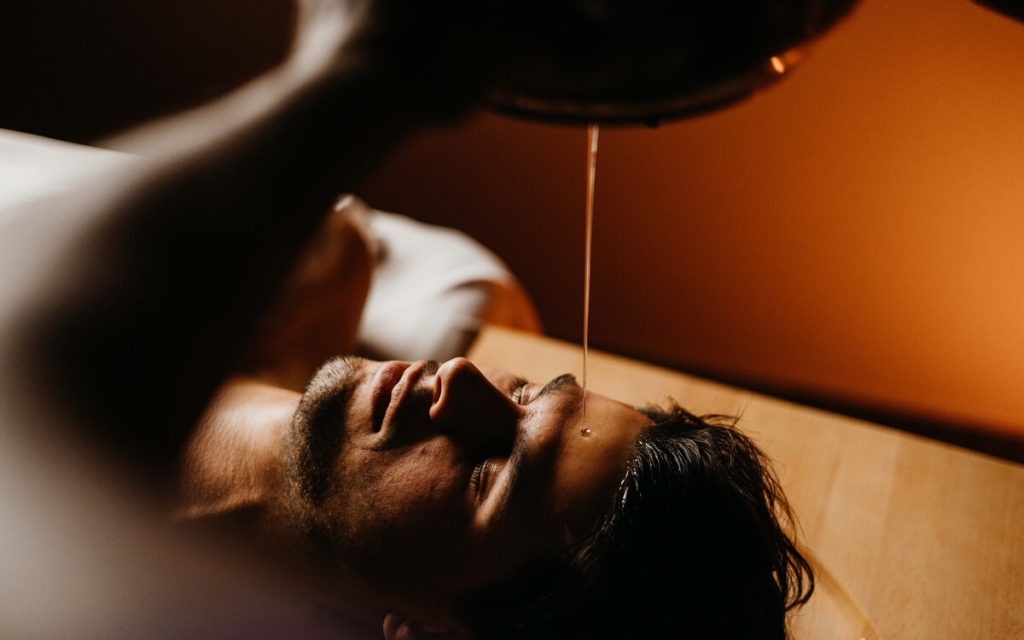
One of the most important Ayurveda therapies for internal cleansing is the Panchakarma cure. The cure can be translated as “Five Actions” and consists of an intensive external and a gentle internal cleansing. Full-body massages, forehead oil pours, steam baths, and enemas are part of the cure.
The goal of this Ayurvedic cure is the gentle liberation of your organism from toxins and metabolic waste. This also restores the harmonious balance of your body and your constitutional types. Panchakarma is performed both against and for the prevention of diseases, as well as to enhance well-being.

Discover the Panchakarma Cure for Home
In our book “Ayurveda: The 7-Day Panchakarma Cure for Home,” our experts show you how to gently detox in 7 days.
4. Nutrition
Proper nutrition plays an important role in Ayurvedic teachings and is ideally tailored individually to the composition of your doshas. Ayurvedic nutrition is used both for health maintenance and for healing purposes. For this reason, there are also specific rules regarding eating habits.
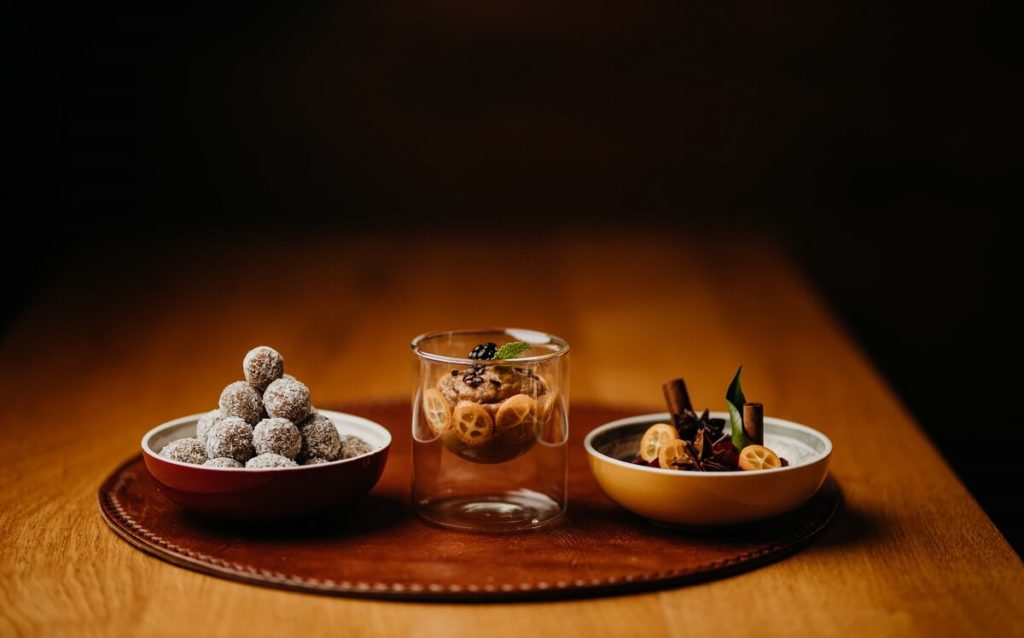
What you eat is not the only decisive factor, but also how well you utilize your food. A healthy digestive fire – called Agni in Ayurveda – which regulates and influences the entire metabolism, is a prerequisite for this. The formation of Ojas, which is closely linked to life energy, also depends on a healthy diet.
According to Ayurvedic teachings, every food has specific properties with which you can specifically improve and balance your doshas. It is therefore all the more important that you eat according to your Dosha to benefit as much as possible.
Diet alone can prevent diseases and slow down the aging process. The following points are part of the Ayurvedic dietary teachings:
- Eat only when you are truly hungry
- Maintain fixed meal times
- Eat in a relaxed atmosphere and without stress
- Pay attention to the right pace when eating and avoid rushing
- Prepare your meals fresh
- Prefer cooked dishes
- Season your dishes properly
- Drink mostly warm beverages in small sips with your meal
- Eat according to your Dosha
- Use Ayurvedic nutritional supplements to better balance your doshas

The following overview shows which foods are particularly recommended for the individual constitutional types:
| Vata | Pitta | Kapha | |
| Grains | Wheat, rice, cooked oatmeal | Wheat, rice, barley, millet, corn, oatmeal | Aged grains, barley, millet, corn, buckwheat, rye, oatmeal, wheat, rice |
| Legumes | Yellow mung beans, red lentils | Soy products, yellow mung dal | All types of beans |
| Vegetables | Zucchini, artichokes, asparagus, sweet potato, cucumbers, celery, spinach (in small quantities) | Asparagus, artichokes, white pumpkin, zucchini, okra, spinach, chicory, cauliflower, broccoli, cabbage, celery, potatoes, sweet potatoes, sprouts, lettuce, young eggplants | Green leafy vegetables, asparagus, artichokes, potatoes, carrots, cabbage, cauliflower, broccoli, celery, peas, bell peppers, sprouts, zucchini, tomatoes, young radish |
| Fruits | Ripe, sweet, and juicy fruits, grapes, pomegranates, mangoes, bananas, avocados, sweet and juicy apples and pears, sweet oranges, melons, plums, raisins, dates, prunes, figs, kiwis, peaches, apricots, dried fruits (best soaked) | Grapes, pomegranates, bananas, avocados, mangoes, melons, apples, pears, raisins, dates, figs, apricots, sweet oranges, grapefruit, olives, sweet pineapple, papaya (in small quantities), kiwis | Pomegranates, grapes, cranberries, raisins, figs, dates, peaches, apples, papaya |
| Dairy Products, Oils, and Others | All dairy products, sugarcane, honey (in small quantities), all good oils, all nuts | Ghee, milk, butter, lassi (sweet), cream, coconut oil, olive oil, coconut | Lassi, buttermilk, ghee, whole milk (in small quantities), honey, sunflower seeds, pumpkin seeds, cashews, all spices except salt, lemon juice (in small quantities) |
Foods you should better avoid depending on the composition of your constitutional types are:
| Vata | Pitta | Kapha | |
| Flavor Profile | Pungent, bitter, astringent | Strongly spiced, pungent, sour, salty | Sweet, sour, salty |
| Foods | Cold dishes and drinks, dry foods, beans (except mung beans and red lentils), unripe, dry, and sour fruits | Sour fruits, tomatoes, sour milk products, yogurt (only as lassi), quark, cheese | Whole milk, ghee, fatty and oily foods, ice cream, sweets |
5. Yoga & Meditation
Ayurveda and Yoga go hand in hand. The meditative yoga practice is an integral part of Ayurvedic healing and deals with inner and outer purification. With yoga and meditation exercises, you learn to free yourself from emotional burdens and let go internally. Through meditation, you practice mindfulness and awareness of yourself and your environment.

This makes it easier for you to free yourself from burdensome thoughts and to fully concentrate on the here and now. Regular meditation thus promotes your health on many levels. Additionally, yoga and meditation prove helpful for chronic pain, psychological complaints, and sleep disorders.
Yoga is a wonderful way to achieve more balance in everyday life and helps you become more aware of your body. At the same time, yoga helps you gain more strength and flexibility, which brings health benefits. It has been shown that yoga lowers blood pressure, helps with back and headaches, reduces nervousness and anxiety, and improves sleep quality.
6. Herbal Medicine
An important component of Ayurvedic medicine is herbal medicine. Plants have always been used as part of therapy and treatment. Over millennia, the knowledge of releasing the healing powers of plants has been preserved. This includes the selection and composition of plants, the right time for harvesting, purification, and processing.

There are specific recipes that, for example, affect the function of your organs or doshas. Furthermore, recipes for Ayurvedic medicine that have health-promoting, strengthening, or rejuvenating effects are included. From these properties, Ayurvedic dietary supplements have also developed, which additionally strengthen your organism.
European Ayurveda® – Ayurvedic Tradition Meets European Needs
Ayurveda is thus a holistic health philosophy from the ancient Indian Vedic high culture. It is based on the three doshas, which are to be brought into harmony. The focus is on the individual body, mind, and soul as a unit. The central elements in Ayurveda are pulse diagnosis, massages, (cleansing) cures, yoga & meditation, Ayurvedic nutrition, and herbal medicine.
At Sonnhof, we strive to combine the traditional teachings of Indian Ayurveda with the needs of Europeans. Our focus is less on the body and more on the mind, as emotional stress plays a significant role here. This is how European Ayurveda® came into being. Experience European Ayurveda firsthand at Sonnhof Tyrol!

What is European Ayurveda®?
Ayurveda is an Indian healing art with a long tradition. Translated, the term means “knowledge of life.” However, life looks very different in various cultures.
In the first few years, it gradually became clear to us that the needs of Indians and Europeans differ. This is how we eventually developed the concept of European Ayurveda®.