When energies can flow undisturbed in your own home, we live in peace and balance. Vastu Shastra, the Indian science of architecture, makes use of this principle. Anyone who plans their home according to its specific principles will find more balance and inner peace. Here, we reveal how Vastu Shastra works and how you can make your home more harmonious.
In Brief: What is Vastu Shastra?
Vastu Shastra is an Indian science of architecture. The term is composed of the Sanskrit words for dwelling (Vastu) and teaching or science (Shastra). Literally, it means: the science of correct living.
It is not just about correctly aligning the apartment and furnishings, but about bringing them into harmony with energy currents.
Vastu was already mentioned in the Vedic scriptures and is several thousand years old. The teaching is often seen as the Indian counterpart to Chinese Feng Shui and is also frequently observed in Ayurveda.
How Does Vastu Work?
Vastu states that all life on earth is influenced by energies, which can be both positive and negative. Various factors, such as the five elements, the cardinal directions, the planets, the sun, and the moon, act upon us and bring balance or disharmony.
In the Vedic scriptures, there is the legend of the spirit of the dwelling, the so-called Vastu Purusha. This figure threatened to devour the earth and was banished to an energy field as punishment.

In Vastu Shastra, furnishings and architecture are aligned according to this rectangular energy field, with the head of the Vastu Purusha in the northeast and his feet in the southwest.
The head in the northeast represents spiritual energies, while the feet in the southwest represent stability and constancy. You can also make use of these properties and energies of the universe when planning and furnishing your home.

“Living often influences our well-being more strongly than we realize. Vastu Shastra shows how rooms can promote more peace, clarity, and harmony.”
Elisabeth Naschberger-Mauracher, European Ayurveda Expert & Managing Director of the European Ayurveda Resort Sonnhof in Tyrol
A peaceful life therefore means living in harmony with cosmic forces and ensuring that the energies in the house can harmonize well. Houses and plots of land should be oriented so that the energy flows can always move freely.
Only then can the people living within them live in harmony and balance. For this, the structures of the plot and the building are particularly important. If a house is planned according to these special principles, it is said to bring prosperity, health, happiness, and peace.
Numerous buildings worldwide are even built according to Vastu rules; the most famous, by the way, is the Taj Mahal!

Architecture and Energies: The Most Important Vastu Rules
But how does the Indian science of architecture work? Well, to optimally align a house or a room, Vastu considers various factors, namely:
- The five elements
- The eight cardinal directions
- The course of the sun and moon
- The influence of the nine planets
- Geological and climatic influences
- The Earth’s magnetic field
- The Earth’s energy grids
- The influence of non-material entities
According to Vastu Shastra, the sun emits primarily stimulating energy until noon, which mainly hits the northeast, east, and southeast. From noon onwards, however, the sun has a calming effect and then hits the southwest, west, and northwest.
Each cardinal direction is also associated with a specific element. All these influences can have both positive and negative effects.
Vastu Shastra means utilizing positive influences and inhibiting negative ones. If all these principles are taken into account in the architecture, the energies can flow freely and the finished house is in harmony with the cosmos.
Furnishing with Vastu: 4 Simple Tips
Those who already live in a house that is not ideally aligned architecturally usually have few options for major changes.
Therefore, we provide you with 4 tips here to support the energies in your home a little and make your living situation more harmonious:
- Heavy furniture should primarily be placed in the south and southwest of a room.
- The center of the room should never be cluttered, but should remain as free as possible so that the room energy can flow undisturbed.
- Valuables, money, or bank statements are best kept in the north of the apartment, as this cardinal direction stands primarily for wealth and prosperity. The south, northwest, or northeast, on the other hand, are taboo for this.
- A desk should preferably be positioned so that you face east while sitting at it. This provides the best support for concentration.
Aligning your home according to Vastu Shastra brings more harmony and peace into your own four walls. But even if nothing more can be done about the architecture, much can be achieved with a few simple measures.
Often, the right sleeping position or a change in the positioning of furniture already helps. Try it out and ensure that the energies in your home can flow undisturbed again and that you feel more energy in everyday life!
Decoration According to Vastu: Choosing Colors and Shapes
You can also use shapes and colors in Vastu. Round shapes are said to bring peace and harmony, while square or rectangular ones bring luck.
Regarding colors, cool tones such as blue, green, or white are considered calming, while warm tones such as red, yellow, and orange have an invigorating effect. The various colors are also assigned to cardinal directions.
Light colors are best suited for rooms located in the north and east, while dark colors are for the south and west. We will tell you more about this below in the section on planning a house according to Vastu Shastra.
Tip:
To determine the cardinal directions in your home, you can simply use your smartphone. Most smartphones have a compass app installed that you can use to determine the individual orientation of your house.
Vastu in the Bedroom
The bedroom is the place in the home intended to bring us recovery and well-being. If you have sleep problems, it may be that the bedroom is incorrectly located and the energies cannot flow properly. What helps against constant fatigue? Perhaps the right furnishings!
Ideally, the bedroom should be located in the southwest of the apartment. There, the heavy energies ensure a particularly deep, restful sleep.

Bedroom Furnishings
For the positioning of the bed, too, the southwest is the best place. Under no circumstances should it stand in the middle of the room, as this inhibits the flow of valuable energies.
Other life forms such as plants or fish are also rather disruptive in the bedroom. This means: Aquariums are better moved to another room, ideally to the northeastern part of the living room, as they are said to bring wealth and success there.
You should banish electrical devices from the bedroom, as they also disturb positive vibrations. If it is absolutely unavoidable, the devices should at least be as far away from the bed as possible.
Advantageous colors for a restful night’s sleep are green and blue tones. Brown or gray also have a soothing effect. Red, provided it is not too bright, provides more passion.
The Correct Vastu Sleeping Direction: Which Way to Sleep?
Our sleeping direction is particularly important for our well-being. Especially if the bedroom is in an unfavorable location, this can be compensated for a little with the right sleeping direction. According to the science of architecture, this has a significant influence on how energy can flow favorably.
The ideal sleeping direction is therefore with the head toward the south. This brings balance and wealth. If the head lies toward the west, this is also advantageous and can bring prestige and fulfillment.
A sleeping position in which the head faces east, on the other hand, stands for spiritual progress and mental balance. Only a head position toward the north is very unfavorable. This can lead to heavy thoughts and dreams, which can result in sleep problems.
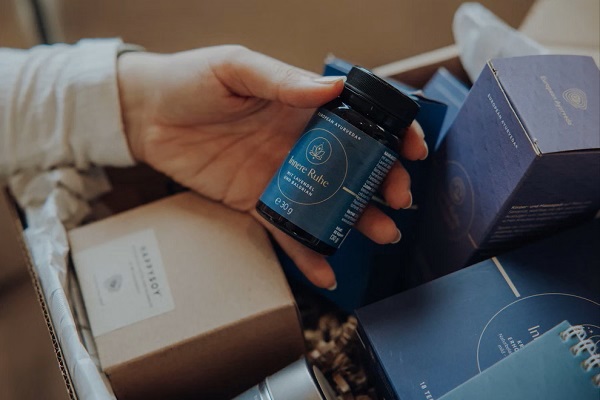
Discover the European Ayurveda® Sleep Well Home Treatment now
Transform your sleep in just three weeks! This intensive Ayurveda program for home use can sustainably improve your sleep so that you can start the new day full of energy. Now with our European Ayurveda® Home App: The complete program for better sleep!
Vastu in the Living Room
The living room is a place for gathering and company. This is where people like to spend time with family or guests. Therefore, hang many happy family pictures in the living room to strengthen the relationships with individual family members.

Photos or paintings depicting violence, tears, or negativity are taboo. In the east, however, you can hang paintings or photos of a sunrise. The television should ideally be placed in the southeast of the living room.
Planning the Ideal House According to Vastu: Colors and Floor Plan
But what does such a house look like? According to Indian principles, the optimal building site is on a slope that rises to the west and south and slopes slightly toward the northeast. Ideally, the floor plan of a Vastu house should be square or rectangular .
Positive energy flows come from the northeast through the morning sun. They have a cleansing and beneficial effect and should therefore definitely find their way into the house. Therefore, it is good to place doors, windows, verandas, and balconies in the north and east of the house as much as possible to promote an overall positive mindset.
However, there must be no obstacles in this direction so that the positive power can actually enter the house. In the south and west, on the other hand, it is good to plant trees. They not only ensure a good climate but also protect against negative vibrations.
Regarding the room layout, according to Vastu, there is a specific arrangement that utilizes particularly positive flows and thus brings balance into your own home. Specifically, a floor plan according to Vastu looks like this:
Northwest
- Element: Air
- Strengthening color: dark green
- Ideal for movement and exchange, for guest rooms, office, waiting room, toilet, storage of light goods
North
- Element: Air, Water
- Strengthening color: white
- A strengthening quality prevails here, perfect for study, bedroom, balcony, terrace, safe
Northeast
- Element: Water, Ether
- Strengthening color: violet
- The cleansing energy gate, optimal as a meditation and study room, conference room, entrance, bathroom
West
- Element: Earth, Water
- Strengthening color: Indigo
- Brings harmony, suitable as a children’s room, dining room, bedroom
Center
- Element: Ether
- Strengthening color: Rainbow
- The calm pole, should be as open as possible, such as an inner courtyard, atrium, or light well, possibly also as a living room
East
- Element: Fire, Ether
- Strengthening color: yellow
- Opening, good as an entrance or foyer, also for balcony, dining room, or meditation room
Southwest
- Element: Earth
- Strengthening color: blue
- Heavy, spent energy, good as a master bedroom, storage room, or office
South
- Element: Fire
- Strengthening color: black
- Hot, heavy energy, good as a bedroom, living room, and storage of heavy goods
Southeast
- Element: Fire
- Strengthening color: orange
- Brings zest for life and enjoyment, perfect for kitchen, heating, fireplace, or electrical appliances
Vastu and Feng Shui: The Differences
The Indian teaching is frequently associated with Feng Shui. Although Vastu is actually much older, there are indeed many similarities.
In both Indian Vastu and Chinese Feng Shui, energy flows play a role in furnishing. Furthermore, both teachings refer to the five elements, even if they are defined slightly differently in each case.
Nevertheless, the two teachings differ in their principles. Vastu focuses more on architecture, while Feng Shui usually concentrates on interior design and creates balance through the placement of certain objects.
Specifically, this means: while there are many similarities between the two principles, there are also some deviations. Therefore, the two teachings should not be equated.

Chakra Meditation: Activate Your Energy Centers
Each chakra possesses a specific meaning for our body, mind, and soul. The state of the chakras simultaneously represents the state of consciousness. With a Chakra Meditation, you can influence your state of consciousness and your spirituality. We show you how this meditation works.