For sleep disorders and inner restlessness, Ayurveda offers a miracle remedy: Ashwagandha. This herb reduces stress and helps you gain more strength and energy. It therefore has a long tradition in Ayurvedic medicine and is used for various ailments. Here, you will learn exactly what Ashwagandha is, how it works, and how to take it.
What is Ashwagandha?
Ashwagandha (botanically Withania somnifera) is an Ayurvedic medicinal plant that primarily grows as a small shrub with red berries in India, Pakistan, and Afghanistan. The name comes from Sanskrit and means “smell of a horse.”
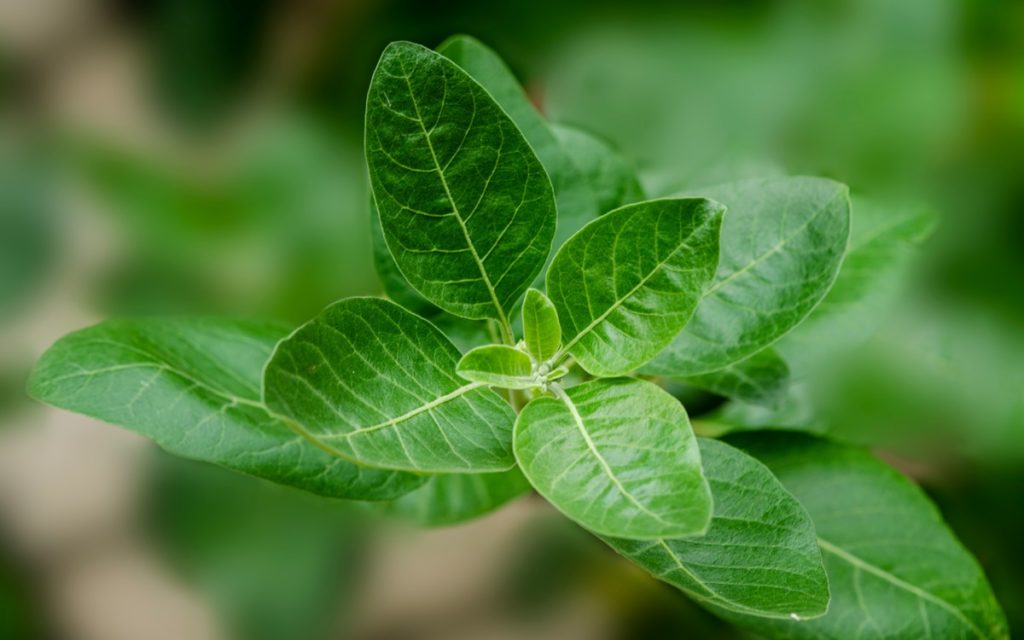
The origin of the name is not definitively known; it presumably comes from the fact that the plant’s scent is said to resemble that of horses. Or perhaps it simply comes from the plant’s ability to awaken strength – after all, the horse symbolically represents power and vitality.
Because of its positive effect on sleep, the plant is known here as the winter cherry or Indian ginseng. However, it is occasionally also referred to as the Indian ginseng.
In Ayurvedic medicine, this plant has been known for over three millennia and is used to heal a wide variety of ailments. The plant is also attributed with life-extending properties, thus supporting your life energy Ojas and your Longevity.

“When body and mind are under constant tension, regeneration is needed on multiple levels. Ashwagandha has therefore always been a valued companion in Ayurveda for more balance and strength.”
Gaurav Sharma, Ayurveda Specialist at the European Ayurveda Resort Sonnhof in Tyrol
Ashwagandha Ingredients
Ashwagandha’s benefits and effects are not least due to its ingredients. The active compounds are found in the leaves, but in even higher concentrations in the root of Ashwagandha. The most important ingredients of the plant (3) are:
- Alkaloids
- Withanolides
- Choline
- Fatty acids
- Amino acids
What is Ashwagandha Used For? – Effects on Psyche and Body
The plant is often regarded as a “miracle berry” in Ayurveda because of its versatile applications. Primarily, the herb is used to balance stress and the typical Vata imbalances associated with it.
If the Vata Dosha is elevated due to physical and mental strain, we experience it in the form of worries, anxieties, and sleep disorders. However, digestive problems, muscle complaints, twitching, or emotional imbalances can also become noticeable.
So, what does Ashwagandha do? If you feel an elevated Vata Dosha, restlessness, or poor sleep, pay attention! We’ll show you what this plant can do!
Attention:
You should only take dietary supplements after consulting with your doctor. The information provided in this article is for educational purposes only and does not constitute a substitute for medical advice! The intake of recommended dietary supplements is at your own discretion.
Better Sleep and More Strength
Ashwagandha offers many benefits, bringing both inner calm and energy for body and mind. This may sound contradictory, but they are indeed connected. As soon as your restless mind relaxes a bit, your sleep quality also improves.
You fall asleep more easily, and deep sleep phases are extended. The result: you wake up more rested and energized the next morning.

The plant is, after all, also called the winter cherry for a reason and is mostly administered in Ayurvedic medicine for sleep disorders. However, being well-rested has many other positive effects.
Because it also increases performance, memory, and concentration. The herb thus sharpens your mind, allowing you to work with greater focus.
Emotions are Balanced
Ashwagandha can also bring healing for general states of restlessness, anxiety, and nervousness. It calms the nerves, and your agitated emotions slowly return to balance.
Tensions begin to dissolve, and you find your center again. With regular intake, the body learns to cope better with stress (6), and you become more inwardly serene and peaceful.
Digestion is Calmed
Tension and stress often affect the stomach. If the Vata Dosha is elevated, this imbalance is felt through bloating, constipation, or nausea.
However, the medicinal herb can help you soothe the Vata Dosha again and alleviate digestive complaints. This benefits you, your digestive tract, and your digestive fire, Agni.

Ashwagandha and Potency
In Ayurveda, the plant also has a tradition as an aphrodisiac and is even said to enhance potency. While Ashwagandha’s effect is said to increase potency in men, it can also show effects in women.
For example, it can help increase libido and lead to greater sexual fulfillment. Therefore, it can’t hurt to try Ashwagandha if you are trying to conceive, right?
Can You Lose Weight with Ashwagandha?
Stress has a significant impact on overweight. Especially during prolonged tension, our body releases more cortisol, which can cause increased appetite and even intense cravings. How can Ashwagandha help with this?
Well, since it has stress-reducing effects, the herb prevents the body from producing too much cortisol. Appetite is thus somewhat curbed and remains within the normal range. Additionally, the plant remedy stabilizes our blood sugar level, which is why it can also be used against diabetes (4).
When blood sugar levels drop too quickly, the body also reacts with an increased feeling of hunger. However, when taking Ashwagandha, such hypoglycemia does not even occur. In this way, the medicinal herb can indeed be a good dietary supplement for weight loss!

Discover high-quality dietary supplements in our shop now
To support a balanced diet, we recommend selected Ayurvedic dietary supplements and supplements.
On the other hand, Ashwagandha can also be used to support muscle building. It accelerates muscle growth, which also affects weight. Thus, Ashwagandha can cause weight gain through increased muscle tissue.
Are There Side Effects When Taking Ashwagandha?
With a normal dosage of Ashwagandha, side effects are generally not expected. However, if the dose is exceeded, abdominal pain, nausea, or diarrhea may occur. But if you stick to the recommended dose, there is no cause for concern!
However: pregnant and breastfeeding women, as well as children, are still advised against taking the herb. The reason for this is that there are no studies on it yet, and it is therefore better to err on the side of caution (1, 2).
If you are taking medication, you should also consult a doctor beforehand to avoid disadvantages or interactions with Ashwagandha. Otherwise, it is absolutely harmless.
Can Ashwagandha Cause Liver Damage?
Some studies indicate a possible influence of Ashwagandha on thyroid function and altered liver values. Therefore, if you have pre-existing liver or thyroid conditions, you should definitely consult a doctor before taking the herb.
Is Ashwagandha dangerous? No, no health damage has been proven for healthy individuals (4). However, the Federal Institute for Risk Assessment (BfR) advises against taking it, especially for people with such pre-existing liver or thyroid conditions (1).
Ashwagandha: The Correct Dosage and Intake
In this country, the medicinal herb is not listed as a medication but is considered a dietary supplement. Thus, it is freely available on the market and can simply be purchased in the form of capsules or powder.
The recommended dose is 300–500 mg per day, ideally divided with meals. The onset of Ashwagandha’s effect, however, depends on the method of intake. Make sure to choose high-quality preparations!
Capsules
The advantage of Ashwagandha capsules is that the dosage is already predetermined. Therefore, they are ideal as a beginner’s product because you can’t go wrong with them.
The capsules can simply be taken with a little liquid and are completely tasteless. However, the effect usually only appears after some time. So, for starters, you can confidently reach for the capsules.
Powder
Ashwagandha powder is made from the ground roots of the plant and can be used in various ways. A tea is particularly popular and easy to prepare, but the powder can also be added to yogurts or smoothies.
In this way, you benefit from the substance in its pure form and can dose it individually, exactly as it suits you!
Ashwagandha Recipes: Benefit from its Effects
Honestly, it must be said: the taste of Ashwagandha powder can sometimes be a bit getting used to, as it tastes slightly bitter. But don’t worry, it’s all a matter of preparation!
If you want to experience the effects of the medicinal plant yourself, we have two delicious recipes for you here. This way, taking it becomes a daily ritual and tastes delicious too.
Ashwagandha Tea
It has long been known in various cultures: a nice cup of tea helps with falling asleep. If you then add some Ashwagandha, you get a particularly effective nightcap!

You will need:
- 1 tsp Ashwagandha powder
- hot water
- Cinnamon or cardamom
- 1 tsp honey or agave syrup
Boil the water and add the powder. Then let the tea steep for about 5 minutes. To counteract the bitter taste, we recommend simply adding some cinnamon, cardamom, or a spoonful of honey or agave syrup.
Ashwagandha tea has a calming and sleep-inducing effect and is even said to have antibacterial properties. This way, you can gently drift into a peaceful sleep in the evening.

Discover our European Ayurveda® Teas now
Ayurvedic tea is an indispensable part of Indian healing traditions. You can cleanse, heal, and stimulate your body with it – or simply relax with a cup of tea. With us, you will find selected Ayurvedic teas of various types in the best quality.
Moon Milk
Everyone knows: a warm milk before bed provides a cozy, relaxed feeling and helps you unwind pleasantly. The so-called Moon Milk also contains Ashwagandha, further promoting healthy and deep sleep.
You will need:
- 200 ml (almond, oat, or other plant-based) milk
- 1 tsp Ashwagandha powder
- 1 tsp honey or agave syrup
- 1 tsp raw cocoa powder
- 1 tsp dried lavender blossoms
Slowly warm the milk and gradually stir in all ingredients. Instead of cocoa powder, you can also simply use a pinch of cinnamon, depending on your taste. If you wish, you can, of course, vary the ingredients – that’s entirely up to you. The important thing is that it tastes good and helps you relax.
Ashwagandha, through its positive effects, can bring more balance and equilibrium into your life. However, do not forget that Ayurveda is always a holistic approach, and taking the plant alone cannot compensate for an unhealthy lifestyle.
In combination with meditation and the right Ayurvedic diet, Ashwagandha can ensure a more stress-free daily life and help you find your center again.

How Can I Regulate My Nervous System? 4 Tips from European Ayurveda®
An overstimulated nervous system is one of the most common causes of chronic complaints. Irritable bowel syndrome, exhaustion, hormonal imbalances, insomnia, or migraines are frequent consequences. We show you how you can regulate your nervous system with European Ayurveda and return to Vata balance.
Cover image: © eskymaks – istockphoto.com (File No.: 1041090420)
Ashwagandha Studies and Sources:
(1) Federal Institute for Risk Assessment (2024): Ashwagandha: Winter Cherry Preparations with Potential Health Risks.
(2) Federal Institute for Risk Assessment (2012): Risk Assessment of Plants and Herbal Preparations.
(3) Mirjalili M. et al. (2009): Steroidal lactones from Withania somnifera, an ancient plant for novel medicine. Molecules (14/7), pp. 2373-2393.
(4) Gorelick, J. et al. (2015): Hypoglycemic activity of withanolides and elicitated Withania somnifera. Phytochemistry (116), pp. 283-289.
(5) Raut, A. et al. (2012): Exploratory study to evaluate tolerability, safety, and activity of Ashwagandha (Withania somnifera) in healthy volunteers. Journal of Ayurveda and integrative medicine (3/3), pp. 111-114.
(6) Chandrasekhar K. et al. (2012): A prospective, randomized double-blind, placebo-controlled study of safety and efficacy of a high-concentration full-spectrum extract of ashwagandha root in reducing stress and anxiety in adults. Indian Journal of Psychological Medicine (34/3), pp. 255-262.