Strengthening, balancing, even rejuvenating: These and other effects are attributed to the Amla fruit. Find out here what Amalaki is all about and why it’s a real insider tip, especially for hair!
What is the Amalaki Fruit?
Amalaki, Amla, Indian gooseberry – the fruit of the Amla tree has many names. This tree is originally found throughout India, South Asia, and parts of East Africa. But why is Amla no longer popular only in India? How exactly should one imagine the effects of this much-praised little superfruit?
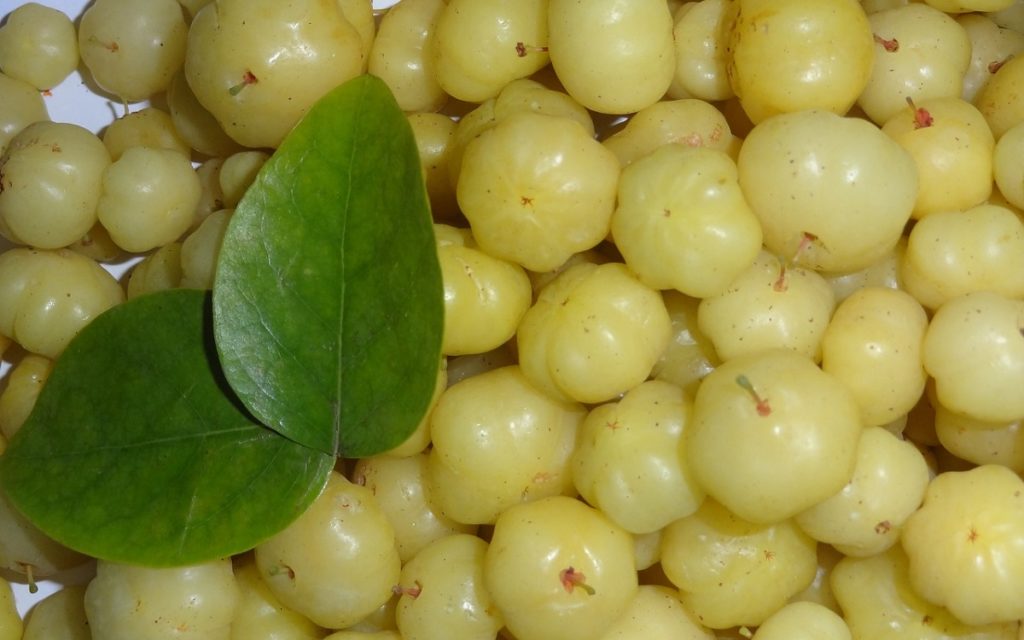
Amalaki: Effects in Ayurveda
The Amalaki tree plays a significant role in Indian tradition – so significant that the tree is considered a sacred plant in India and has its own holiday. The berry is regarded as a fountain of youth and is an indispensable part of daily life for most people in India.
And what is the Ayurvedic teaching on Amalaki? Of course: also very positive! This is because the Amla fruit combines five of the six tastes. It is primarily sour, but also bitter, sweet, pungent, and astringent.

“In Ayurveda, Amalaki combines nutrient richness with a particularly balancing effect. This is precisely what makes this fruit so valuable for vitality and regeneration.”
Gaurav Sharma, Ayurveda Specialist at the European Ayurveda Resort Sonnhof in Tyrol
Thanks to this almost unique combination, Amla can bring all three Doshas back into harmonious balance.
This Ayurvedic medicinal plant is often combined with Haritaki and Bibhitaki in Ayurvedic products. The result is Triphala (translated as “three fruits”), one of the most well-known herbal mixtures in Ayurveda.
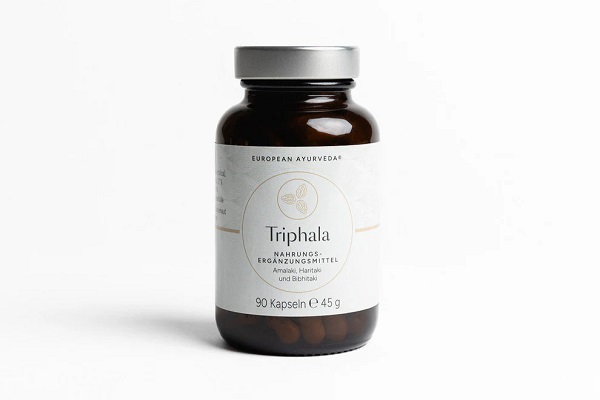
Discover Triphala in our online shop now
Triphala has proven itself as an Ayurvedic dietary supplement for centuries. It balances the Doshas and promotes a good gut feeling.
Whether in this combination or alone, Amla berries are considered helpful for various ailments. From coughs, headaches, and digestive disorders to chronic illnesses, the fruits are trusted in many situations.
What are the Effects of Amla?
Amalaki fruits appear to be true multi-talents: they contain a lot of heat-resistant vitamin C, carotene, riboflavin, iron, and calcium. And that is just a small selection of the substances necessary for our health as well as for beautiful skin and hair (1).

The vitamin C content alone significantly strengthens the immune system (3). As a dietary supplement, Amalaki powder or capsules ensure that infections don’t stand a chance and we simply feel more energetic (2). The following effects are attributed to the Amla berry:
- strengthens the immune system and has antioxidant effects
- helps to detoxify the body
- stimulates metabolism and digestion
- regulates cholesterol and blood sugar levels
- strengthens hair and prevents hair loss
- ensures radiant, firm skin
From an Ayurvedic perspective, this medicinal plant is so unique because it can calm a very agitated Pitta and prevent hyperacidity. Of course, these health-promoting states can also be achieved with other plants. However, no other natural remedy works as gently as Amalaki.

Discover the European Ayurveda® Inner Beauty Home Cure
Beauty comes from within! Achieve an all-around radiant appearance with the Inner Beauty Cure – make your skin and hair glow from within and learn healthy routines.
Does Amla Have Side Effects?
Generally, no side effects are to be expected from Amla in the doses recommended by manufacturers. However, as with many dietary supplements, excessive consumption can have a laxative effect. Abdominal pain and nausea are also possible then.
If you have pre-existing conditions or take medication regularly, you should definitely consult your doctor before taking Amla. Since large-scale human studies are currently lacking, Amla is not recommended for pregnant women, breastfeeding women, and children.
Attention:
You should only take dietary supplements after consulting your doctor. The information provided in this article is for educational purposes only and does not constitute a substitute for medical advice! The consumption of recommended dietary supplements is at your own discretion.
How to Use Amalaki: Powder, Capsules, or Oil?
So, it’s clear: Amla is beneficial. However, the fruit can hardly be consumed pure, as it is very sour and bitter. Traditionally, it is processed into juice, syrup, or jam. Here, however, it is primarily available in dried form.
But how can this medicinal plant actually be used? In principle, you have three options:
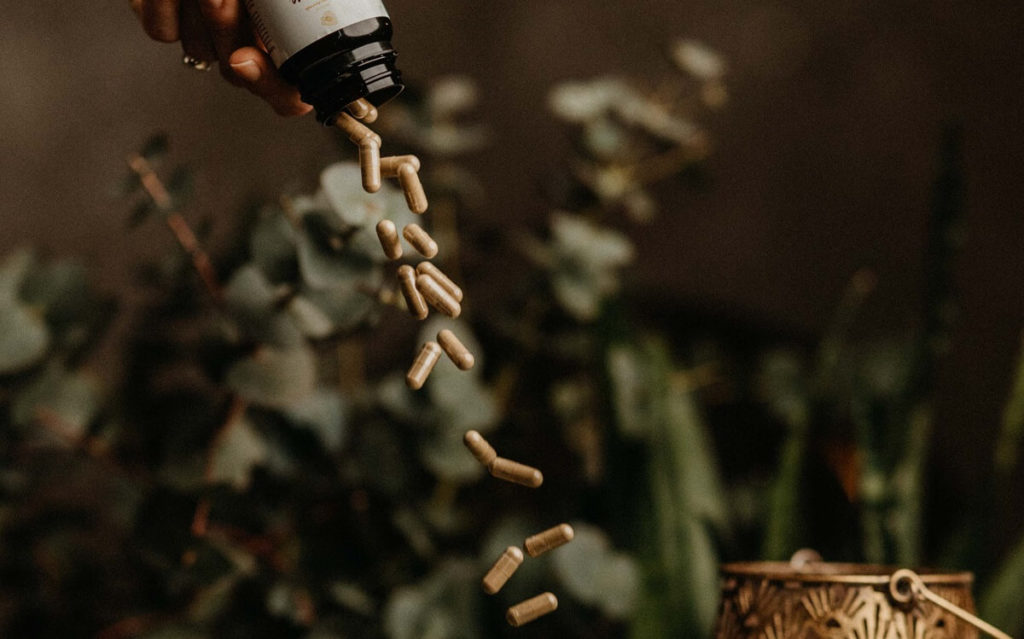
Amla Powder
- You can mix the powder with water to create a versatile paste
- You can apply it either for facial skin care or for pain relief, for example, to the scalp for headaches or to minor burns
Amla Capsules
- You can easily take Amalaki capsules daily.
- You can generally promote your health by strengthening the immune system and preventing hyperacidity.
- The nice side effect: You will soon also see on your skin and hair that the plant provides the body with many important nutrients.
Amla Oil
- You can massage Amla oil into your scalp.
Tips for Proper Amalaki Application
Used correctly, Amalaki has many benefits. But what does “correctly” mean in this case? Here are some tips on what to look out for if you want to try these little powerhouses yourself:
1. Pay Attention to Origin
When purchasing, pay attention to the origin and only choose products from pure organic cultivation that are free of artificial additives. This way, you can be sure to fully enjoy the natural power of the Amla fruit.
2. Observe the Maximum Daily Dose
If you are taking Amla capsules or powder to improve your health, you should make sure not to consume more than 2–5 g per day.
Because as always in Ayurveda (and in life in general!), it’s about finding balance. Too much Amalaki, for example, can lead to digestive problems, while the right dose optimally supports your Agni.
3. Consult a Doctor for Pre-existing Conditions
If you regularly take medication, we advise you to speak with your doctor before taking Amalaki. This way, unwanted interactions can be avoided.
Amalaki as a Natural Hair Treatment: Amla Oil for Hair
Aside from its health benefits, Amalaki is also an increasingly popular hair care product. Beautiful, thick, shiny hair is promised by almost every renowned manufacturer of hair cosmetics.
However, promises can be plentiful – and disappointment is often great when the desired effect fails to materialize. But what about natural products like Amla oil? What can one hope for from it?

The Effect of Amla on Hair
In short, Amalaki affects hair as follows: It strengthens hair roots and improves scalp health. And the reason for brittle, lifeless hair that falls out quickly is primarily a dry scalp with weakened hair follicles.
In other words: On a healthy scalp, hair can grow stronger and gain more shine. Dandruff and itching also become a thing of the past. Amla oil is also said to prolong the growth cycle, making the hair on the scalp denser.
The oil inhibits what is known as 5-alpha reductase, a process that causes hair to thin or even leads to hair loss (5).
Using Amla in Hair Care: 3 Practical Tips
Even when it comes to hair care with Amla oil, there are a few tips we’d like to share with you:
Tip #1: Apply Regularly
Massage the oil into your scalp 2-3 times a week and let it sit for at least an hour or overnight before washing it out.
If you opt for the latter, it’s best to place a towel over your pillow or wear a shower cap. You can apply the oil to damp or dry hair.
Do not use Amla oil much more frequently than indicated above. Too much of a good thing will have the opposite effect and tend to dry out the scalp.
Tip #2: Combine Natural Product with Oil
Amla oil is a natural product and is not infused with artificial fragrances. Some people need to get used to its herbal-like scent.
If you don’t want to work with pure Amla oil, you can instead mix a high-quality Amalaki powder into the oil you usually use – for example, coconut or jojoba oil.
There are also Amla shampoos, but when buying, you should make sure that they do not contain silicones or paraffins and that Amalaki is listed as high as possible among the ingredients.
Tip #3: Wash Out Carefully
As with any oil treatment for hair, when washing out: Be careful in the shower, as the oil makes the floor slippery.
Amla Can Prevent Gray Hair
Amalaki is said to have an antioxidant effect; it is believed to be able to slow down the aging process. Although there are no scientific studies on this, it is assumed that Amla delays the point at which melanin production slows down.
Melanin is the pigment that gives hair its natural color. So, the longer melanin is produced, the longer the hair color is retained. It is also often reported that hair care with Amla makes the natural color more prominent.
Of course, you won’t automatically get the thick, full hair of Indian women through Amla. However, Amalaki capsules or powder improve the health of the entire body, which significantly contributes to clear skin and a healthy scalp, among other things.
Feeling good thanks to a true miracle remedy from nature: There’s a good reason why Amla is so valued in Ayurveda!

Ojas in Ayurveda: Strengthen Your Cells and Ensure Healthy Longevity
In Ayurveda, Ojas refers to the life energy that influences our vitality, health, and strength. It is therefore essential for healthy living and aging. You can build Ojas through healthy routines – we show you how in this article.
Cover image: © natbits – istockphoto.com (File No.: 470551584)
Studies and Sources:
(1) Javed, S., Nasim, T., Zia-Ul-Haq, M. (2023). Amla. In: Zia-Ul-Haq, M., Abdulkreem AL-Huqail, A., Riaz, M., Farooq Gohar, U. (eds) Essentials of Medicinal and Aromatic Crops. Springer, Cham. https://doi.org/10.1007/978-3-031-35403-8_3.
(2) Khalid Muzaffar, ., Sofi, S. A., Makroo, H. A., Darakshan Majid, . & Dar, B. N. (2022). Insight about the biochemical composition, postharvest processing, therapeutic potential of Indian gooseberry (amla), and its utilization in development of functional foods—A comprehensive review. Journal of Food Biochemistry, 46, e14132. https://doi.org/10.1111/jfbc.14132.
(3) Gul, M., Liu, Z.-W., Iahtisham-Ul-Haq, Rabail, R., Faheem, F., Walayat, N., Nawaz, A., Shabbir, M. A., Munekata, P. E. S., Lorenzo, J. M., & Aadil, R. M. (2022). Functional and Nutraceutical Significance of Amla (Phyllanthus emblica L.): A Review. Antioxidants, 11(5), 816. https://doi.org/10.3390/antiox11050816.
(4) Shanthi S., Begum M. Sahina, Senthuja M. (2021). In-vitro antioxidant and anti-aging activity of a traditional ayurvedic formulation. Research Journal of Pharmacy and Technology, 16(8), 3521–3524. http://dx.doi.org/10.52711/0974-360X.2023.00581.
(5) Akhbari, M. et al. (2024). The effect of an oral product containing Amla fruit (Phyllanthus emblica L.) on female androgenetic alopecia: A randomized controlled trial. Journal of Ethnopharmacology, 318(A). https://doi.org/10.1016/j.jep.2023.116958.