last updated on January 31, 2026
In addition to nutrition and yoga, Ayurvedic health teachings also include massages. The Ayurveda Abhyanga Massage is one of the most soothing and effective forms of treatment. Abhyanga can be translated from Old Indian as “great anointing with loving hands.”
The Essentials: What is an Abhyanga Massage?
Abhyanga is an Ayurvedic full-body massage using various, individually tailored oils. Warming oils are used for the body, while cooling oils are applied to the head. The massage generally contributes to your well-being. According to Ayurvedic teachings, it is particularly suitable as a balance for extensive physical or mental work, stress, or for body regeneration.
The Abhyanga massage works in three areas:
- Physical relaxation and loosening of your body
- Psychological well-being, by loosening and releasing inner barriers
- Medical effect through the penetration of the herbal extracts from the massage oil into your body
Read more about Ayurvedic massages:
- Ayurveda Massage: Process, Benefits, and Technique
- Ayurveda and Acupressure: Marma Massage and its Benefits
- Padabhyanga: Instructions for the Ayurvedic Foot Massage
The Tradition and History of Abhyanga Massage
The Abhyanga massage combines several massage techniques that serve the deep relaxation and revitalization of your body.

Additionally, high-quality, plant-based oils are used, which penetrate deep into your skin. This supports a healthy complexion.
Already in the Rigveda, one of the most important scriptures of Hinduism, the following words point to the positive effect of Abhyanga massage:
“My hand is God. Limitlessly blissful is my hand. This hand preserves all secrets that make whole, with its gentle touch.”
Here, a distinction is made between internal oleation (Abhyantara) and external oleation (Bhahya Snehana). Additionally, Abhyanga is divided into a pressure massage (Mardana) and a lighter, gentler massage (Smvahana). The focus can also be placed on acupressure and energy channels, which is then referred to as Marma massage.
Ayurvedic massages help you clear your mind and are a holistically enriching experience.
Abhyanga as an Ayurvedic Morning Ritual
The goal of European Ayurveda® is to bring body, mind, and soul into harmony. The classic morning routine consists of various rituals. They promote your health and spiritual development.
These rituals include:
- Waking up before sunrise
- An Abhyanga massage, 2-3 times a week
- Drinking a glass of water on an empty stomach
- Oiling the body and gargling with oil
Ayurveda Massage: Process and Benefits
The Abhyanga full-body massage has a relaxing, rejuvenating effect and strengthens your immune system.
During the massage, there are two stroking directions – against and with the direction of hair growth. Your therapist will discuss which type is right for you.
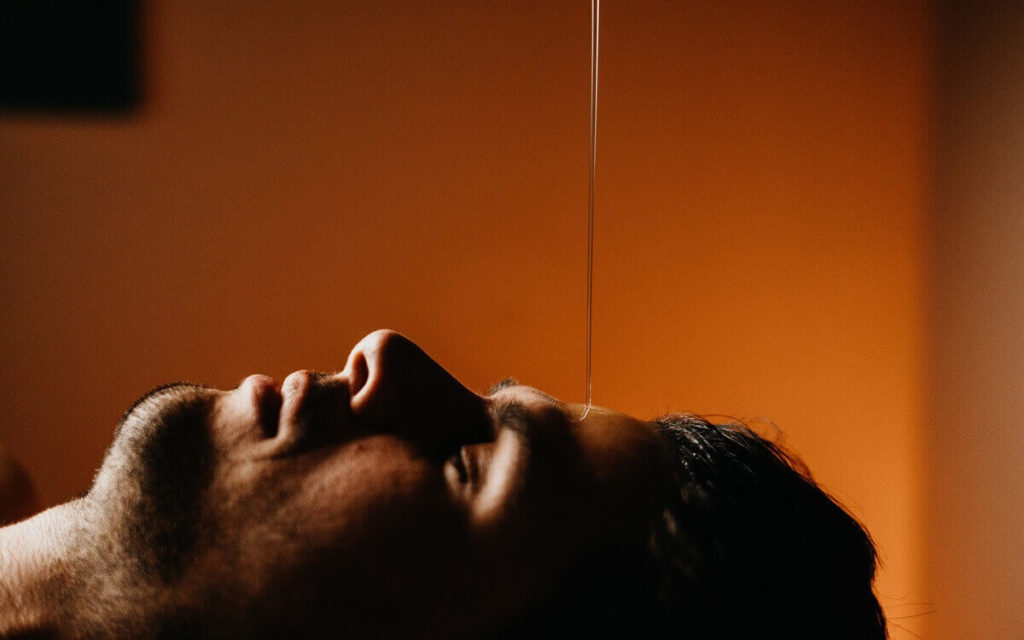
The massage with the direction of hair growth, “Anuloma,” has a calming and balancing effect on you. The second variation is performed against the direction of hair growth and is called “Pratiloma.” Its effect is stimulating and invigorating. It offers the perfect opportunity to awaken your spirits.
The term Abhyanga stands for the oiling of the entire body. However, there are also subtypes and partial massages, each serving different purposes.
Ayurvedic partial massages include, for example:
- Mukabhyanga (facial massage)
- Prishtabhyanga (back massage)
- Udarabhyanga (abdominal massage)
- Padabhyanga (foot massage)
For the Abhyanga massage, primarily warming oils are used for the body. For your face, however, cooling oils are preferred. Generally, in Ayurveda, only cooling oils are used for the face and head to prevent heat from accumulating in the head.
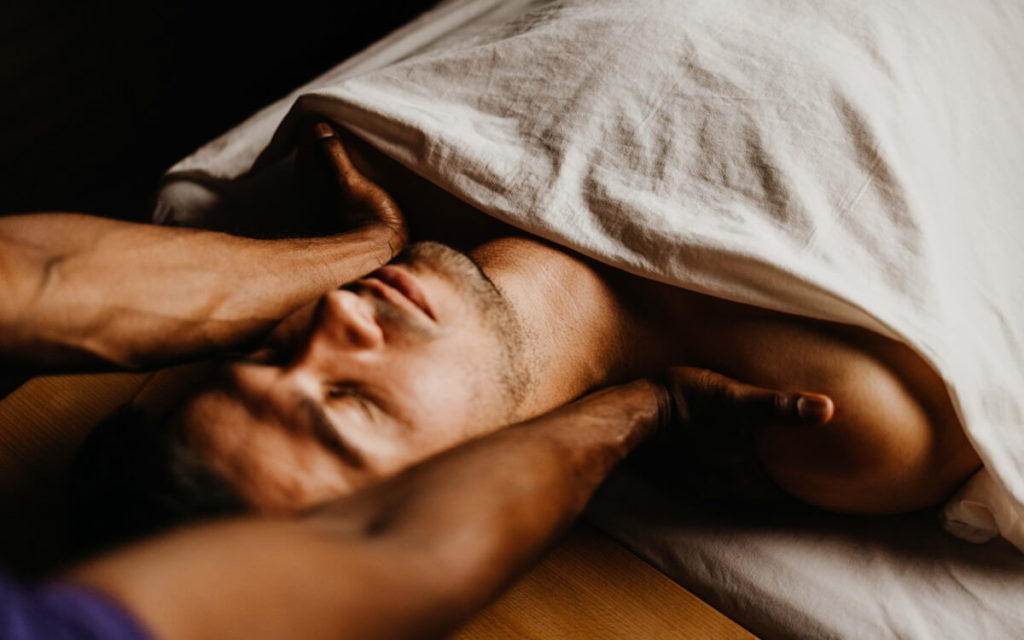
The Abhyanga massage’s effects can be divided into three areas according to Ayurvedic teachings.
- Firstly, like a classic massage, it serves the physical relaxation and loosening of your body.
- Furthermore, the treatment positively impacts your psychological well-being. Inner barriers are loosened and released.
- A third area is the “medical” application. This involves introducing the healing herbal extracts of the massage oil into your body.
Overall, the Abhyanga application has various positive effects on your body. The goal is to open your detoxification channels to promote the removal of toxins.
An Ayurvedic Abhyanga massage can also have other positive effects:
- Strengthening eyesight
- Promoting good sleep
- Stimulating organ function
- Slowing down the aging process
- Promoting beautiful skin
- Improving overall health

“The Abhyanga is far more than just a massage. It calms the nervous system, promotes regeneration, and provides a deep sense of security.”
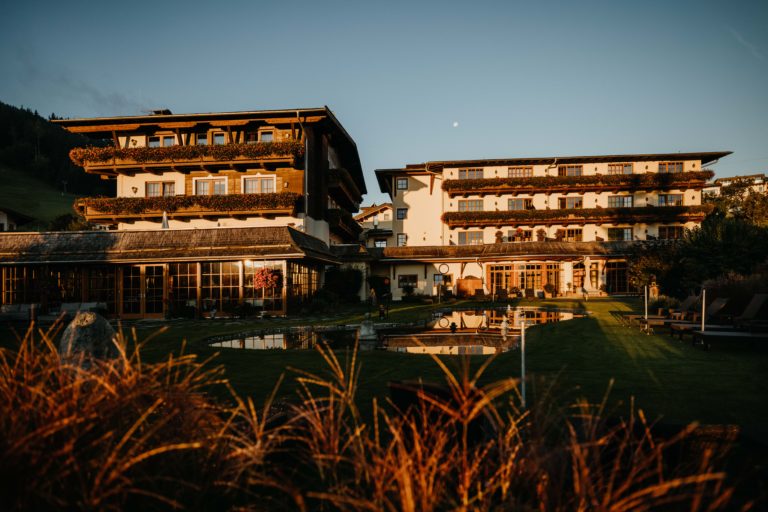
Elisabeth Naschberger-Mauracher, European Ayurveda Expert & Managing Director of the European Ayurveda Resort Sonnhof in Tyrol
What are the Pros and Cons of an Abhyanga Massage?
There are some classic indications that favor an Ayurveda massage. However, in certain body conditions, such a massage is not advisable.
Classic indications for Abhyanga:
- In case of a dosha imbalance, especially Vata (the principle of movement)
- Daily performance of intensive physical exercises (e.g., for athletes)
- As a balance for extensive mental work
- In geriatrics, as Rasayana (rejuvenating agent)
- For promoting the regeneration of tissues and organs
- For stress reduction
These conditions contraindicate Abhyanga:
- A cold with severe phlegm
- Immediately after a cleansing treatment, such as a Panchakarma cure (Ayurvedic purification therapy)
- Acute fever
- Food not yet fully digested
- Clients with severe fatigue
- Severely blocked Shrotas (body channels) caused by Ama (undigested toxins)
The Different Oils and Their Effects
The production of the special oil types for Abhyanga massage is very time-consuming and material-intensive. It sometimes takes several days. However, high quality of the oils is crucial for the therapeutic benefit.
The oils account for up to 70 percent of the treatment. For an Abhyanga massage, various oils are used and individually selected according to constitution.
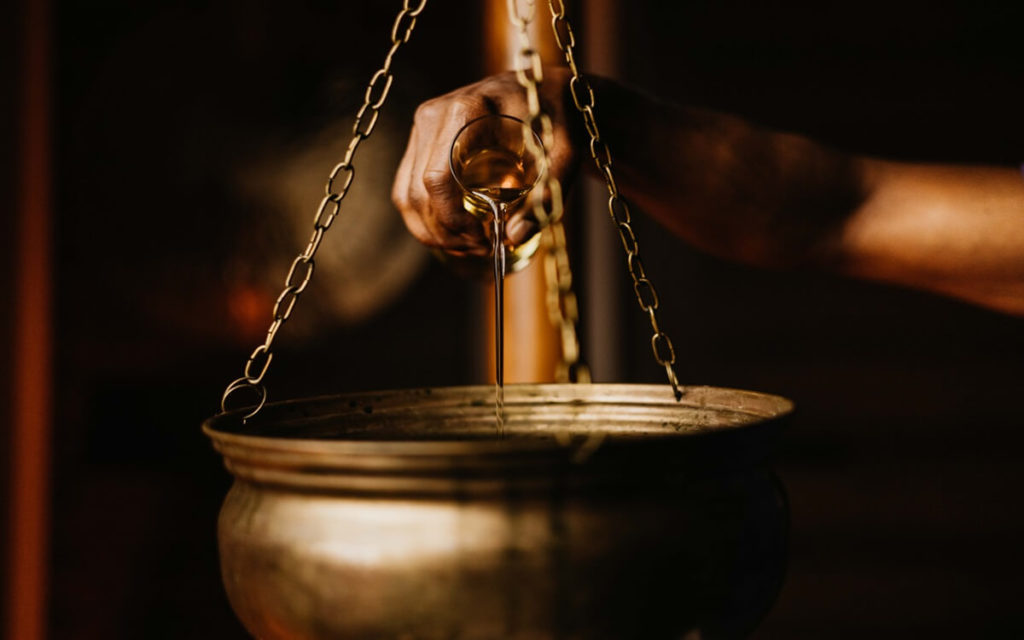
The oil nourishes your cells and organs. It releases toxins from the tissues and supports a positive perception of the body. For example, sesame oil (warming), olive oil, and coconut oil (cooling) can be used as body oils.
Sesame oil plays a significant role. It can penetrate very deeply through the tissues, adequately supplying them with nutrients. It’s not for nothing that the saying goes: Sesame, open yourself!
The cooling and fragrant properties of rose oil or almond oil enchant you during the facial massage of the Abhyanga. In Ayurveda, the face and head are always treated with “cooling” oils to prevent heat from accumulating in the head.
Three Typical Medicated Oils in Ayurveda
The oils Mahanarayan Thailam, Pinda Thailam, and Shulahara Thailam are particularly favored in Ayurvedic massage. They possess healing properties.
- Mahanarayan Thailam: An oil that has anti-inflammatory, pain-relieving, and nourishing effects on the various Dhatus (tissues). It is used for stiff joints, tendon inflammation, and rheumatic diseases. It is also excellent as a full-body oil for Abhyanga in cases of Vata or Vata imbalance.
- Pinda Thailam: An oil that has cooling and blood-purifying effects. It is used for excessive heat in the body and skin metabolic disorders. Pinda Thailam is also applied to Pitta types or Pitta imbalance.
- Shulahara Thailam: An oil that contains camphor and mustard oil, among other ingredients, has cleansing and warming effects. It stimulates metabolism. This oil is well-suited for toxin accumulation, cellulite, sluggishness, or muscle tension. It is used for Kapha constitution or Kapha disorders.

Discover high-quality massage oils now
In our European Ayurveda® Shop, you will find numerous Ayurvedic body care products of exclusive quality. Discover our massage oils now!
What are the Characteristics of an Authentic Ayurveda Abhyanga Massage?
Before the actual massage, the following points are important for you:
- Do you have an allergy?
- Have you had surgery in the past six months?
- Are you pregnant?
- Are you currently menstruating?
With the help of these questions, your therapist can precisely tailor the massage, oil, pressure and rhythm, as well as the duration and aftercare to you. Additionally, your therapist can better inform you about possible reactions.
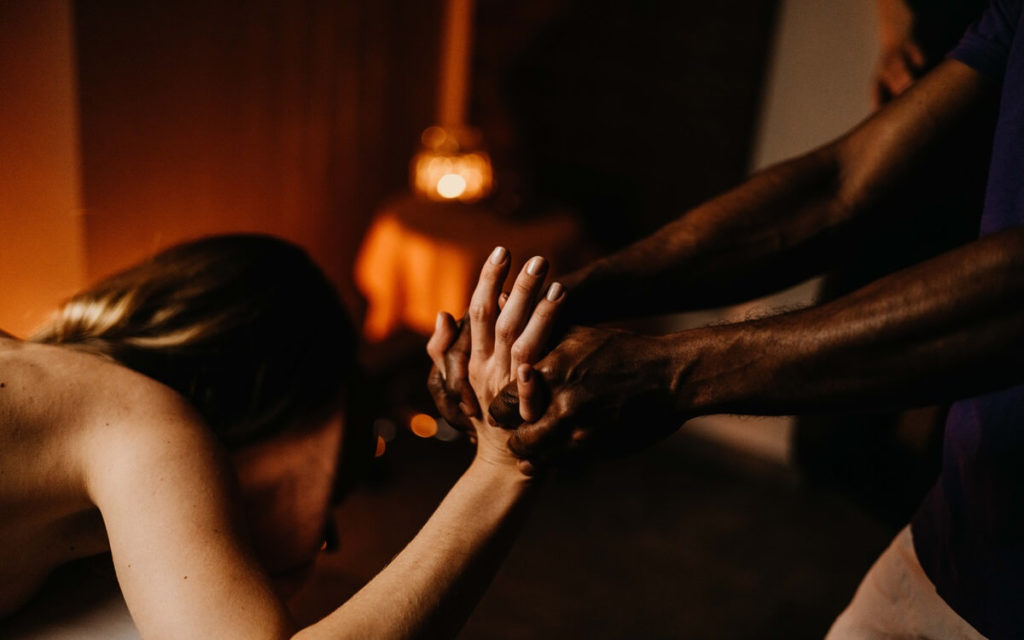
To maintain the balance gained through the massage, you should pay attention to the following points after an Abhyanga massage:
- Do not walk barefoot
- Protect yourself from drafts and wind
- Cover your head
- Do not eat heavy meals
- Do not engage in extreme activities after the massage
- Drink hot ginger water
Ayurveda Detox: Procedure and Effectiveness of Ayurvedic Detoxification
With an Ayurveda Detox cure, your body is detoxified, your soul can breathe freely, and your mind can refocus on what truly matters.