Almost every naturopathic teaching includes periods of fasting. During these times, specific foods and stimulants are intentionally avoided for a limited period. Ayurvedic fasting naturally frees the body from toxins, detoxifies, and cleanses it, thereby gaining new vitality and lightness.
Why Fast?
For millennia, fasting has been an integral part of the human way of life, involving the conscious avoidance of certain foods for a specific period.
This gives your body the chance for detoxification, cleansing, and purification. Spring and autumn are traditionally the seasons for Ayurvedic fasting.
The goal is to initiate the self-healing process and strengthen the body’s immune system. It is important to remember that fasting is not about hunger, but about the body’s recovery. With proper fasting, you achieve better performance without feeling hungry.

“Ayurvedic fasting means gently relieving the body and specifically strengthening the digestive fire. In this way, abstinence can lead to new lightness and clarity.”
Elisabeth Naschberger-Mauracher, European Ayurveda Expert & Managing Director of the European Ayurveda Resort Sonnhof in Tyrol
Overview of Ayurvedic Fasting Methods
In Ayurveda, the term Kshut Nigraha is used when referring to fasting, which roughly translates to “controlling hunger.” Also in this context is Langhana, which describes the various methods of weight reduction in general through an Ayurveda diet.

Depending on your Dosha type, there are various Ayurvedic fasting and cleansing techniques, as well as detox cures, which are individually tailored to you. You can also perform an Ayurvedic detox at home.
Water, Dry Fasting, and Monodiet
On the one hand, Ayurveda includes actual fasting cures, but these are only recommended for a short duration. Water fasting involves total fasting for a short period, meaning a complete abstinence from solid food and caloric beverages. Dry fasting is a slightly more moderate variant, where no food or liquid is consumed during the day.
Another variant is the monodiet, where only easily digestible foods (e.g., rice with yogurt, Kitchari, or vegetable soup) are eaten for a certain period. This can also be done as a juice fast, where only juices are consumed for a few days.
All these fasting cures should not last longer than five days and must be tailored to your Dosha type!
Panchakarma
However, a Panchakarma cure is better suited, as it focuses not only on abstaining from certain foods but also on eliminating harmful substances from your body. The Panchakarma cure is the best-known cleansing cure in Ayurveda and translates to “five actions.”

Cleansing or regeneration can occur in five different ways:
- Through the intestines with laxatives (Virechana)
- Through the intestines with enemas (Vasti)
- Through the mouth by vomiting (Vamana)
- Through the nose with medicated oils (Nasya)
- Through the blood by bloodletting (Raktamokshana)
Before an Ayurvedic fasting cure, your body is systematically prepared for the elimination of foreign substances. Massages and steam baths are used to support this process, opening the pores and tissues.
An expert will decide which treatment is right for you based on your constitutional types and your physical and mental condition. With our book, you can also perform a Panchakarma cure at home:
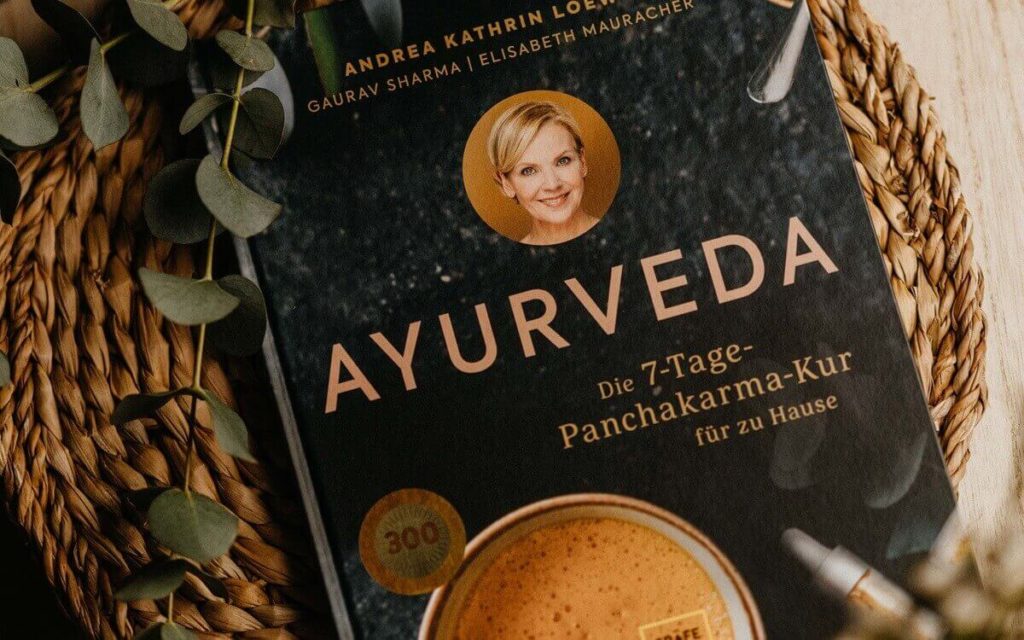
Anyone can do Ayurveda! Easily perform a detox cure in the comfort of your own home. You’ll find instructions in our book “Ayurveda – The 7-Day Panchakarma Cure for Home.”
What is Ayurvedic Therapeutic Fasting?
Ayurvedic therapeutic fasting is a type-specific partial fast based on a wholesome and vegan diet. It is an effective alternative when complete abstinence from food is not possible. It primarily involves knowledge of the ingredients and spices used as therapeutics in Ayurveda.
In Ayurveda, complete abstinence from solid food is not recommended. This can permanently weaken the digestive fire, Agni, leading to digestive disturbances. Therefore, Ayurvedic therapeutic fasting is not a diet, but a valuable relief.
Freeing your body from toxins stabilizes Agni, which represents the digestive juices. Fasting in Ayurveda not only frees your body but also your mind. You can excellently support the cleansing phase with light yoga, meditations, walks, and soothing massages.
Before the appropriate cure is found for you, a clarifying anamnesis discussion takes place with an Ayurveda expert. Your Doshas will be determined, and any open questions and wishes will be clarified. Afterwards, you will receive an Ayurveda Fasting Guide, according to which you can carry out the cleansing cure.
Guide for an Ayurvedic Fasting Day
Cleansing with Ayurveda primarily aims to balance your Doshas, optimize Agni, and strengthen your psyche. The cures differ depending on your individual needs.
Above all, however, it depends on the following three prerequisites:
- Choose a day with plenty of time for rest and relaxation, as well as exercise in the fresh air.
- Drink boiled water and rice broth as cleansing beverages throughout the day (recipe below).
- Eat easily digestible meals in moderate portions.
It is best not to work during an Ayurvedic fasting cure to avoid stress. Only in complete relaxation can your body effectively eliminate toxins and regenerate. Integrate self-massages, yoga, and meditation into your daily routine to best facilitate vitalizing renewal.
Rules During an Ayurveda Fasting Cure
The following general rules apply to all cleansing cures and every type of fasting:
- No stress during fasting: A relaxed nervous system is a prerequisite for all metabolic and cleansing processes. Make sure to include sufficient rest and relaxation phases during your fasting period.
- Stay in rhythm: The more regularly you consume food, the better your body can gain inner strength and stability.
- Drink hot water: Drinking hot water cleanses the circulatory channels (Srotas) and stimulates healthy elimination. Boiled water improves conductivity and further promotes internal cleansing.
Recipes for an Ayurveda Fasting Cure at Home
Many dishes for the Ayurveda fasting cure can be prepared yourself. This is very easy with our Ayurveda cookbook. The focus is always on an individual and holistic approach. Through natural detoxification at home, your Doshas are balanced, and your mental health is strengthened.

Here are three recipes for Ayurvedic fasting at home for inspiration:
Rice Broth
| Ingredients | Preparation |
| – 40g Basmati rice – 560 ml water – 1 pinch of salt | – Roast 2 tbsp (40 g) Basmati rice for 1–2 minutes in a pot, then add 560 ml hot water. – Simmer the rice until soft for 15 minutes, add 1 pinch of rock salt, and strain the rice water. – Pour into a thermos and drink as a “snack” in the morning and afternoon. |
Kitchari with Red Rice
| Ingredients | Preparation |
| – 200 g mung beans – 100 g red rice – 2 tsp Original Ayurveda Ghee or sesame oil – 700 ml water – ½ tsp each of ginger and black pepper, cumin, turmeric, and coriander – ½ tsp rock salt – Fresh coriander | – Soak the mung beans and rice overnight and rinse in a sieve until the water runs clear. – Bring the water to a boil, add mung beans and rice. Reduce heat and simmer covered. – Stir occasionally. If the stew is too thick, add more water if necessary. – After half an hour, heat the ghee or oil in a pan, roast the spices for 5 minutes, then add to the rice. – Remove the pot from the heat and let it steep, covered, for 10 minutes. Serve with fresh coriander to taste. |
Lord Buddha Kheer
| Ingredients | Preparation |
| – 1 cup Basmati rice (or Jasmine rice) – 5 cups whole milk – 1 cup cashews (roasted) – 1 tsp cardamom – 20 drops rose water – Saffron threads (dissolved in a little water) | – Wash the rice and let it stand covered with water for about 30 minutes. – Drain the water, add milk, and simmer for 20 minutes. – Mix with sugar, add cashews, rose water, and spices, then enjoy. |
Mung Dal Fasting Soup with Vegetables
| Ingredients | Preparation |
| – 100 g mung dal – 1 tsp ghee – 1 tbsp ginger, finely diced – ¼ tsp ground cumin – ½ tsp ground coriander – ¼ tsp ground turmeric – ¼ tsp asafoetida – ½ tsp sweet paprika powder – 1,250 ml water – 2 bay leaves – 100 g parsley root – 100 g carrots – 1 tbsp ghee – 1 tbsp fresh savory, finely chopped (or 1 tsp dried savory) – Rock salt to taste – 1 tbsp lemon juice – 2 tbsp flat-leaf parsley, finely sliced | – First, roast the dal in a pot, stirring, until it begins to smell slightly. Then rinse in a sieve under running water. – Melt the ghee in a pot, add the ginger, and gently sauté for a few seconds over medium heat. Then remove the pot from the heat and sprinkle all the spices over the ginger. – Add the water, dal, and bay leaves. Cook the dal, covered, over low heat for 20 minutes. – Meanwhile, peel the parsley root and carrots and cut them into small cubes. – Melt a little more ghee in a pot. Add the parsley root and carrots and sauté everything for a few minutes over low heat, stirring constantly. Then remove the pot from the heat. – Add the sautéed vegetables and savory to the mung dal soup, salt, and gently simmer everything for another 10 minutes. – Refine with lemon juice. Serve with fresh parsley and enjoy warm. |
Read more: Ayurveda Detox
In our hectic and fast-paced world, there is often no time for healthy and wholesome food. A healthy diet is often neglected. With an Ayurveda Detox Cure, your body is detoxified, your soul can breathe a sigh of relief, and your mind can refocus on the essentials.