last updated on 02/26/2026
The human intestine performs a great deal of work every day. In addition to metabolism, it also influences almost 80 percent of your immune system. A healthy gut flora is therefore indispensable for your entire organism. With intestinal cleansing, you can completely eliminate harmful bacteria and alleviate discomfort. Here, you will learn how an Ayurvedic intestinal cleansing works and how you can perform it at home.
Ayurveda is an Indian healing art with a long tradition. Translated, the term means “knowledge of life.” However, life looks very different in various cultures.
In the first few years, it slowly became clearer to us that the needs of Indians and Europeans differ. Thus, we eventually developed the concept of European Ayurveda®.
The Essentials: What Does Ayurvedic Intestinal Detoxification Do?
Ayurvedic intestinal cleansing aims to release accumulated Ama (metabolic waste products), strengthen the digestive fire (Agni), and balance an elevated Vata dosha. The goal is to regulate digestion and gently relieve the body.
Typical measures include drinking warm water or ginger water, a easily digestible diet, and cleansing enemas. These applications support natural detoxification, promote healthy digestion, and contribute to strengthening the immune system.
Read more about intestinal cleansing and detox:
- 5 Tips to Stimulate Your Digestion
- Ayurvedic Detoxification: Methods & Home Remedies for Ayurvedic Detox
- Hot Water & Ayurveda: Why You Should Drink Warm Water
- Detox Now – Why Detox is More Important Than Ever
Benefits of Ayurvedic Intestinal Cleansing
With an Ayurvedic detox intestinal cleansing, you enhance your well-being and free your body from toxins. Furthermore, chronic illnesses are alleviated, and acute discomfort can be treated.
Physical discomforts that can be particularly well treated by Ayurvedic intestinal cleansing include:
- Allergies
- Headaches and Migraines
- Irritable Bowel Syndrome
- Chronic Digestive Problems
- Weakened Immune System
- Rheumatism
Intestinal cleansing or gut rehabilitation can also help with psychological issues such as depressive moods, persistent exhaustion, or sleep problems.
Why Perform Ayurvedic Intestinal Cleansing?
With Ayurvedic intestinal cleansing or detoxification and a healthy diet, you can protect your intestines and prevent diseases in the long term. The intestine is responsible for eliminating harmful bacteria. With an unhealthy gut flora, the risk of illness increases.
The cause and problems lie in the inner wall of the large intestine. There, bacteria or metabolic residues – also called ‘Ama’ in Ayurveda – accumulate. The greater the number of deposited toxins, the easier it is for diseases to take hold.
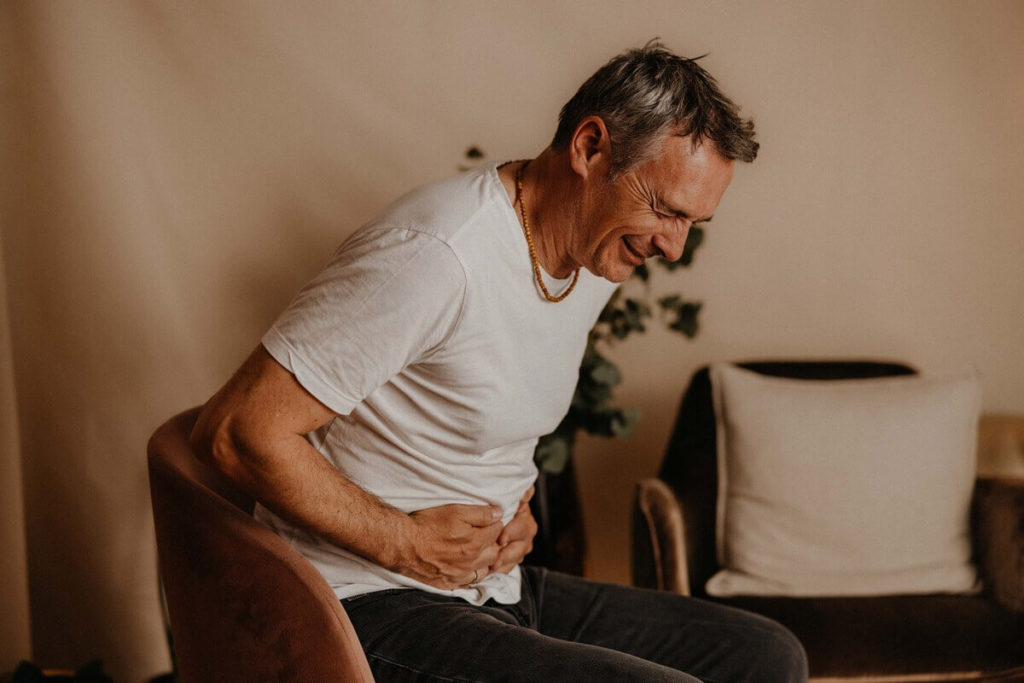
Ayurvedic intestinal detoxification is also recommended if you have no acute discomfort. The result after a completed detoxification is immediately noticeable. You feel lighter and have more energy again.
Intestinal Cleansing and Rehabilitation in Ayurveda
In Ayurveda, a distinction is made between intestinal cleansing and intestinal rehabilitation. Intestinal cleansing is a short-term process in which you detoxify your large intestine with the help of home remedies.
In intestinal rehabilitation, however, various measures are combined and applied as a longer-term cure. This can take several weeks or months and is advisable if your intestines are particularly weakened. It is best to undergo rehabilitation under the experienced guidance of Ayurveda experts at a resort.

“Healthy digestion is the foundation for vitality and well-being in Ayurveda. When the intestines are specifically relieved, the entire organism can regain its balance.”
Dr. Alaettin Sinop, Specialist in General Medicine with a focus on naturopathic procedures
How Does Ayurvedic Intestinal Cleansing Work at Home?
You can use Ayurveda in various ways to cleanse your intestines. During the classic Ayurvedic fasting cure (Panchakarma cure), you largely abstain from solid food. This means the intestines have very little work to do and can regenerate better.

Discover the 7-Day Panchakarma Cure for Home Now
In our book “Ayurveda: The 7-Day Panchakarma Cure for Home,” our experts show you how to gently detoxify in 7 days.
Another option is the active intestinal cleansing cure, which is called ‘Shankprakshalana’ in Ayurveda.
The most important thing is to take plenty of time for an intestinal cleanse. The activities in the intestines often only become noticeable after hours or even days. Furthermore, your body needs energy during this time and thus more rest periods.
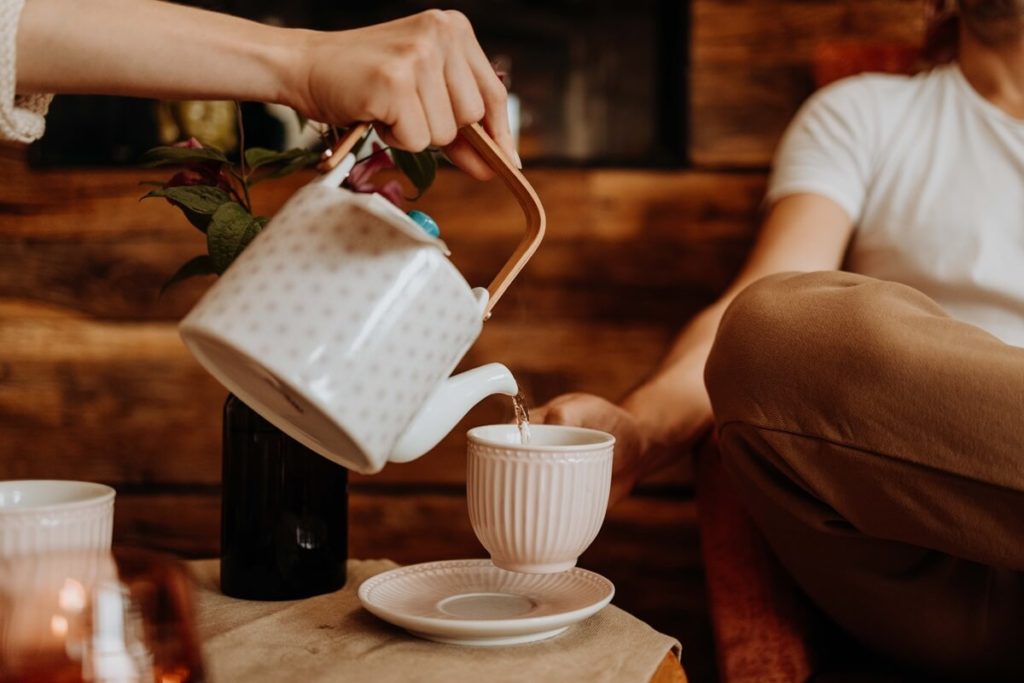
During the cleansing process, your intestines flush out, causing you to lose a lot of fluid. To counteract this, you should ideally drink two to three liters of warm water per day. Your body needs even more fluid if you perform the cleansing with Epsom salt.
The Right Diet for Ayurvedic Intestinal Cleansing
Ayurvedic nutrition plays a major role in achieving the best possible results from your treatment. In addition to active exercises, the right foods support your intestinal detoxification.
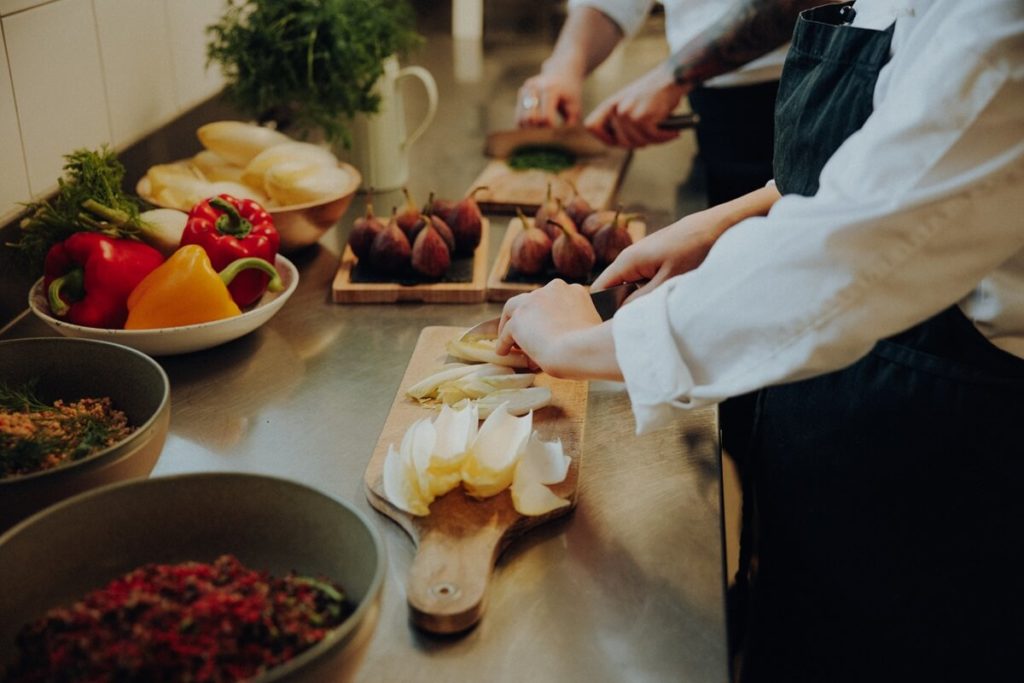
Especially vegetables and legumes, as well as the following alkaline foods, have a positive effect:
- Apples
- Pears
- Arugula
- Endive
- Broccoli
- Almonds
- Mushrooms
- Vegetable Juices
- Green Tea
- Amalaki
Bitter substances are a great support for Ayurvedic intestinal cleansing. In the morning, you can drink a glass of warm water with lemon juice, honey, and ginger on an empty stomach. This mixture stimulates your metabolism and, as a daily routine, has a long-term positive effect on you and your gut flora.
Ayurvedic Recipes for Your Intestinal Health
With the right recipes, you can do a lot for your well-being and intestinal health. Both as a supportive measure and as prevention, the following inspirations have a positive effect on you and your body.
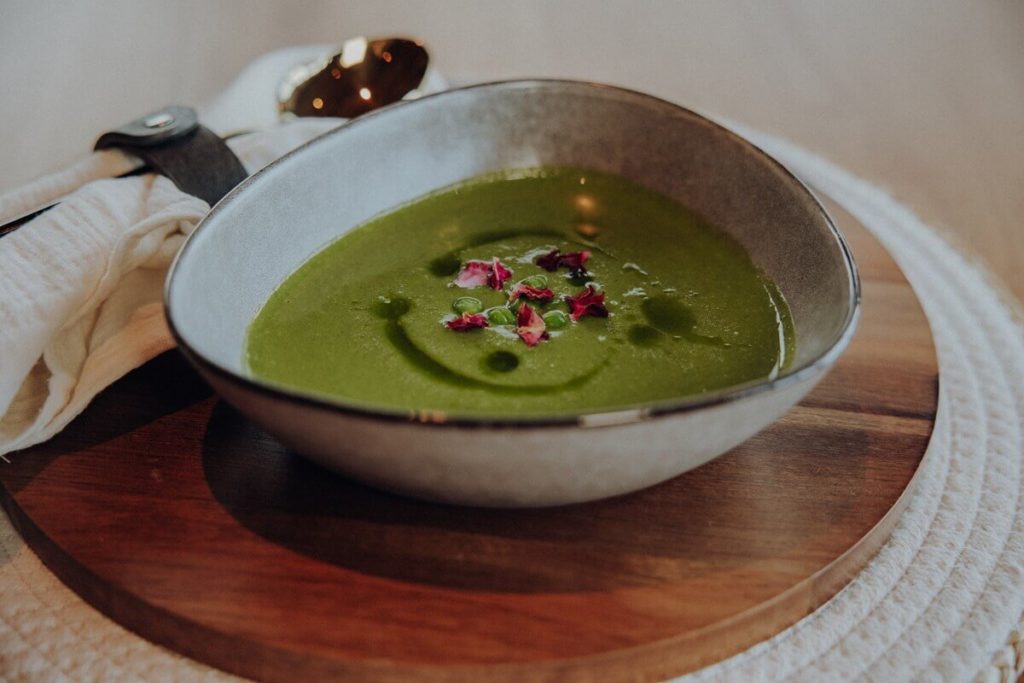
Recipe #1: Ginger Water
Ginger helps to cleanse and detoxify your body. It promotes digestion and stimulates metabolism and the digestive fire ‘Agni’. It is best to drink ginger water lukewarm and throughout the day.
| Ingredients: | Preparation: |
| – 4 slices fresh ginger – 1 liter boiling water | – Wash the ginger and cut it into thin slices. – Then bring it to a brief boil in water. – Remove the pot from the stove and let it steep for about 15 minutes. |
Recipe #2: Kitchari
Kitchari is a light stew made from mung beans and rice, rich in nutrients and protein. If you are doing an Ayurvedic intestinal cleanse, you can consume this dish up to three times a day. The recipe is suitable for all three Dosha types.
| Ingredients: | Preparation: |
| – 1 cup green mung beans – 1 cup basmati rice – 3 tsp ghee – 1 tsp cumin, whole – 2 bay leaves – 1 tbsp fresh ginger, grated – 1 pinch asafoetida powder – 1 tsp turmeric – 3 green cardamom seeds – 1 tsp peppercorns – 1 pinch salt – 8 cups water – Vegetables as desired, about a handful (e.g., carrots) | – Soak mung beans in water overnight, ensuring they are covered. – Grind pepper, cardamom, and cumin in a mortar. – Heat ghee in a pot, add cumin. After briefly sautéing, add the remaining spices. – Stir in mung beans, rice, and salt, deglaze with 8 cups of water, and bring to a brief boil. Reduce heat and simmer with a lid for about 40 minutes. – After 20 minutes, add the remaining vegetables, e.g., carrots, and cook along. – Remove bay leaves before serving. |
Recipe #3: Probiotic Lassi
Lassi has a cooling effect on your body and supports digestion. Lassi also opens subtle bodily channels, leading to more freshness and energy. The basic recipe can be refined or expanded as desired.
| Ingredients: | Preparation: |
| – 1 cup yogurt – 4 cups lukewarm water – Spices to taste (e.g., cinnamon) | – Thoroughly mix both ingredients with a blender or whisk until the mixture foams. – Skim off the top foamy layer and filter the rest. A clean cotton cloth or a very fine sieve is best suited for this. – Then season to taste (e.g., with cinnamon) and enjoy. |
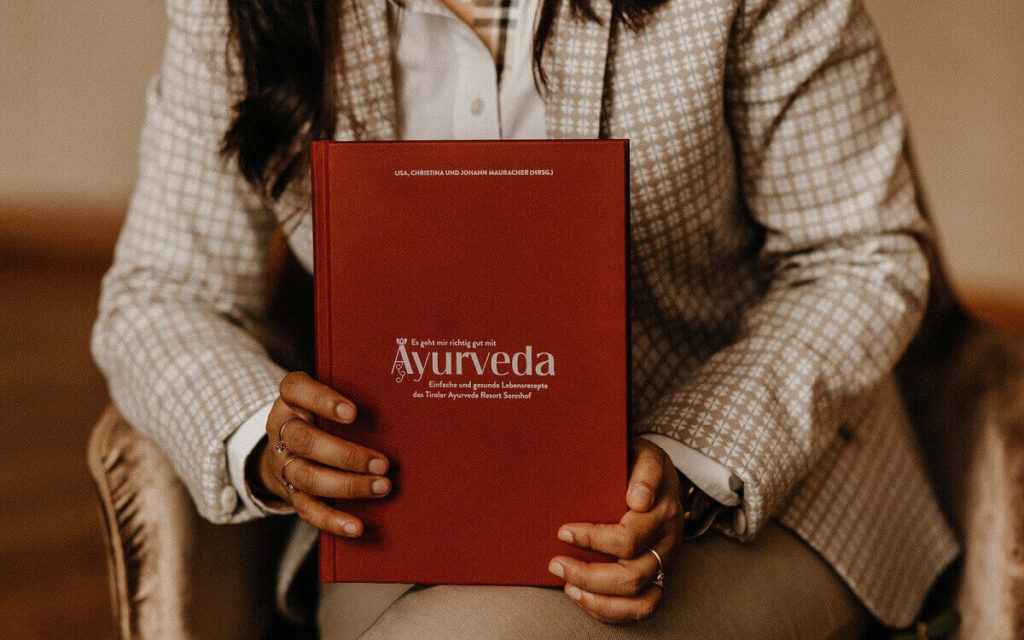
Ayurvedic Cookbook for Home
Discover the cookbook “I Feel Really Good with Ayurveda” for home now – with 60 simple and healthy recipes from the European Ayurveda Resort Sonnhof!
Natural Remedies for Intestinal Cleansing: Psyllium Husks, Epsom Salt, and Glauber’s Salt
Crushed psyllium husks contain a large amount of digestive-promoting substances that, when taken with water, swell in the intestines. The increased food volume stimulates intestinal activity, which softens deposits on the intestinal wall and allows them to be eliminated more quickly.
You should not consume more than a maximum of 40 grams of psyllium husks. It is best to drink the mixture one to two hours before a meal. To do this, pour a small amount of psyllium husk powder with water and drink the glass as quickly as possible.
Although rapid consumption contradicts the principles of Ayurveda, the seeds swell very quickly and become unpalatable.
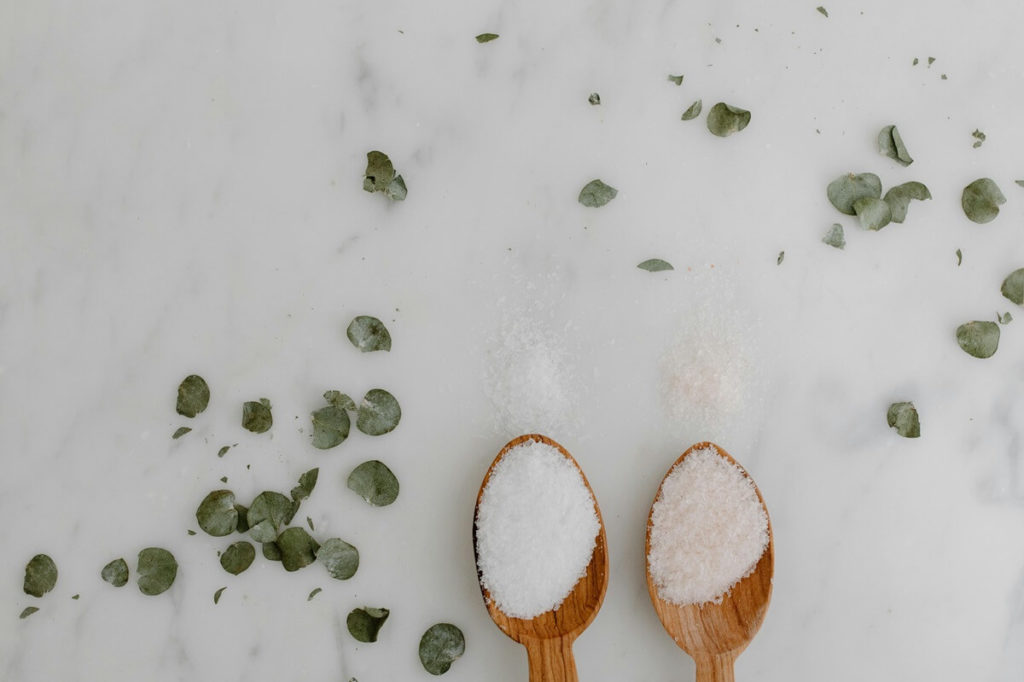
Epsom salt binds water in your intestines, which leads to softer stools. Similar to psyllium husks, the volume of intestinal contents is increased here, and intestinal activity is stimulated. The effect begins approximately one to three hours after ingestion.
Regarding the amount of Epsom salt you take, there is no general recommendation. It is best to try if one tablespoon is sufficient or if you can take a little more. You simply dissolve the Epsom salt in warm water. Immediately afterward, drink plenty of still water, as the salt dehydrates your body.
Glauber’s salt is also dissolved in a glass of lukewarm water and then drunk in sips. You can dissolve up to four teaspoons of magnesium sulfate at once.
Example of a Daily Plan for Ayurvedic Intestinal Cleansing
You can combine your diet and gentle exercise in this way, for example.
Example Daily Schedule for an Ayurvedic Intestinal Cleansing at Home:
| Recommended Time of Day: | Our Recommendation: |
| 7:00 AM | Slowly sip a large glass of lukewarm water with lemon juice, honey, and ginger. |
| 7:15 AM | First, light yoga exercises or a gentle abdominal massage. |
| 7:30 AM | Drink a second large glass of lukewarm water with salt. |
| 7:45 AM | Perform further gentle forms of movement. |
| 8:00 AM | Drink a third glass of water with Epsom salts. |
| 9:00 AM | Approx. 10-minute abdominal massage with plenty of massage oil. |
| 9:15 AM | Ayurvedic Breakfast: For example, a warm, vegan porridge with apple and cinnamon. |
| 10:00 AM | Repeat your drinking cure and yoga exercises (drink, yoga, drink, yoga, drink) for the next hour. |
| 11:00 AM | Relax before lunch and rest. |
| 12:00 PM | Cook a fresh Ayurvedic lunch that promotes your intestinal cleansing. |
| 1:00 PM | After eating, take a digestive walk. |
| 2:00 PM | Time for another intestinal cleanse with psyllium husks or Epsom salt. |
| 3:00 PM | For a light snack, fresh fruit and freshly squeezed juice, as well as nuts, are excellent now. |
| 4:00 PM | Drink a cup of ginger water or lukewarm ginger tea. |
| 6:00 PM | Prepare a easily digestible dinner – ideally a light soup. |
| 9:00 PM | End your day with yoga and meditation and massage your feet for about 10 minutes with plenty of oil. |
| 10:00 PM | Before falling asleep, perform a final 10-minute abdominal massage, as in the morning. |
During the time you are performing the intestinal cleansing, make sure to avoid stress. Stress negatively affects your energy levels and can impair the success of the cure.
Process of a Professional Intestinal Cleansing Cure
At the beginning of each cure, a consultation with an Ayurveda expert takes place, clarifying important details about you and your health.
Based on this, an individual treatment and nutrition plan is then created for you. This takes into account the results of the examination and your lifestyle and circumstances.

Your Dosha type will also be determined to bring the three Doshas Vata, Pitta, and Kapha into balance. This restores your life energies.
Depending on the cure you choose, one to three Ayurvedic treatments take place daily. The first few days begin with detoxification and elimination from your intestines.
With the help of Ayurvedic colon irrigations and enemas, your intestines are then emptied and cleansed from within. Toxins are released from your body and transported away via the gastrointestinal tract. This is accompanied by external treatments such as Ayurvedic massages and forehead oil applications.
Also helpful for an intestinal detox is the intake of special Ayurvedic herbs and spices. These additionally stimulate cleansing and detoxification and strengthen you. As soon as your intestines are completely cleansed, healthy rebuilding begins.
Ayurvedic Cures for Cleansing Your Intestines
There are various Ayurvedic cures and programs that help you cleanse your intestines and gain new energy.
- Panchakarma Cure: A profound cure for cleansing body, mind, and soul. With the help of ghee, oil massages, and peelings, toxins are released from your body. On a purgation day, your body flushes out the toxins, and you gain new strength for the rebuilding phase.
- AyurDetox Intensive Cleansing: With the help of internal cleansing, as well as full-body, stamp, and herbal powder massages, your body is freed from toxins. This strengthens your immune system and restores your well-being.
- Immune Power Cure: To build up your immune system, a combination of oil massages and yoga sessions brings your intestines and your Doshas back into balance.
How Can Intestinal Discomfort Be Prevented and Alleviated in Ayurveda?
With the Ayurvedic way of life, you can keep your body healthy naturally. This includes a healthy gut free from constipation, diarrhea, or bloating. In Ayurveda, there is a solution for every digestive problem that will help you alleviate your discomfort.
Ayurveda for Constipation
In conventional medicine, constipation is usually attributed to insufficient “motility” of the intestines – known as intestinal motility. This is caused by an improper diet, low fluid intake, or too little exercise.
In Ayurveda, all these factors weaken the digestive fire ‘Agni’, which can no longer adequately digest ingested food. As a result, your stomach remains constantly full because the digestive tract can no longer keep up with its task.
To rekindle your Agni, Ayurvedic foods or spices such as ginger or fennel are used. Toxins (Ama) are additionally treated with special herbs.
Toxins are metabolic waste products that are not transported away by your body. From an Ayurvedic perspective, they are considered disease-causing.
The following Ayurvedic remedies help with constipation:
- Aloe Vera
- Ginger
- Deepana (spices that stimulate Agni, such as cumin, mustard seeds, or asafoetida)
- Ayurvedic Herbs (Trikatu, Triphala)
- Bitter and Pungent Spices
Ayurveda for Diarrhea
If your intestinal contents are expelled faster than normal, diarrhea occurs, causing your body to lose important salts, nutrients, digestive juices, and especially water. The increased risk of dehydration is the consequence. Here, quick relief is needed. Make sure to drink enough still water or unsweetened tea.
From an Ayurvedic perspective, diarrhea indicates an overly strong digestive fire. The reason for this is poor utilization of food in the digestive tract. To counteract this, your Agni must be reduced, which can be achieved with the following measures:
- Avoid solid food
- Fasting period of 24 to 36 hours
- Regular enemas
- Drink buttermilk, coconut water, and rice bran
- Eat cooked rice, yogurt, and nutmeg
These foods have proven helpful for diarrhea in Ayurveda:
- Ajwain Water
- Barley Water
- Whey
- Pomegranate Peel Powder
- Mangosteen
Ayurveda for Bloating
If an unusually large amount of air accumulates in your intestines, bloating occurs. This can be caused by foods that promote bloating, as well as by eating hastily, which leads to swallowing too much air. The majority of intestinal gases are produced during the digestion process itself.
When stomach acid turns into carbon dioxide, it leads to a feeling of fullness or belching. Unused carbohydrates that ferment in your intestines or an intolerance to lactose can also lead to bloating. In this case, sugar compounds reach the large intestine undigested and ferment there.
In Ayurveda, dietary principles and the right nutrition are used to combat bloating. Take plenty of time to eat and avoid stress during food intake.
The following foods further promote bloating:
- Onions
- Cabbage
- Beans
- Lentils
- Raw food
- Unripe fruit
- Coarse whole grain bread
- Deep-fried foods
For acute bloating, taking ginger, fennel, and Piper longum (long pepper) helps.
Ayurveda for Irritable Bowel Syndrome
Irritable bowel syndrome is diagnosed when gastrointestinal problems such as abdominal pain, irregular bowel movements, or bloating occur multiple times within twelve months. Although irritable bowel syndrome is not medically dangerous, it significantly impairs your quality of life.
In Ayurveda, a Vata imbalance is considered the cause of irritable bowel syndrome, where the elements of air and space combine. Irritable bowel symptoms are counteracted in Ayurveda by strengthening Vata and the digestive fire ‘Agni’.
This requires comprehensive therapy, including a change or adjustment of diet. Only then can your symptoms be resolved in the long term.
Ayurvedic Tips for Intestinal Discomfort
In addition to Ayurvedic herbs such as ginger, fennel, aloe vera, and cumin, a daily routine also contributes significantly to a healthy gut. It is important that you never ignore your hunger and eat regular meals at approximately the same times.
Ayurveda recommends not eating dinner later than 8:00 PM to allow sufficient time for digestion before bedtime. Also, pay attention to conscious and stress-free eating. After eating, you should not drink anything for a while, but allow your intestines to rest.

A healthy diet is crucial for physical well-being and a healthy digestive tract. In Ayurveda, diet is adapted to the seasons and the current state of your body. This means cooking seasonally and preferring light meals in summer, while you can eat heartier in winter.
Possible Side Effects Before Improvement
Intestinal cleansing represents a certain degree of adjustment for your body. A lot happens within you, and your body first needs to cope with it. This can lead to a so-called “detoxification crisis.” Possible side effects include:
- Headaches
- Lack of energy
- Constipation
- Bad breath
- Increased sweating
Thus, side effects may initially occur during an Ayurvedic intestinal cleansing before an improvement in symptoms sets in.
It is almost impossible to predict possible side effects because every body is unique and reacts differently to cleansing. In Ayurveda, however, regarding intestinal detoxification, it is generally true: Your body reacts in its own way because it is an individual system.

Detox at Sonnhof: Cleanse Body, Mind, and Soul
Many of our guests want to shed old burdens and cleanse body, mind, and soul from within. A detox at Sonnhof is perfect for this. We will show you what such a detox cure looks like at our hotel.