Last updated on February 26, 2026
A person’s skin condition reveals a lot about their health and emotions. It can show whether you live in harmony with yourself and your environment. A balanced work-life balance or a lot of stress also manifest in the skin’s appearance. Here, you’ll learn how Ayurvedic skincare helps you achieve radiant, beautiful, and well-cared-for skin.
In the first few years, it slowly became clearer to us that the needs of Indians and Europeans differ. This is how we eventually developed the concept of European Ayurveda®.
The Essentials: Skincare in Ayurveda
Ayurvedic skincare follows a holistic approach, relying on natural ingredients like plant oils, ghee, and medicinal herbs. It is based on an individual assessment of skin type according to the Doshas, to precisely tailor care and treatment.
In addition to external applications such as massages and herbal masks, internal care through a diet appropriate for one’s type also plays a central role. The goal is to support the skin’s natural balance and sustainably strengthen its health.
Read more about skincare in Ayurveda:
- 5 Tips to Sustainably Improve Your Skin’s Appearance
- Ayurveda for Neurodermatitis: Holistic Help for Healthier Skin
- Ayurveda for Hair Loss: Natural Help for Beautiful Hair
What Factors Influence Your Skin?
From an Ayurvedic perspective, your skin’s appearance can be influenced by three main pillars: nutrition, proper skincare, and mental balance. The bioenergy Pitta, in particular, is responsible for beautiful skin.
Pitta’s main seat is the liver area, which requires good liver and duodenum function for beautiful and healthy skin. An imbalance of these organs and hormonal regulation will eventually leave their marks on the skin.

“Beautiful skin doesn’t start with external care, but with inner balance. Ayurveda therefore always views skin health holistically.”
Deepa Naik, Ayurveda Specialist at European Ayurveda Resort Sonnhof in Tyrol
The Different Skin Types in Ayurveda
In Ayurveda, skin types are differentiated into three categories according to the three constitutional types: Vata, Pitta, and Kapha. Your skin’s appearance varies depending on your Dosha, which provides insight into your type. Take our Dosha test right here.
- Vata skin is fine-pored, dry, cold, pale, dull, rosy or brownish, and especially sensitive to sun exposure. To protect your skin, mild cleansing and intensive care are important for this type.
- Pitta skin is often reddish, warm, moist or oily, and prone to inflammation (especially due to improper diet). Freckles or moles are also characteristics of Pitta skin. For this skin type, intensive cleansing and low-irritant, cooling, and sebum-reducing skincare products are important.
- Kapha skin is cool, dense, well-hydrated, rather oily, and large-pored. Regular cleansing is beneficial here, although this skin type is the easiest to care for.
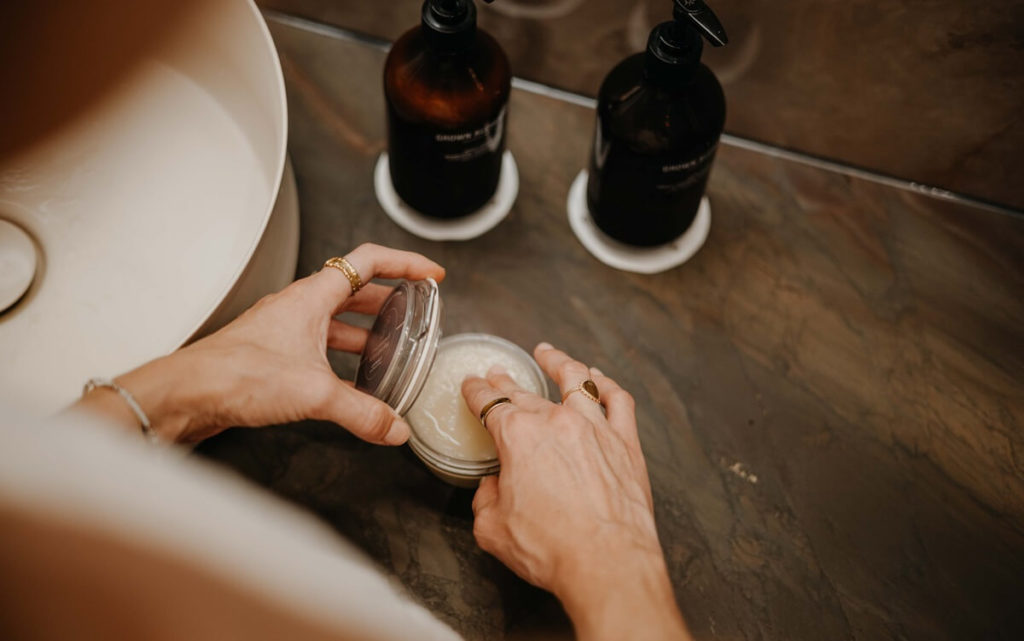
Discover suitable skincare products for your Dosha now
Naturally beautiful with Ayurveda! Make your skin glow with European Ayurveda® skincare products – tailored to your needs and your Dosha.
The Right Skincare for Your Constitutional Type
Ideally, you should adapt your skincare to your skin’s needs. Your Dosha type can be helpful here.
Therapeutic massages:

| Vata | – Warm sesame, avocado, olive, almond, or walnut oil – Gentle, soothing massage for more relaxation and revitalization of the Vata personality |
| Pitta | – Almond, coconut, sunflower, apricot kernel, or olive oil – Soothes and cools the skin |
| Kapha | – Almond, rapeseed, thistle, grapeseed, or apricot kernel oil – Essential oils of lemon, cypress, lavender, clove, camphor, or bergamot – Manual massage for lymphatic drainage and activation of skin metabolism |
Masks and Compresses:

| Vata | – Warm compresses, sweat treatments, and face masks with avocado, cream, banana, oatmeal, sandalwood powder, and herbs like jasmine and basil |
| Pitta | – Mask or compress made from parsley, rose water, coriander, lotus, spikenard, or lavender with yogurt or buttermilk |
| Kapha | – Hot compresses and steam baths with cistus water or medicinal herbs like ginger, turmeric, neem, and clary sage |
Proper Nutrition:

| Vata | – Natural sweet fruit juices – Warm, fresh soups with rice, spelt, potato, carrot, fennel, and asparagus – Two tablespoons of olive oil daily with spices like fennel, nutmeg, ginger, and saffron |
| Pitta | – Especially green, slightly bitter vegetables – Raw food like leafy salads, artichokes, chard, endive, chicory, and asparagus – Apples, millet, rice, potato – Spices like cinnamon, cardamom, turmeric, and coriander |
| Kapha | – Avoid fatty, fried, sour, and salty foods – Increase pungent and metabolism-stimulating spices like pepper, ginger, chili, turmeric, and garlic |
Supplements:
With the right supplements, you can do a lot of good for your body and your skin. The following Ayurvedic medicinal plants promote your skin’s well-being, have anti-inflammatory effects, and prevent dryness and skin aging (anti-aging):
- Amalaki: antioxidant, cooling
- Chandana: cooling, soothing, brightening
- Guduchi: antioxidant, blood-purifying
- Haridra: blood-purifying, anti-allergic
- Khadira: anti-eczema, astringent
- Mandukaparni: cooling, wound-healing, anti-inflammatory
- Manjistha: blood-purifying, pigment-correcting
- Nimba: antimicrobial against bacteria and fungi
- Sariva: itch-relieving, sweat-regulating, anti-allergic
- Shallaki: anti-inflammatory, anti-allergic, anti-tumor
- Yashtimadhu: “Ayurvedic cortisone,” wound-healing
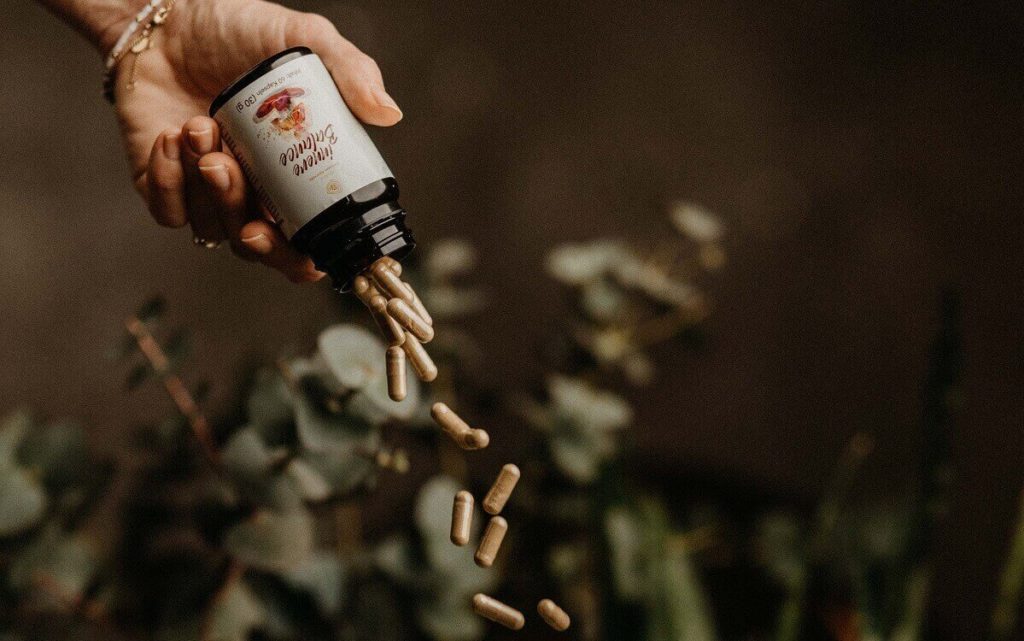
Discover high-quality supplements in our shop now
To support a balanced diet, we recommend selected Ayurvedic supplements.
The Right Care for Radiant, Beautiful, and Healthy Skin
For your skin to remain fresh and healthy, you should pay attention to several different factors. Inner health is at least as important as outer health. In addition to the nutrition tips, the following points will support you on your path to beautiful and radiant skin.
Tip #1: Skincare from Within
Ayurvedic skincare is all about strengthening from within. With the right Ayurvedic diet, tailored to your Dosha type, you strengthen your individual digestive fire, Agni.

Furthermore, the following applies to all constitutional types:
- Eat wholesome and warm meals
- Eat regularly at fixed times: Ayurvedic breakfast by 9:00 AM at the latest, lunch between 12:00 PM and 1:00 PM, and dinner between 6:00 PM and 7:00 PM
- Do not combine sweet and salty
- Eat plenty of green leafy vegetables
- Sufficient intake of Vitamin C, e.g., through citrus fruits
- Intake of high-quality fats and oils
Tip #2: Care for Your Liver
In Ayurveda, the liver is considered key to healthy skin. It is no coincidence that it is the central starting point when it comes to improving skin appearance. Even with skin problems, the liver should be addressed first. If it is overloaded or out of balance, you can take appropriate measures.
On the one hand, you can take measures for elimination and cleansing to relieve the detoxification organ. For example, a professional Ayurvedic detox cleanse helps with sustainable detoxification. A conscious intake of nutrients also has a positive influence on the liver.
Tip #3: Abhyanga Massage for Dryness
The Abhyanga massage is one of the most important Ayurvedic measures against dry skin. It involves massaging the body with valuable oils, ideally on a daily basis.
It can also be performed as a self-massage. Coconut, castor, sesame, or almond oil are excellent for Abhyanga massage.
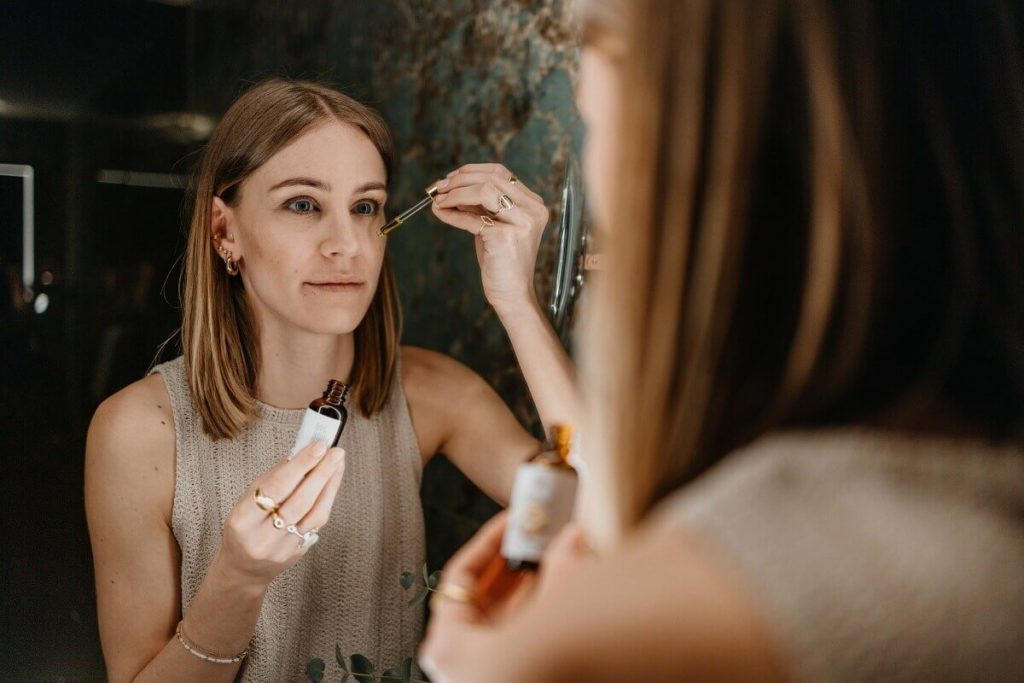
The oils work best against dryness if you warm them slightly in a water bath. Then, massage them into your skin with even movements. After the oil has absorbed for half an hour, you can wash it off. You can use Ayurvedic herbal oils as a supportive measure up to twice a week.
Tip #4: Daily, Thorough Skin Cleansing
Thorough cleansing is a firm and important component in Ayurveda. A warm bath or shower cleanses and relaxes your body. Kapha types, in particular, should pay attention to thorough cleansing because bacteria and allergens adhere more easily to their oily skin.
Tip #5: Best Natural Cosmetics for Wonderfully Nourished Skin
For long-term nourished, smooth, and supple skin, you should also provide it with the right external protection and care. With the gentle products of Ayurvedic care, you pamper your skin intensively.
Tip #6: Sufficient Sleep
Another important component in Ayurveda is sleep – the time of regeneration. This applies to all areas of the body, including the skin, whose cells renew faster during sleep than during the day. With persistent sleep deprivation, your skin becomes thinner and prone to wrinkles.
Tip #7: Conscious Relaxation
Make sure to consciously relax regularly. Experience shows that this works particularly well if you schedule fixed times for daily breaks. Yoga, breathing exercises, and meditation are great options for this. A pleasant walk in the fresh air also helps you relax.

Tip #8: Daily Movement
Regular movement promotes blood circulation in your skin and its supply of nutrients and oxygen. The removal of waste products is also encouraged. In Ayurveda, sports activities are preferably recommended between 6:00 AM and 10:00 AM.
Tip #9: Face Masks as a Pampering Program for the Skin
Once a week, you should pamper your skin with a face mask. An Ayurvedic facial treatment, which is suitable for use in the morning and evening and also serves as a nourishing mask, is excellent for this. Here too, make sure to use the right mask and cream for your Dosha type.
Tip #10: Mindfulness & Joy of Life
Finally, it is important that you pay a lot of attention to your skin. This active dedication not only has a positive effect on your body but also on your entire sense of well-being. This, in turn, influences your appearance – if you feel completely comfortable, it will also make your skin glow.
Ayurvedic Nutrition Tips to Strengthen Your Skin
As in many other Ayurvedic sub-areas, skin health is largely managed through a healthy lifestyle. Your skin benefits sustainably from a healthy Ayurvedic diet. With the right foods, you adequately supply your body with the correct nutrients. These, in turn, ensure smooth digestion and metabolic processes.

In Ayurveda, the right diet for your skin is fundamentally vegetarian.
Foods and preparations that are good for your skin:
- Sweet and bitter foods
- Boiling, stewing, or steaming
- Fresh steamed vegetables
- Fresh, sweet, seasonal, and ripe fruits (apples, grapes, pears, melons)
- Fresh, bitter salads (endive, chicory, radicchio, dandelion)
- Cooked legumes (especially mung dal)
- Cooked grains (rice, quinoa, spelt, oats, wheat)
- High-quality and stable fats (ghee, coconut fat, olive oil)
- Only pasteurized cow’s milk and cream (organic)
- Mild, digestion-promoting spices (ginger, turmeric, coriander, cardamom)
Foods and preparations you should avoid:
- Very acidic foods
- Roasting, baking, grilling, and deep-frying
- Red meat, dark fish, and seafood
- Excessive alcohol
- Sunflower oil, thistle oil, sesame oil (because they are heated to high temperatures)
- Processed foods or fermented products
- Excessively pungent spices (chili, asafoetida, pepper)
- Too much salt
Ghee as a Natural Aid in Ayurvedic Cuisine
Ayurvedic ghee is an integral part of Ayurvedic cuisine. This clarified butter, with its positive properties, surpasses other fats. It is not only suitable for gentle frying but can also be used for health purposes.

Ghee is essentially nothing more than clarified butter with almost 100 percent fat content. During production, almost all the water evaporates, and animal proteins and milk sugar separate. The ghee takes on a rich yellow color and achieves a solid consistency.
The clarified butter is suitable for both internal and external use and has anti-inflammatory effects. The effect of ghee on your skin is shown by preventing the formation of scars or blisters and reducing redness.
Ghee can also be used for psoriasis treatment. In Ayurvedic medicine, ghee is also used against wrinkles, among other things. Its high fat content helps your skin absorb moisture and thus reduce wrinkles.
For example, it is also suitable for removing makeup in the evening. The fat not only dissolves makeup but also nourishes your skin at the same time. Ghee is also ideal for massages.
What are the Causes of Skin Diseases in Ayurveda?
As mentioned earlier, skin diseases have various causes. They can be caused by nutrition or be the result of a disturbed metabolism.
The following criteria are considered in Ayurveda as causes for the development of unhealthy skin:
- Too much fresh grain, yogurt, fish, salty, and sour foods
- Too much urid dal, radish, sesame, milk, pastries, and jaggery
- Hard-to-digest, fatty, or heavy foods
- Suppression of natural urges, such as nausea and vomiting
- Cold water after intense heat, physical exertion, or upsetting situations
- Physical exertion in intense heat or after a heavy meal
- Eating uncooked food before the previous meal has been digested
- Sexual activity with poor digestion
- Incorrect performance of Panchakarma
- Daytime sleep
During a professional Ayurveda cleanse, an Ayurveda expert can help you interpret your skin symptoms and categorize them into Vataja Kushta, Pittaja Kushta, and Kaphaja Kushta. Subsequently, an individual disease progression (Samprapti) will be created based on the results. A suitable therapy concept will then be developed.
How Does Ayurveda Help Against Acne?
Acne has various origins, ranging from food intolerances to medical causes. In addition to hormonal reasons, your diet and lifestyle play a significant role. With the right Ayurvedic cleanse, quick results can be noticed, as the cleanse is individually tailored to you.
It is important that you eat a balanced diet to provide your body – and your skin – with all the important nutrients, vitamins, and minerals. You should consistently avoid foods that have a negative impact on your organism. Fresh and unprocessed foods strengthen you and your body in the long term.
In Ayurveda, your lifestyle habits are examined when it comes to treating acne. Factors such as sleep rhythm, exercise, and good stress management can influence your skin’s appearance.
Exercise promotes blood circulation and supplies your skin with oxygen. Yoga, breathing, and meditation techniques are also Ayurvedic approaches to naturally treat acne.
Conclusion: Mindfulness and Proper Nutrition for Beautiful Skin
Beautiful skin comes from within! In Ayurveda, skincare is therefore approached holistically and specifically tailored to your Dosha type. Pay attention to a Dosha-appropriate diet so that your digestive fire, Agni, is in balance.
Furthermore, balance and mindfulness for oneself and one’s own body are important. Sufficient sleep, regular relaxation, and plenty of exercise significantly influence your skin’s appearance.
Together with daily, thorough cleansing and the right skincare through Ayurvedic natural cosmetics, face masks, and soothing oil massages, this will truly make your skin glow!

5 Tips to Sustainably Improve Your Skin’s Appearance
The skin is the largest organ of the human body. It protects against sun, cold, and pathogens and requires appropriate care. With a healthy lifestyle and proper care, you can sustainably improve your skin’s appearance.