last updated on 08/25/2026
Exhaustion, an irregular cycle, mood swings, or difficulty conceiving – often a progesterone deficiency is the underlying cause. The corpus luteum hormone influences far more than just fertility: it affects your sleep, your mood, and your entire hormonal balance.
Key Takeaways: How Does Progesterone Deficiency Occur?
- Progesterone deficiency is usually caused by luteal insufficiency, chronic stress, or menopause.
- Typical symptoms include PMS, irregular cycles, sleep problems, mood swings, and water retention.
- Hormonal balance can be naturally supported through nutrition, targeted nutrients, and stress reduction.
- Ayurveda views hormonal fluctuations holistically and also relies on Dosha-appropriate nutrition, routines, and relaxation.
- In the case of persistent symptoms or a desire to have children, the diagnosis of a progesterone deficiency should always be handled by a physician.
Read More on the Subject:
- 5 Tips on How Ayurveda Helps You During Menopause
- Shatavari: Effects in Ayurveda
- Understanding and Treating Mood Swings
What Is the Role of Progesterone in Your Body?
Progesterone is also called the corpus luteum hormone because it is produced in the so-called corpus luteum after ovulation. It prepares the uterine lining for potential implantation and maintains an early pregnancy.

Furthermore, progesterone has a calming effect on the nervous system, promotes deep sleep, and keeps your cycle in balance. If levels fall out of balance, you often notice it first in your mood and sleep quality.
How Do You Recognize a Progesterone Deficiency?
A progesterone deficiency rarely manifests clearly; instead, it presents through a cluster of complaints. Many of the following symptoms become noticeable particularly in the second half of the cycle, when hormone levels should actually be rising.
Common signs of luteal insufficiency include:
- Irregular or shortened cycle with a second cycle half that is too short
- Premenstrual syndrome (PMS) with breast tenderness and irritability
- Sleep disturbances and inner restlessness
- Mood swings ranging to depressive moods
- Water retention and weight gain
- Headaches and exhaustion
- Unfulfilled desire to have children or repeated early miscarriages
The skin can also react to a disturbed ratio of progesterone and estrogen. If progesterone drops in comparison to estrogen, this is referred to as relative estrogen dominance. In some women, this manifests as increased sebum production and blemishes, similar to premenstrual skin changes.
Important to know: Skin problems cannot always be clearly attributed to progesterone levels alone. Often, the underlying cause plays a larger role, such as PCOS with elevated androgen levels. If symptoms persist, a dermatological or gynecological consultation is worthwhile.
Luteal insufficiency is a common hormonal cause of cycle complaints, even if exact numbers vary depending on the diagnostic criteria (1). Therefore, it is worth taking complaints seriously and having them medically clarified.
What Are the Most Common Causes of Progesterone Deficiency?
The causes of insufficient progesterone are diverse. Most commonly, there is a so-called luteal insufficiency, where the corpus luteum does not produce enough hormones after ovulation.

Chronic stress also plays a central role: Under permanent pressure, chronic stress can inhibit the release of the hormones necessary for ovulation. This can also indirectly lead to a decrease in progesterone production (2). Other possible causes include thyroid dysfunction, PCOS, obesity, or menopause.
Yoga, meditation, or breathing exercises can help against stress. Equally important is good sleep, which can be restored even at home with the right applications.
How Are Luteal Insufficiency and the Desire to Have Children Linked?
In the case of luteal insufficiency, ovulation usually takes place, but the uterine lining does not build up sufficiently due to the progesterone deficiency. This makes it difficult for the fertilized egg to implant or increases the risk of an early miscarriage.
Can Progesterone Deficiency Also Affect Men?
Yes, although it is discussed significantly less often than in women. In men, a low progesterone level can be accompanied by exhaustion, sleep problems, and a disturbed testosterone-estrogen balance.
The deficiency is often favored by chronic stress, lack of sleep, and a sedentary lifestyle. A reliable classification is only possible through medical hormone diagnostics, as the symptoms can resemble many other causes.
Progesterone Deficiency During Pregnancy: What Do High or Low Values Mean?
During pregnancy, progesterone levels rise steadily, as the hormone maintains the uterine lining and prevents contractions. Low levels in early pregnancy can indicate a risk of miscarriage and are closely monitored by physicians.

Values that are too high are usually harmless and often occur in multiple pregnancies (3). In fertility treatments, progesterone is often specifically administered to support the luteal phase and improve the chances of implantation (4).
How Can You Naturally Increase Progesterone?
A mild progesterone deficiency can often be supported through targeted adjustments in daily life. Important to know: Natural measures usually take effect only over several cycles and do not replace a medical consultation for pronounced symptoms.

Which Foods Support Progesterone Production?
Your body primarily needs healthy fats, high-quality protein, and complex carbohydrates for hormone production. Particularly recommended are nuts, seeds, avocado, legumes, whole grain products, and fresh vegetables.
Ayurvedic nutrition complements this with warm, easily digestible meals. They protect the digestive fire (Agni) and thus indirectly the hormonal balance as well.
Which Nutrients Does Your Body Need for Hormone Production?
Certain micronutrients are particularly important for progesterone production. Frequently recommended are magnesium, zinc, vitamin B6, vitamin D, and omega-3 fatty acids.
A deficiency in these nutrients can put additional strain on the hormonal balance. A balanced, varied diet is therefore the basis of any natural support.
Which Medicinal Plants Help with Progesterone Deficiency?
Various medicinal plants are traditionally used to support the second half of the cycle. They usually act gently and require patience before an effect becomes noticeable.
- Chasteberry (Vitex agnus-castus): lowers elevated prolactin, promotes the body’s own progesterone production
- Shatavari: Ayurvedic women’s tonic for hormonal balance
- Lady’s Mantle: supports the second half of the cycle
- Wild Yam: traditionally used for PMS symptoms
It is best to discuss the intake of medicinal plants with a doctor, especially if you are already taking hormonal medications.
What Does Ayurveda Say About Progesterone Deficiency and Hormone Balance?
In Ayurveda, hormonal fluctuations are not viewed in isolation but are always seen in connection with the overall Dosha balance. Particularly an increased Vata is considered a cause of restlessness, sleep problems, and an unstable cycle.
One of the best-known Ayurvedic medicinal plants for women is Shatavari. It has always been valued for its nourishing and balancing effects.
Progesterone Deficiency During Menopause: What Helps Particularly?
With the onset of menopause, progesterone levels are usually the first hormone to drop significantly, often years before the last menstrual period. This phase, perimenopause, often manifests through hot flashes, sleep disturbances, and pronounced estrogen dominance.

“For us, a balanced hormonal balance never begins with a single hormone value alone, but always with the entire system of nutrition, sleep, and inner balance. This is exactly where European Ayurveda comes in.”
Elisabeth Naschberger-Mauracher, European Ayurveda® Expert & Managing Director of the European Ayurveda Resort Sonnhof in Tyrol
In Ayurveda, this stage of life is understood as the transition from the Pitta to the Vata phase. A warming, calming diet, fixed routines, and targeted relaxation help to gently balance the emerging Vata imbalance.
What Side Effects Can Progesterone Therapy Have?
Bioidentical or synthetic progesterone is prescribed by a doctor, for example, in the case of proven luteal insufficiency or during menopause. Possible side effects include among others fatigue, headaches, mood changes, or breakthrough bleeding.
Special caution is required for certain pre-existing conditions, such as the risk of thrombosis. Progesterone therapy should therefore always only take place under medical supervision. Natural measures can meaningfully complement it and support your body in the process.
FAQ: Frequently Asked Questions About Progesterone Deficiency
When is the best time to have progesterone levels tested?
The decisive factor is not a fixed calendar day, but the interval from ovulation: the value is in the most meaningful range about 5 to 7 days after. In the case of irregular cycles, ovulation should be determined beforehand via temperature or ovulation tests so that the test really falls within the luteal phase.
How does progesterone deficiency differ from estrogen dominance?
Progesterone deficiency refers to an absolutely too low progesterone level. Estrogen dominance, on the other hand, does not describe too high estrogen per se, but a disturbed ratio. If progesterone drops, estrogen acts relatively stronger, even if its value remains normal.
Can skin changes also indicate a progesterone deficiency?
Yes, increased blemishes and oily skin can be accompanied by relative estrogen dominance. However, skin changes cannot always be clearly attributed to progesterone levels alone; often, the underlying cause plays a larger role. If symptoms persist, a dermatological or gynecological consultation is worthwhile.
How long does it take for natural measures to take effect?
Nutrition, nutrients, and medicinal plants usually only have a noticeable effect on the hormonal balance after several cycles, as hormonal control loops adapt only slowly. Those who do not notice any change after a few weeks should not view this as a failure, but rather give the transition more time or have it medically re-evaluated.
Can progesterone deficiency lead to weight gain?
Yes, a deficiency favors water retention and estrogen dominance, which can additionally slow down the metabolism. In combination with stress and lack of sleep, this effect is often intensified.
How does Sonnhof provide support for hormonal complaints?
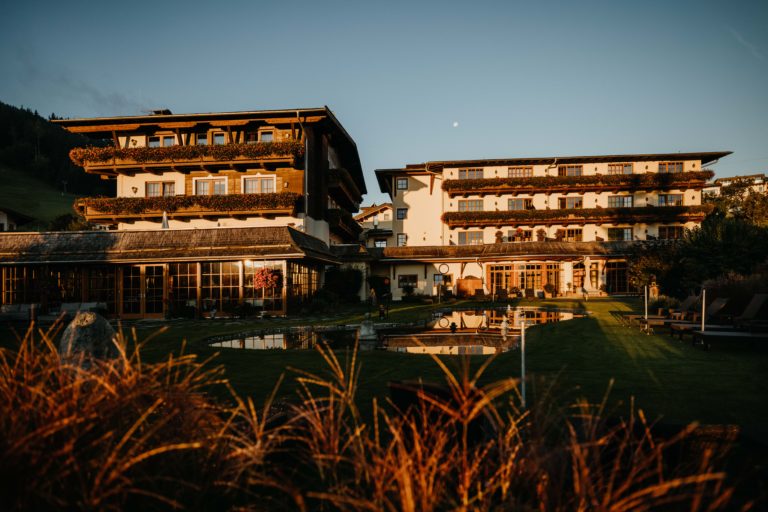
At the European Ayurveda Resort Sonnhof, every retreat begins with an individual pulse diagnosis by experienced Ayurveda physicians. Tailored to this, the Balance & Longevity retreats as well as the Female Power program combine Ayurvedic therapies with modern insights into hormonal health.
Sources
- Practice Committees of the American Society for Reproductive Medicine and the Society for Reproductive Endocrinology and Infertility. (2021). Diagnosis and treatment of luteal phase deficiency: A committee opinion. Fertility and Sterility, 115(6), 1416–1423. https://doi.org/10.1016/j.fertnstert.2021.02.010
- Phumsatitpong, C., Wagenmaker, E. R., & Moenter, S. M. (2021). Neuroendocrine interactions of the stress and reproductive axes. Frontiers in Neuroendocrinology, 63, 100928. https://doi.org/10.1016/j.yfrne.2021.100928
- Goktolga, U., Gungor, S., Ceyhan, S., Keskin, U., & Fidan, U. (2008). Assessment of the predictive value of serum progesterone levels on early pregnancy prognosis in spontaneous twin gestations: A prospective study. European Journal of Obstetrics & Gynecology and Reproductive Biology, 137(2), 185–188. https://doi.org/10.1016/j.ejogrb.2007.08.014
- van der Linden, M., Buckingham, K., Farquhar, C., Kremer, J. A., & Metwally, M. (2015). Luteal phase support for assisted reproduction cycles. Cochrane Database of Systematic Reviews, (7), CD009154. https://doi.org/10.1002/14651858.CD009154.pub3