Last updated on June 7, 2026
Many people want to live longer, but living a healthy life for longer is the real challenge. This is exactly where longevity nutrition comes in: a dietary approach that doesn’t rely on quick-fix diets, but rather on what regenerates your body and keeps it healthy in the long term.
Key Takeaways: Longevity Nutrition in Ayurveda
The longevity diet aims not only for a long life, but also for a healthy one. This diet is based on the following five pillars:
- A plant-based diet should make up at least 90% of one's diet.
- Choose nutrient-dense foods that are rich in vitamins, minerals, and antioxidants ( ).
- Maintain a moderate calorie intake with slight restriction and ensure you get all the essential nutrients.
- Plan for regular mealtimes and intentional breaks between meals to allow for cell regeneration.
- Follow an anti-inflammatory diet by avoiding processed foods and sugar.
Read more on this topic:
- Longevity Supplements: Which Supplements Are Really Worth Taking
- Longevity: 10 Tips for Aging Healthily
- Longevity in European Ayurveda®: 4 Strategies
- Holistic health with European Ayurveda®
- Ayurvedic Nutrition: Rules & Tips
- Your Ayurvedic Food Chart (includes PDF)
What is longevity nutrition?
The longevity diet is a plant-based eating plan designed to help you live not only longer, but—more importantly—live a healthier life. The focus isn’t solely on lifespan, but on what’s known as “healthspan”: the years during which you are physically fit, active, and mentally sharp.
Diet plays a key role in this. According to Eurostat, average life expectancy in the EU is around 80 years—but healthy life expectancy is only about 62 years (1). This means that many people spend nearly 18 years living with chronic health issues or a reduced quality of life. The Longevity Diet addresses this very issue.
It is interesting to note that what modern science now celebrates as “longevity principles” has always been known in Ayurveda. Whether it’s biohacking, intermittent fasting, or a plant-based diet, Ayurveda has been practicing these approaches for more than 5,000 years. In doing so, it always takes into account each person’s individual constitution.
Longevity Nutrition – Insights from the Blue Zones
Researcher Dan Buettner refers to five regions of the world as "Blue Zones," where people have been shown to age most healthily and where there is a particularly high number of centenarians. These zones are:
- Sardinia (Italy)
- Okinawa (Japan)
- Nicoya (Costa Rica)
- Ikaria (Greece)
- Loma Linda (California)
But what do these very different places have in common? About 95% of their diet consists of plant-based foods. Processed foods, sugar, and alcohol are the exception, not the rule. Meals are eaten mindfully, often in a group setting and without distractions.
A particularly well-known principle from Okinawa is “hara hachi bu.” It involves stopping eating when you are 80% full. This small act of self-discipline reduces calorie intake over the long term and eases the burden on your metabolism and digestion—a principle that is also deeply rooted in Ayurveda.
The most important foods for a long life
The Longevity Diet isn't a diet plan with strict rules. It's a lifestyle based on certain food groups. It helps you protect your cells, reduce inflammation, and strengthen your body's systems over the long term. We'll now show you which foods are key to this approach.
Legumes: The Foundation of Our Daily Diet
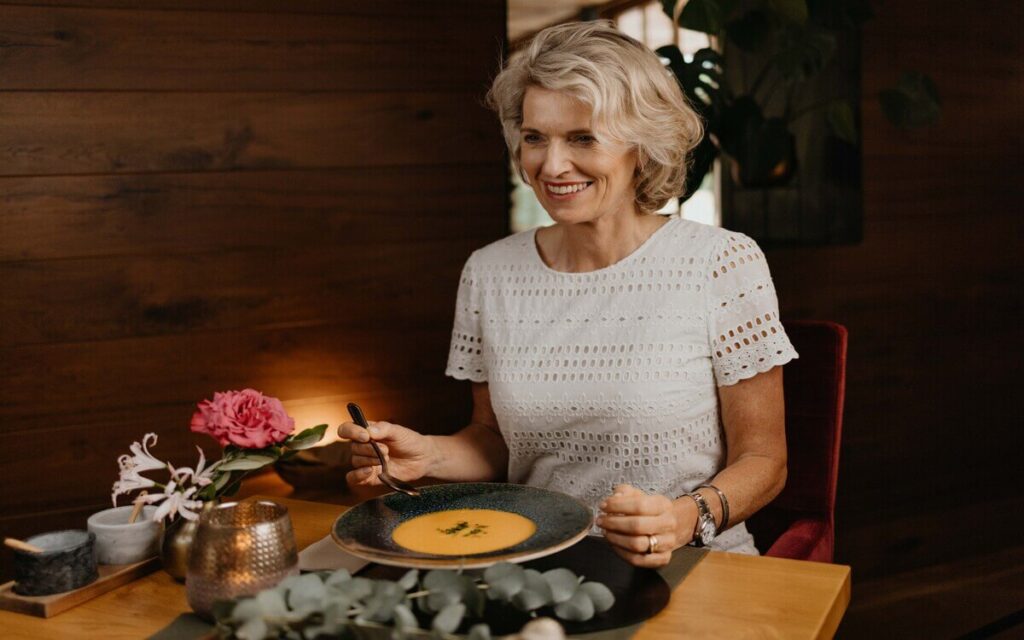
Beans, lentils, and chickpeas are a staple of the daily diet in all Blue Zones. Studies show that eating them regularly can increase life expectancy by up to 2.5 years (2). Theyprovide high-quality plant-based protein, fiber, complex carbohydrates, and essential micronutrients —all in one.
Tofu, tempeh, and other soy products are also excellent sources of plant-based protein. They contain phytochemicals that have antioxidant properties and can help lower cholesterol levels.
Fruits, vegetables, and berries: pure cell protection
Fresh, colorful fruits and vegetables provide the body with vitamins, minerals, phytochemicals, and antioxidants. The following are particularly beneficial:
- Berries (blueberries, raspberries): rich in polyphenols, which have been shown in studies to have life-prolonging effects (3)
- Leafy greens (spinach, kale): provide folate, potassium, and phytochemicals
- Cruciferous vegetables (broccoli, cabbage): known for their detoxifying and anti-inflammatory properties
- Herbs and spices: enhance flavor without adding calories and have antioxidant properties
A good rule of thumb: Try to eat at least 30 different plant-based foods each week. According to current research, this promotes the diversity of the gut microbiome—and can thus strengthen the entire immune system.
Healthy Fats and Nuts: Good for the Heart and the Brain
Nuts, seeds, high-quality olive oil, and fish provide unsaturated fatty acids that protect the cardiovascular system and reduce inflammation. Omega-3 fatty acids, in particular, have anti-inflammatory effects and support brain health. Eating a handful of nuts every day is considered a daily ritual in several Blue Zones.
Whole-grain products and fermented foods
Whole grain products promote gut health, help stabilize blood sugar levels, and provide the body with B vitamins and dietary fiber. Fermented foods such as sauerkraut, kefir, and miso support the gut microbiome—the hub of the immune system. In current longevity research , the gut microbiome is considered one of the key areas for healthy aging.

Intermittent Fasting and Meal Breaks in the Longevity Diet
It’s not just what we eat, but also when we eat, that affects our lifespan. Taking sufficiently long breaks between meals triggers a process known as autophagy, a cellular self-cleaning process. During this process, damaged cellular components are broken down and recycled.
The best-known method is 16:8 intermittent fasting: a 16-hour fast followed by an 8-hour eating window. In the Blue Zones, people often eat their last meal early in the evening and give their digestive system a rest until the next day.
Ayurveda has long recognized this principle: “Don’t eat again until you’re truly hungry”—which is essentially the same as intermittent fasting, but tailored to the individual. This is because not every constitutional type benefits equally from long periods of fasting. Vata types, for example, need more regular meals than Kapha types.
Does Longevity need dietary supplements?
The fact that supplements are necessary at all today is also linked to our modern diet. Nutritionists point out that many foods today contain fewer nutrients than they used to —due to industrial agriculture, long transport routes, and highly processed products.

In addition, levels of certain vital substances simply decline with age: substances such as NAD+ or alpha-ketoglutarate, which are essential for cell division and energy metabolism, can hardly be obtained in sufficient quantities through a normal diet. Hormonal levels also change—often abruptly in women over 40 during menopause, with noticeable effects on energy, sleep, and well-being.
But how do you figure out what your body really needs? The first step is a vitamin analysis or blood test. Only once it’s clear where deficiencies actually exist can you supplement your diet in a targeted and effective way with high-quality supplements. Age, gender, nutritional status, existing medical conditions, and medications you’re taking all play an important role—there simply isn’t a one-size-fits-all recommendation.
When choosing specific supplements, it’s important to pay attention to quality and dosage. It’s also important to be aware of potential interactions: certain supplements can enhance each other’s effects, while others may interact with medications. If you want to be on the safe side, discuss your supplement regimen with a doctor or an Ayurvedic expert.
Longevity, Nutrition, and Ayurveda: Tradition Meets Science
What modern longevity research has now proven has always been standard practice in Ayurveda. Whole plant-based foods, personalized dietary recommendations based on dosha, regular meal times, herbal medicine, and detoxification —these pillars have always been the foundation of Ayurveda.

“A longevity-focused diet isn’t about deprivation, but rather a conscious choice to prioritize what nourishes, regenerates, and protects the body over the long term. This is precisely where we see how closely modern longevity research and Ayurvedic knowledge are intertwined.”
Deepa Naik, Ayurveda specialist at the European Ayurveda Resort Sonnhof in Tyrol
Science has now begun to understand the mechanisms behind this. Telomeres, cell regeneration, inflammatory markers —these are all modern explanations for what Ayurveda has been practicing for thousands of years.
An Ayurvedic diet tailored to your dosha takes into account the seasons, times of day, and digestive strength (Agni), and personal imbalances. It is, by its very nature, a longevity diet—because it not only nourishes the body but also regenerates and protects it.
5 Practical Tips for Incorporating Longevity Nutrition into Your Daily Life
A longevity-focused diet doesn't have to be complicated. Small, consistent changes have the greatest impact over the long term. Here are five places to start:
- More plant-based foods, fewer processed foods: Gradually replace industrially processed foods with fresh, seasonal, and local alternatives.
- Legumes every day: Incorporate beans, lentils, or chickpeas as a source of protein into soups, salads, or spreads.
- Stick to a regular eating schedule: Ideally, eat at set times and leave at least 12 hours between your last meal and breakfast.
- Mindful eating: Eat without distractions, chew thoroughly, and listen to your body’s signals of fullness.
- Drink enough water: At least 1.5 to 2 liters a day supports kidney function, skin health, muscle function, and the elimination of metabolic waste.
Example of a day following a longevity diet
- Breakfast (after at least a 12-hour fast): Oatmeal with blueberries, flaxseeds, and a teaspoon of turmeric, or warm millet porridge with ghee, cinnamon, and seasonal fruits.
- Lunch (main meal): Lentil soup with vegetables, fresh herbs, and whole-grain bread, or dhal with basmati rice, depending on your dosha type.
- Dinner (light, early): Steamed vegetables with quinoa or a light vegetable soup—no later than 6 p.m. to allow for the nighttime autophagy phase.
- Snacks: A handful of walnuts or almonds, green tea, or warm water with ginger.
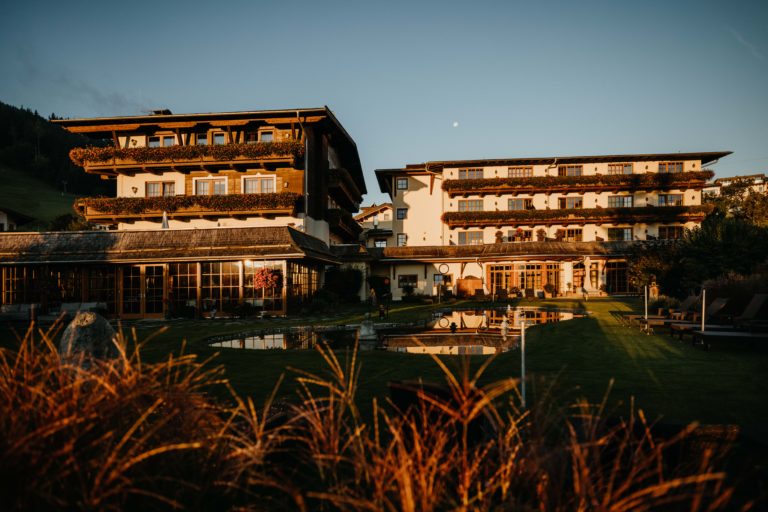
If you’d like to take a deeper dive, a professionally guided Ayurvedic retreat can provide the motivation you need to make lasting changes to your diet. Our Balance & Longevity retreats at the Sonnhof offer exactly that: personalized nutritional counseling, Ayurvedic treatments, and a break from everyday life—for greater vitality and a healthy, long life.
FAQ: Frequently Asked Questions About Longevity Nutrition
What foods should you avoid on a longevity diet?
You should avoid highly processed foods, refined sugar, trans fats, and excessive amounts of red or processed meat. These foods promote chronic inflammation in the body—one of the main drivers of accelerated aging. In Ayurveda, this is referred to as “Ama,” or unprocessed metabolic waste that blocks channels and reduces vitality.
Which foods are part of the longevity diet?
Legumes (beans, lentils, chickpeas), leafy greens, berries, nuts, seeds, whole grains, fermented foods, and high-quality olive oil are particularly recommended. These foods provide antioxidants and anti-inflammatory nutrients and support the gut microbiome. Processed foods, high sugar intake, and red meat should be significantly reduced.
How does a longevity diet differ from a regular diet?
Longevity nutrition goes beyond general dietary recommendations: it is specifically guided by research findings on extending life—such as those from the Blue Zones, epigenetics, and cell biology. The focus is not only on nutrients, but also on eating patterns, meal quality, gut health, and reducing oxidative stress.
Does intermittent fasting promote longevity?
Yes, longer breaks between meals trigger autophagy, a cellular cleansing process that repairs cell damage and slows down aging at the cellular level. The 16:8 model (a 16-hour fasting period followed by an 8-hour eating window) is practical for everyday life and has been shown in studies to offer proven health benefits. In Ayurveda, the basic principle—eat only when you are truly hungry—has been known for thousands of years.
Can changing your diet still be beneficial even in old age?
Yes, it’s never too late to change your diet. Switching to a longevity-focused diet can add about 8 additional healthy years of life even at age 60. Even at age 80, you can still gain over 3 years.
What do Ayurveda and longevity nutrition have in common?
Both approaches emphasize plant-based, minimally processed foods, mindful eating patterns, gut health, and the prevention of inflammation. Ayurveda goes one step further: it tailors dietary recommendations to each person’s specific constitution type (dosha).
What longevity regimen does Sonnhof recommend?
Sonnhof recommends its Balance & Longevity programs for people who want to boost their vitality over the long term and age healthily. These programs combine personalized nutritional guidance based on dosha type, traditional Panchakarma treatments for deep cleansing, exercise, and medical Ayurvedic support. The program is designed for anyone who prefers sustainable changes for the body, mind, and spirit over quick-fix diets.
Sources
(1) Eurostat. (n.d.). Healthy life years statistics. European Commission. https://ec.europa.eu/eurostat/statistics-explained/index.php?title=Healthy_life_years_statistics
(2) Fadnes, L. T., Økland, J.-M., Haaland, Ø. A., & Johansson, K. A. (2022). Estimating the impact of food choices on life expectancy: A modeling study. PLOS Medicine, 19(2), e1003889. doi: 10.1371/journal.pmed.1003889
(3) Park, S. H., Lee, D. H., Lee, D. H., & Jung, C. H. (2024). Scientific evidence of foods that improve the lifespan and healthspan of different organisms. Nutrition Research Reviews, 37(1), 169–178. doi: 10.1017/S0954422423000136