Last updated on June 7, 2026
Water has always been the most important element and the basis of life. It is not for nothing that numerous Ayurvedic texts contain the element in its various forms. The positive effects of water on a person's physical well-being speak for themselves. You can find out why you should drink warm water according to Ayurveda here.
The Bottom Line: What Are the Effects of Warm Water?
- Why warm water: In Ayurveda, hot water strengthens the digestive fire (Agni) and helps flush accumulated toxins (Ama) from the body.
- In the morning on an empty stomach: A glass of hot water right after waking up boosts your metabolism and supports natural detoxification.
- The right temperature: Ideally between 40 and 60 degrees Celsius—warm enough to be effective, yet gentle enough on the mucous membranes.
- Drinking according to your dosha: Vata boils water for 10 minutes, Pitta for 15 minutes, and Kapha for 20 minutes—and each type enhances the water with different herbs.
- In the evening: A small cup of warm water an hour before bedtime promotes relaxation and improves sleep quality.
Read more on this topic:
- Ayurveda morning routine: how to get your day off to a powerful start
- Agni: Why the digestive fire is so important in Ayurveda
- Ayurveda colon cleansing and intestinal detoxification
- Ayurveda Detox: How Ayurvedic detoxification works!
- Dosha test: Which Ayurveda type am I?
The benefits & properties of hot water
We have been told since childhood that water is important for health and performance. In Ayurveda , the quantity and temperature play a decisive role.
The following properties are attributed to hot water in Ayurveda:
- more energy
- Support for strong, radiant skin
- Prevention of digestive problems
- Quick relief for constipation
- Calming the mind
- Refreshment for the whole body
- Life-giving effect
- Cleansing properties
For a successful cleansing of your body with water, Ayurvedic teachings recommend boiling the water before drinking. Spices and herbs can also be added for a better effect and to strengthen your body.

Discover delicious Ayurvedic teas now
Ayurvedic tea is an integral part of Indian medicine. You can use it to cleanse, heal and stimulate your body - or simply relax with a warm cup. Here you will find selected Ayurvedic teas of different varieties in the best quality.
Improved vitality through warm water
In Ayurveda, hot water is drunk in the morning to start the day with more energy. Your tiredness is dispelled and your spirits awakened, making you feel fitter straight away. It is best to incorporate a glass of warm water into your Ayurvedic morning routine to start the day full of energy.
A study published in the European Journal of Nutrition (1) shows that the temperature of the water we drink has a measurable effect on stomach activity (gastric motility). This finding provides scientific support for the Ayurvedic recommendation to drink warm water.

For more flavor, you can add spices to the water to prepare an Ayurvedic drink for the morning. Turmeric, for example, is ideal for this or you can make yourself an unsweetened tea.
The warmth not only creates a pleasant feeling inside you, but also compensates for the loss of fluids overnight. This improves your overall vitality and you will quickly notice that your skin becomes more radiant.
Easier weight loss with hot water
Hot water can also help you lose weight. If you feel hungry between meals, you are often just thirsty. A glass of hot water can calm the feeling of hunger - which is not hunger at all. The hot water also supports detoxification and fat burning, which brings pleasing results in the Ayurveda diet.

"Those who consciously incorporate drinking warm water into their daily routine will quickly notice how much clarity, energy, and inner balance this simple habit can provide."
Elisabeth Naschberger-Mauracher, European Ayurveda expert and managing director of the European Ayurveda Resort Sonnhof in Tyrol
Heat for constipation: How does hot water affect digestion?
Warm water can gently stimulate the digestive tract and help to move accumulated food residues or metabolic waste more easily.
The warmth relaxes the muscles of the stomach and intestines, supporting natural bowel movement (peristalsis). Warm water can therefore be a simple, supportive measure to provide relief, especially in cases of sluggish digestion or occasional constipation.
In contrast, very cold water can slow down the digestive process in the short term, as the body first has to expend energy to bring the liquid up to body temperature.
Warm water, on the other hand, is closer to body temperature and can therefore be absorbed more quickly by the body. At the same time, the warmth promotes blood circulation in the digestive tract, which can facilitate the transport of nutrients and the removal of metabolic waste products.

From an Ayurvedic perspective, warm water should ideally be drunk slowly and in small sips. If each sip is held briefly in the mouth before being swallowed, the body can better perceive and absorb the liquid. This mindful way of drinking supports the digestive process and at the same time strengthens awareness of one's own bodily needs.
Hot water to promote healthy digestion
Water plays a fundamental role in maintaining a healthy and strong digestive system. Drinking too little fluid or cold liquids can harm the digestive fire, Agni, and may even cause it to go out. Your body also needs six hours to digest cold water, whereas it only needs an hour and a half for warm water (2).
Hot water therefore particularly stimulates Agni and promotes digestion. This makes it easier for deposited waste products and toxins to be transported out of your body . This in turn has a positive effect on your recovery and supports the cleansing of your body.
Drinking warm water in Ayurveda
Boiling water in Ayurveda releases energies that are stored in the water molecules. As a result, they are transferred directly to your body when you drink the water. This practice has been used in Ayurvedic medicine for centuries.

In addition, the water becomes thinner from a chemical point of view due to the long boiling process. This now thinner and short-chain Ayurvedic water is better able to transport water-soluble waste products and metabolic residues out of your body.
According to Ayurveda, the ideal drinking temperature is between 40 and 60 degrees Celsius. The water is warm enough to stimulate metabolic processes, but not so hot that it irritates the mucous membranes.
All components of food that cannot be converted into energy remain in your body as metabolic residues. In Ayurveda, this is referred to as ama, which from an Ayurvedic point of view is the beginning of every illness. Ayurvedic, warm water can better remove these from your body.
Boiling also purifies the water and changes its structure. Lime, for example, is crystallized and evaporated. The heat also helps to remove metabolic residues in the digestive tract more effectively. The digestive fire Agni is also supported in its work by the warm Ayurvedic water. Afterwards, you will feel better and have more energy!
Balance the doshas with hot water
Your constitutional type also plays an important role in the correct intake of water. Depending on the three doshas, you should boil your water for different lengths of time and enrich it with different spices. You can find out which Dosha dominates in your case in the Dosha test.
In Ayurveda, water is always boiled for at least 10 minutes, whereby a distinction is also made here between the individual doshas.
- Vata types should let the water boil for 10 minutes until it has reduced by a quarter in the pot.
- Pitta people about 15 minutes until one third has evaporated.
- Kapha people should let the water boil for about 20 minutes until only half of it is left.
Although in Ayurveda warm water should be drunk pure in the morning, you can add the following herbs and spices depending on your constitution. This adds flavor to the warm water and provides your body with additional healthy nutrients. The following times refer to water that has already been boiled:
- The Vata type should boil one and a half liters of water for five minutes. Then add three leaves of mint, ⅕ teaspoon of fennel seeds and ¼ teaspoon of marshmallow root. The water should now be drunk lukewarm throughout the day.
- To calm pitta, two liters of water are boiled for two minutes. Then add ¼ teaspoon of fennel seeds, two rosebuds and a clove to the water. In summer, the water can be drunk at room temperature, in winter a little warmer.
- To balance Kapha, boil one liter of water for five minutes. Then add three basil leaves, two thin pieces of fresh ginger, ¼ teaspoon of cumin and ½ teaspoon of fennel to the water. It works best when drunk hot to lukewarm throughout the day.

Discover Ayurvedic spices for your dosha now
Spices and herbs are as much a part of Ayurvedic nutrition as a sense of balance is to yoga! And here too, it is important to use the right ingredients in order to ideally regulate the balance of the doshas.
Drinking the right amount of hot water in Ayurveda
Various factors need to be taken into account when determining the right amount of water per day. In addition to age and weather, diet and workload, average stress and your constitutional type also play a role.
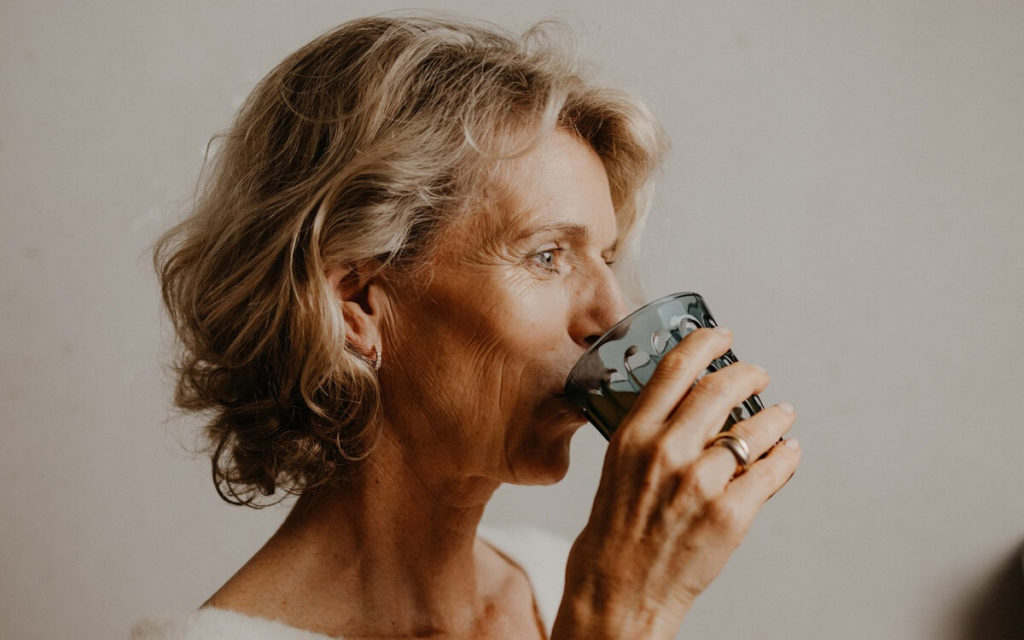
Pitta types are generally thirstier than people with Kapha characteristics. However, all Ayurveda types should prepare water in the morning and store it in a thermos flask. You should then drink some of it every 30 minutes or so throughout the day.
While a high intake of water during the day is important, Ayurveda recommends a small amount of pure water during meals. Ayurvedic cuisine is already very rich in spices and herbs, which could potentially overwhelm the body if the intake is increased.
Depending on the meal, about one cup of water per meal is recommended. For liquid dishes such as soup or dhal, a lower fluid intake is sufficient. For dry dishes, however, you should compensate with more water. It is best to pay attention to the recommended temperature of the water depending on your constitution. However, you should avoid drinking (ice) cold water so as not to quench your digestive fire.
Drinking warm water in the evening: Does it help you fall asleep?
And this isn't just true in Ayurveda: A small cup of warm water about an hour before bedtime calms the parasympathetic nervous system and signals to the body that it's time to rest.
The heat relaxes the muscles and can help you let go of the day’s stress. Vata types, who are prone to racing thoughts and sleep disturbances, benefit from this noticeably.
It’s important to keep your intake low in the evening. Drinking too much fluid right before bed leads to nighttime trips to the bathroom and disrupts restful sleep. If you like, you can add a little honey to the warm water; it has an additional calming effect.
FAQ: Frequently Asked Questions About Hot Water in Ayurveda
Why does Ayurveda recommend drinking hot water?
In Ayurveda, hot water strengthens the digestive fire (Agni) and breaks down accumulated metabolic waste (Ama). It is absorbed by the body more quickly than cold water and promotes detoxification. That is why it is considered a daily ritual in Ayurvedic practice.
How hot should the water be in Ayurveda?
The ideal drinking temperature is between 40 and 60 degrees Celsius. Water that is too hot can irritate the mucous membranes, while water that is too cold weakens the digestive fire. The Ayurvedic recommendation is lukewarm to hot, depending on your dosha type.
How much warm water should you drink each day?
In Ayurveda, it is recommended to drink the prepared warm water throughout the day, taking a few sips about every 30 minutes. The total amount depends on your constitution type, age, the season, and your level of physical activity.
Is it okay to drink warm water in the evening?
Yes, a small cup of warm water about an hour before bedtime calms the nervous system, relaxes the muscles, and promotes a more restful sleep. Vata types, who are prone to restlessness and sleep disturbances, benefit from this in particular.
Why does warm water sometimes make you feel sleepy?
Heat activates the parasympathetic nervous system, which is responsible for relaxation and recovery. This can induce a pleasant feeling of calm and drowsiness.
Is boiled water healthier than regular water?
In Ayurveda, yes—for two reasons: First, cooking reduces bacteria and impurities; second, it changes the structure of the water. It becomes shorter-chain and more fluid, which facilitates the elimination of toxins.
Which treatment at the Sonnhof is best suited for a comprehensive detox?
Our detox program and Panchakarma program both incorporate Ayurvedic hot water as a daily cleansing ritual. It is an integral part of every program at the European Ayurveda Resort Sonnhof.
Sources
(1) Fujihira K, Hamada Y, Yanaoka T, Yamamoto R, Suzuki K, Miyashita M. The effects of water temperature on gastric motility and energy intake in healthy young men. Eur J Nutr. 2020 Feb;59(1):103-109. doi: 10.1007/s00394-018-1888-6. Epub 2019 Jan 7. PMID: 30617417; PMCID: PMC7000532.
(2) Sun WM, Houghton LA, Read NW, et al. Effect of meal temperature on gastric emptying of liquids in humans. Gut 1988;29:302-305.